A whole-house repipe replaces every hot and cold supply line in a building, from the main valve where the water enters to the stop under each sink, toilet, shower and appliance. Hilltop Repipe San Francisco offers and manages whole-house repiping across San Francisco, Daly City and South San Francisco, in PEX or copper, with the work carried out by licensed and insured contractors under a plumbing permit and city inspection.
In San Francisco the job is usually a replacement of old galvanized steel. The Census Bureau counts 45.2% of the city’s housing units as built in 1939 or earlier. Among 273 DBI permit descriptions from 2021 to 2025 that describe a domestic water repipe, 76 name galvanized pipe and 92 name copper, which is mostly what the old steel was being replaced with. The galvanized pipe replacement page covers that pipe in depth. This page covers the full-system job: what gets measured, how new lines are routed through a San Francisco building, what the local code adds and how the house goes back together.
What happens on the first visit
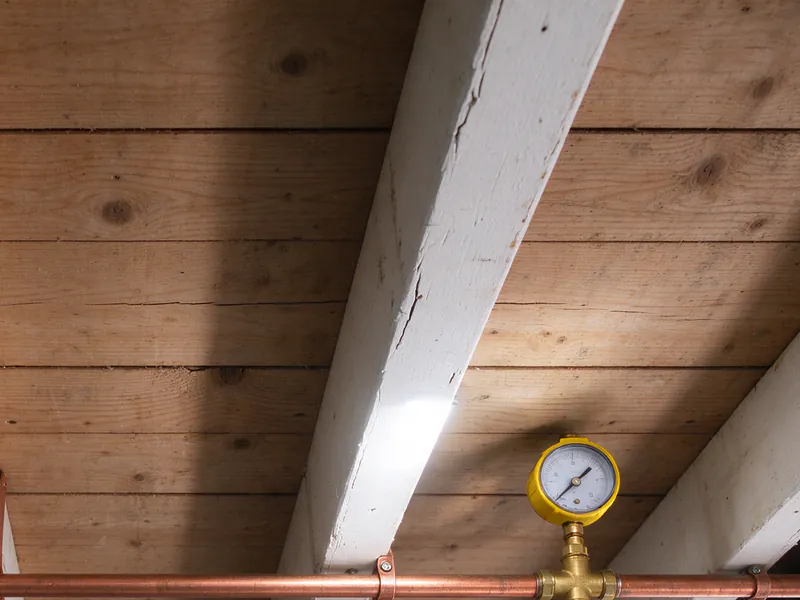
The walk-through starts where the water does, at the meter box and the main valve, and works out to every fixture. Static pressure is measured first. San Francisco is served through about 13 pressure zones fed from reservoirs and tanks at different elevations, so the pressure at one address says little about the next street, and nobody should size a system or promise better flow on an assumed number.
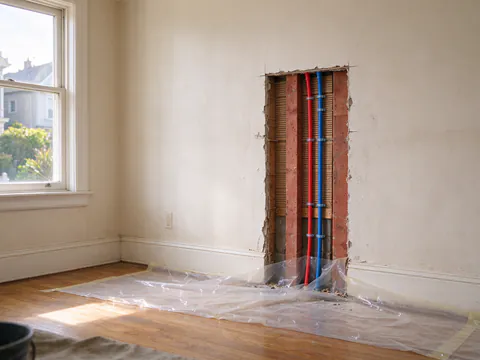
From there the pipe is mapped: the trunk line, the risers to each floor, the branches to each fixture group and the fixture count. Wall types are noted, because original plaster and lath, drywall, tile and cabinets each change how an opening is made and closed. The water heater and its connections are checked, and so is every route that could carry new pipe without opening a finished room: a garage ceiling, a basement, a crawlspace, a closet stacked under a bathroom. The result is a written scope and price that names the material, the layout, each planned opening, the permit and who patches what.
From the meter to the first valve
The meter box at the sidewalk is SFPUC’s. The pipe from the meter box to the building is the owner’s service line, and the house piping starts at the main valve. San Francisco’s code requires a fullway valve after the meter where the supply enters the building, so a repipe begins by making sure that valve exists and works.
The service line matters even though it is a separate scope. SFPUC has been replacing utility-owned galvanized service lines with copper, a program it scheduled to finish years ahead of the state’s 2030 deadline. Where that happened, the owner’s galvanized line now meets new copper at the meter, and SFPUC has written to owners whose customer-side lines it identified as galvanized, recommending replacement. If the line is galvanized, replacing it during the repipe avoids feeding new pipe through old steel. The water service line replacement page covers that work.
Why old supply pipe gives out in San Francisco water
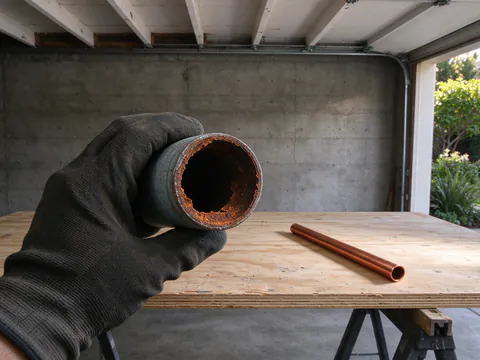
SFPUC water is soft: average hardness is 62 ppm, and the pH is adjusted to about 9.3 for corrosion control. That rules out the explanation people bring from hard-water cities. Galvanized pipe here rarely closes up with mineral scale. Its zinc coating wears through over decades, the steel underneath corrodes, and the rust builds up inside until a 3/4-inch line passes the water of a much smaller one. The outside can look fine while the inside is nearly shut, which is why low flow at several fixtures, rust after a shutoff and leaks at threaded joints often arrive together.
Copper fails differently, usually as pinholes or joint leaks, and there is no single cause. Water chemistry, flow velocity, workmanship and the age of the solder all play a part, so one leak does not prove the whole system is failing. The copper pinhole leaks guide and the guide to San Francisco water and your pipes go further. SFPUC also disinfects with chloramine, so the tubing and fittings chosen are checked against their makers’ published chlorine and chloramine ratings.
How the new lines are routed
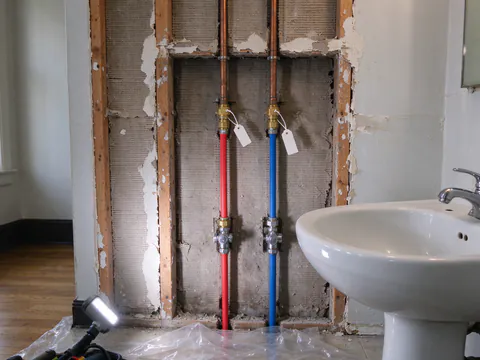
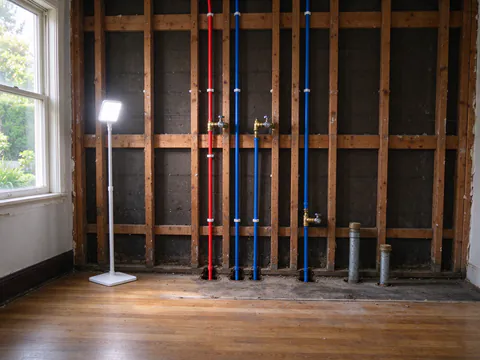
Most whole-house repipes are laid out either as trunk-and-branch, which copies the old system with a main line and tees to each fixture group, or as a home-run manifold, which gives each fixture its own line from a central valve board. The manifold vs trunk-and-branch guide compares them. The material choice runs in parallel: PEX repiping bends through joists and chases with fewer openings, and copper repiping suits owners who want a metal system. The PEX vs copper guide sets out the tradeoffs.
Garage, basement and crawlspace runs
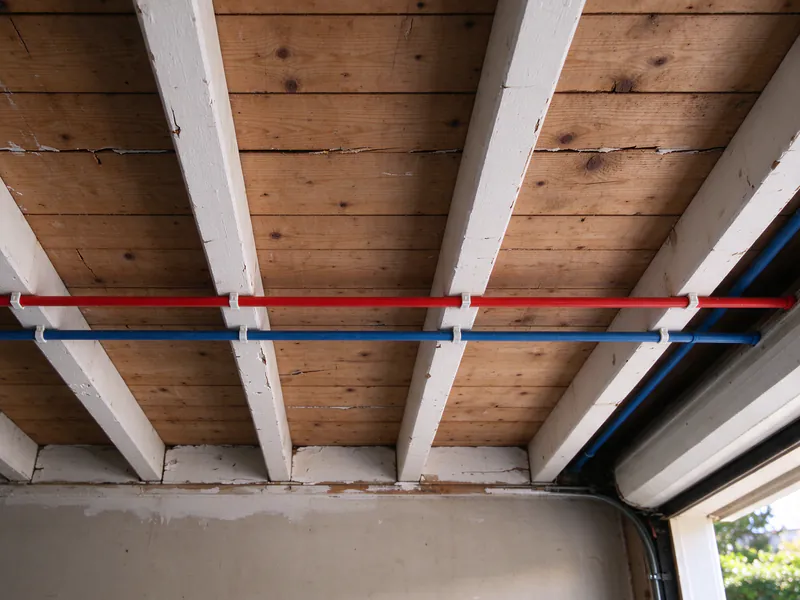
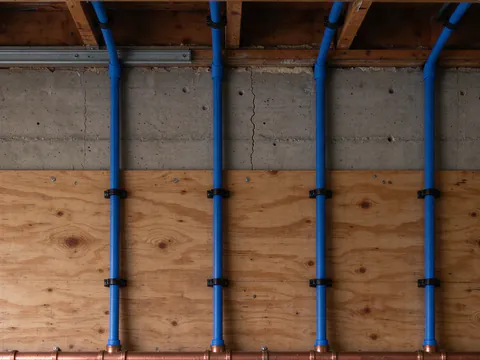
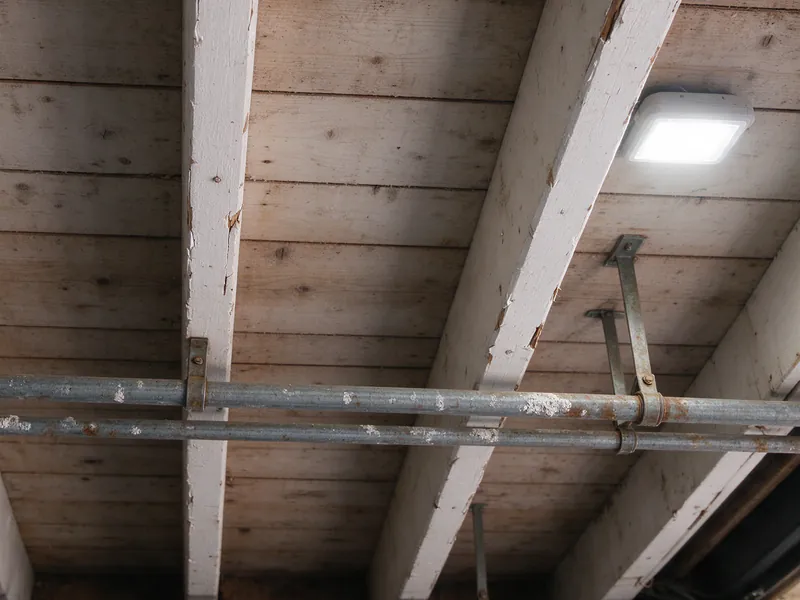
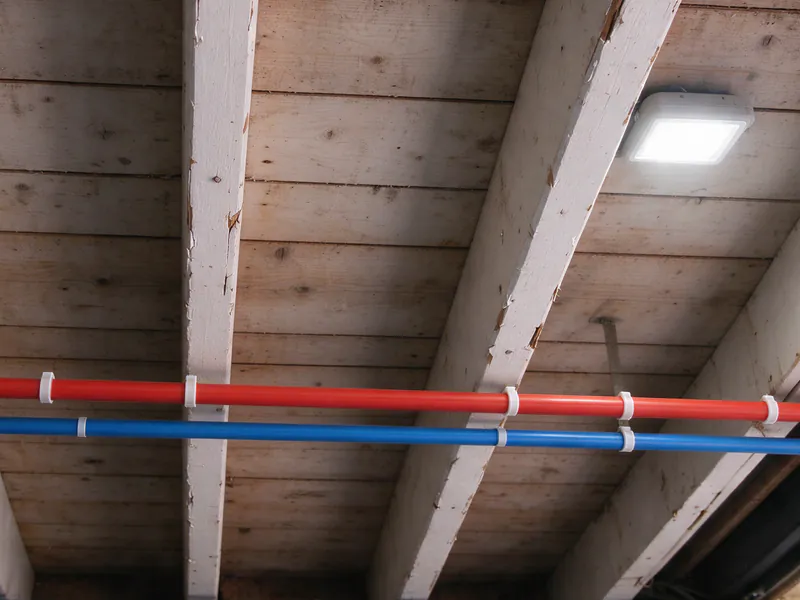
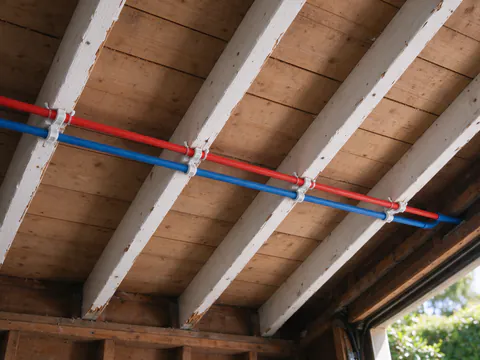
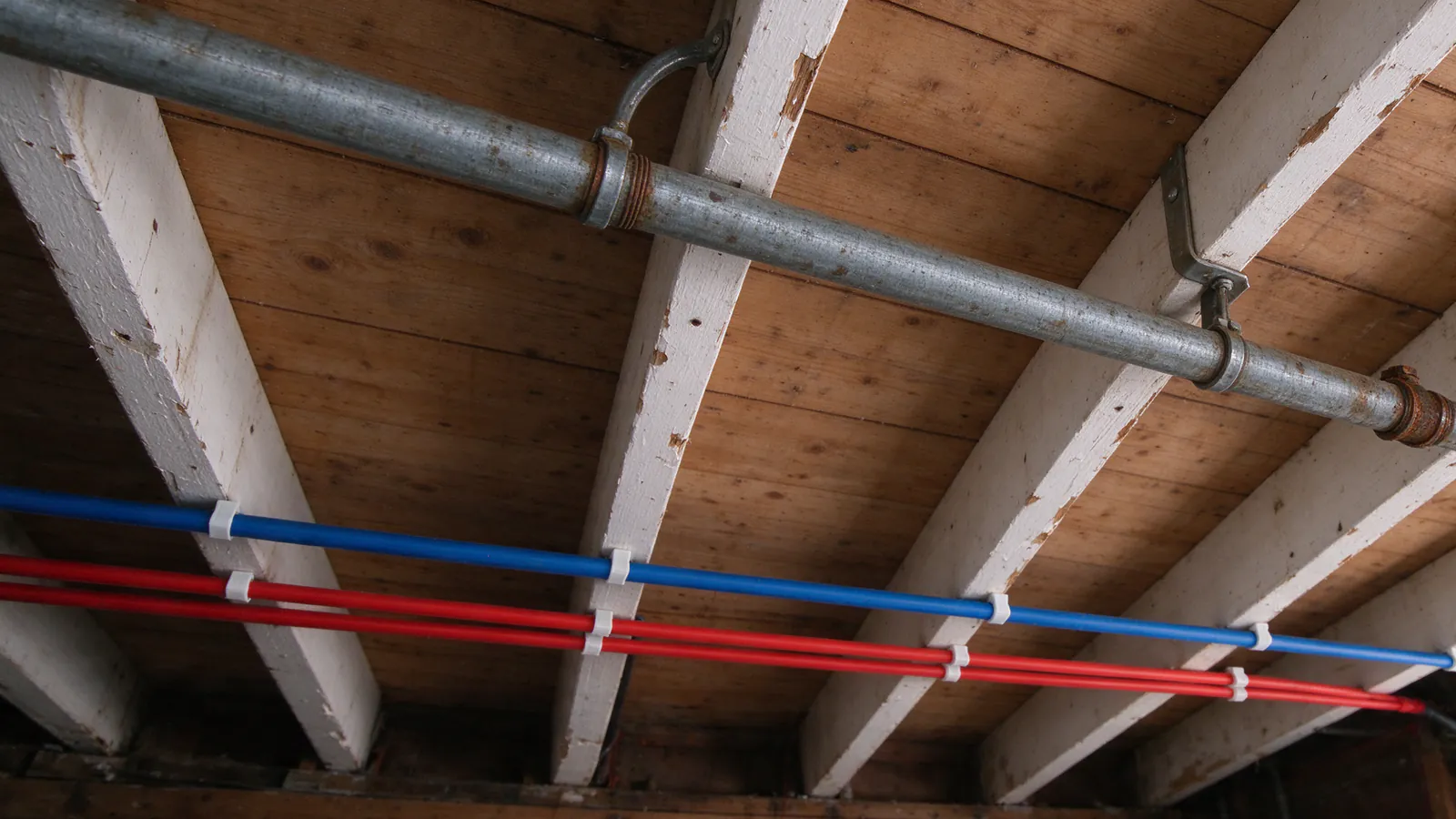
San Francisco Planning describes the Sunset’s 1920s to 1950s houses as one story of living space over a ground-floor garage, and the format extends into later Daly City tracts. Where a house is built that way, the main supply lines and the water heater usually run along an open garage ceiling, so the trunk can be replaced from below and only the climbs to each fixture need openings upstairs. The Sunset and Parkside page covers those houses. Older houses with a basement or a crawlspace under a raised floor work the same way, with the crawlspace as the corridor. Freezing is not what decides these routes: NOAA’s normals for downtown San Francisco record no nights at or below 32 F in an average year. Access and daylight are. PEX installed in California must have at least 30-day UV protection and is kept out of sunlight at garage windows and vents.
Attic runs, where a house has one
Many San Francisco houses have a flat roof and little or no attic. Where a usable attic exists, it can feed a top-floor bathroom from above with short drops through the ceiling, which spares the walls below. Where it does not, the climb goes up through closets, chases or the wall behind a stacked bathroom.
Slab and on-grade garage floors
Where a line runs in or under a concrete garage floor, it is usually abandoned and rerouted overhead rather than broken out. If new pipe has to go under a slab, the code asks for copper without joints where possible, with brazed joints where needed, and PEX placed in soil for drinking water must be sleeved. A leak under the slab before any repipe is a partial repiping question.
Main shutoff, branch and fixture stops
San Francisco adds valves the state code does not require. Besides the fullway valve at the building entry, there must be a separate valve for each building on the lot, a valve on each water heater’s cold supply, and a control valve ahead of every fixture’s hot and cold supply. In a building with more than one dwelling unit, each unit needs shutoffs so its hot and cold can be turned off without interrupting anyone else, and any unit that is remodeled has to be brought up to that rule. The apartment building repiping page covers riser work.
The city also requires air chambers on outlets served by quick-closing valves: single-handle faucets, shower valves, solenoid valves on washers and dishwashers, and flushometers. They are sized at 24 times the fixture supply diameter and absorb the pressure spike that otherwise shows up as water hammer. These valves and devices are a large part of why a San Francisco repipe estimate lists items a generic national figure leaves out.
Water heater connections
The water heater is reconnected, not necessarily replaced. Its cold supply gets the valve the city requires. Where copper meets a steel fitting, San Francisco requires a dielectric or insulating fitting, or a brass nipple at least 6 inches long, to stop galvanic corrosion at the joint. California requires every residential water heater, existing ones included, to be strapped against earthquakes in the upper and lower thirds of the tank, with the lower strap at least 4 inches above the controls, so a missing strap found during a repipe is a code item rather than an extra. If the new system includes a pressure regulator or a check valve, an expansion tank on the cold side keeps heated water from pushing pressure past 80 psi. A heater that is due for replacement anyway can be handled under water heater replacement in the same shutdown.
Fixture reconnection
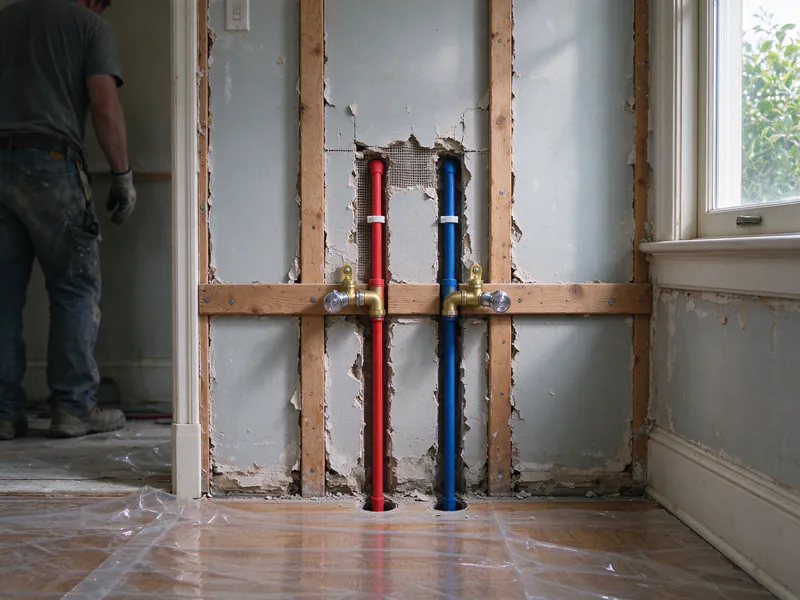
Each fixture gets a new stop and a new supply connection. Toilets, sinks, tub and shower valves, the washer box, the dishwasher, the refrigerator line and hose bibbs are all reconnected and checked for flow and for hot on the left. When galvanized pipe is cut over, loosened rust can travel downstream and lodge in aerators and valve cartridges, so the system is flushed with aerators off and those parts are cleaned before the job is handed back. A repipe does not replace faucets or shower valves; an old valve body that cannot be serviced is noted in the scope.
Polybutylene replacement
Polybutylene is a gray, sometimes blue or black, plastic supply pipe that was used in homes built or replumbed during the 1980s and early 1990s. It is known for failures at its fittings and from aging of the pipe itself, and inspectors flag it during sales. It is uncommon in San Francisco: none of the 273 repipe permit descriptions from 2021 to 2025 mention it, and only 23.5% of the city’s housing units were built in 1980 or later. Where it does turn up, in a later infill house, an apartment building or a unit replumbed in that era, it is replaced as a full system rather than patched, because the fittings throughout share the same weakness. Pricing follows the same drivers as any whole-house repipe. The guide to identifying pipe material shows how to tell it from PEX.
Not sure what's in your walls?
A walk-through traces the pipe from the meter and measures pressure before anyone talks about scope.
Bonding, pressure and the test before walls close
Older houses often used the metal water pipe as part of the electrical grounding path. The California Plumbing Code requires that where metal building supply pipe serves as a grounding electrode, its replacement be of like material, and the electrical code requires remaining metal water pipe to be bonded. The scope flags this so a licensed electrician can confirm the bond when metal pipe comes out.
If static pressure measured at the start is above 80 psi, the code requires a pressure regulator with a strainer and an expansion tank downstream. Before any wall or ceiling closes, the finished system is tested with water at working pressure or with air at 50 psi or more, held at least 15 minutes without leakage. Plastic pipe is air tested only where its maker allows it, which PEX makers may. Then the city inspector sees the work under test.
Permit, lead-safe openings and patching
DBI requires a permit before pipe is cut into or replaced, and since September 14, 2026 new plumbing permits are filed and inspections booked on PermitSF. The permit is pulled by a contractor holding a qualifying California license, such as C-36 plumbing. A house permit is $549, or $809 with underground work, and each re-inspection is $259 per half hour; in condos and apartment buildings, DBI requires a separate permit for each unit. The San Francisco repiping permit guide walks through the steps.
Paint in a San Francisco building built before 1979 is presumed to contain lead. In rentals and shared buildings, Section 327 of the city’s Existing Building Code requires containment with plastic sheeting, posted signs, three business days’ notice to occupants and HEPA cleanup for work that disturbs it. An owner-occupied unit is exempt from the interior rules but not from keeping dust out of shared areas. Textured or skim-coated walls in a building of one to four units can also need asbestos sampling under air district rules before they are opened. Both affect setup time at each opening. Patching is scoped opening by opening, and the guide to how invasive repiping is shows what to expect.
What it costs
A typical San Francisco-area range for a whole-house PEX repipe is $8,500 to $16,000 for one bath, $12,000 to $22,000 for two baths and $14,500 to $28,000 for three; multi-story or hard-access homes can run higher. Copper usually costs more than PEX for the same home; sources put the premium anywhere from about 10% to 60%. The repipe cost guide breaks down what sits inside the price, and the cost estimator gives a range without a phone call. Homeowners insurance generally addresses sudden water damage under the policy’s terms rather than planned pipe replacement, so check the policy before counting on it; the insurance guide explains the difference.