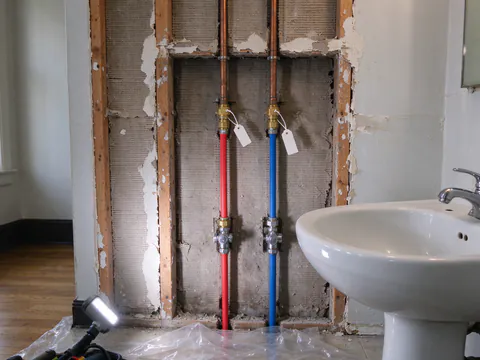
Galvanized pipe replacement takes out the threaded, zinc-coated steel that supplied water to most older San Francisco buildings and puts in PEX or copper. Hilltop Repipe San Francisco offers and manages galvanized pipe replacement across San Francisco, Daly City and South San Francisco, with the work carried out by licensed and insured contractors under a plumbing permit and city inspection. In most houses that means a whole-house repipe; where earlier work already replaced most of the steel, it can be a partial repipe of what is left.
Galvanized is the reason most San Francisco repipes happen. The Census Bureau counts 45.2% of the city’s housing units as built in 1939 or earlier and another 16.1% from 1940 to 1959, the decades when galvanized steel was standard supply pipe. Among 273 DBI permit descriptions from 2021 to 2025 that describe a domestic water repipe, 76 name galvanized pipe, and most of the 92 that name copper describe what it was replaced with. Building age is context, not proof: only tracing the pipe in a particular building says what is there.
What happens on the first visit
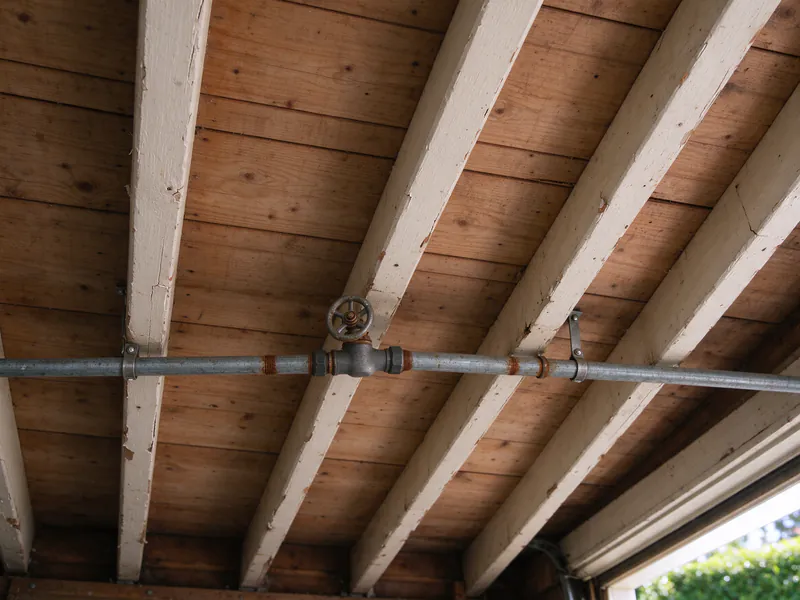
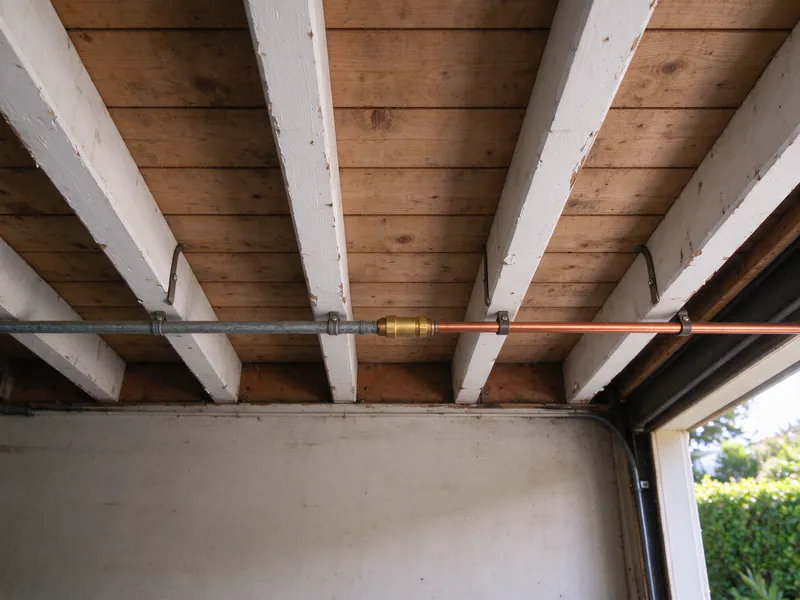
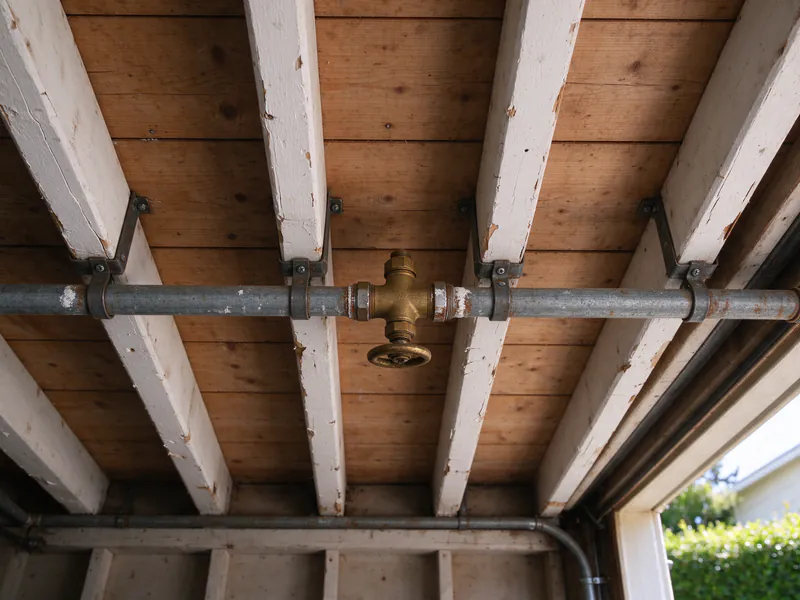
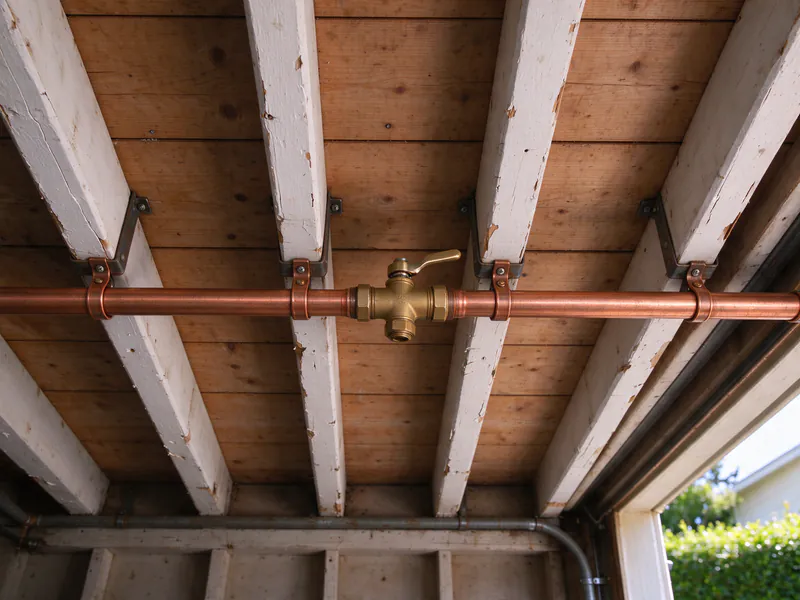
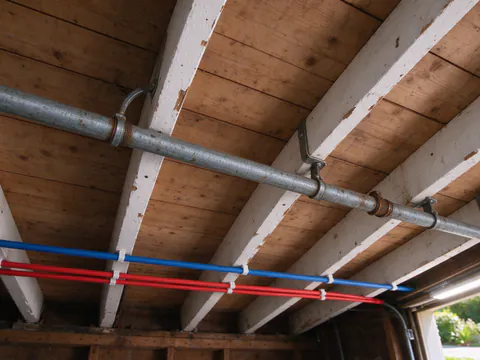
The walk-through starts at the meter box and the main valve. Galvanized steel is dull gray with threaded joints and fittings, and a magnet sticks to it, which separates it from copper at a glance. The visit follows it from the entry across the garage ceiling, basement or crawlspace and notes every place it changes: a copper section where a leak was once cut out, a run of PEX from a remodel, a union where two eras meet. Those patches matter, because each joint between steel and copper is a corrosion point if it was made without a dielectric fitting.
Static pressure is measured at the main valve and flow is checked at fixtures on each floor. Strong pressure at the main with weak flow upstairs points at restriction inside the pipe; weak pressure at the main points somewhere else, such as the service line, a regulator or the supply zone, and new pipe inside would not fix it. The low water pressure guide sorts those causes. The visit also notes the water heater connections, the wall finishes along each likely route and whether SFPUC has written to the owner about the service line. The scope that follows names the material, the boundary, each opening and who patches it.
How galvanized pipe corrodes from the inside
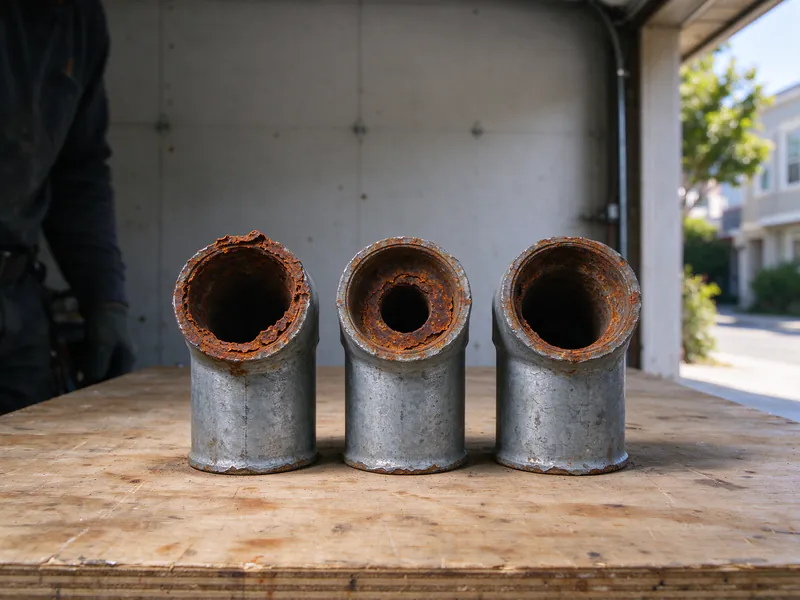
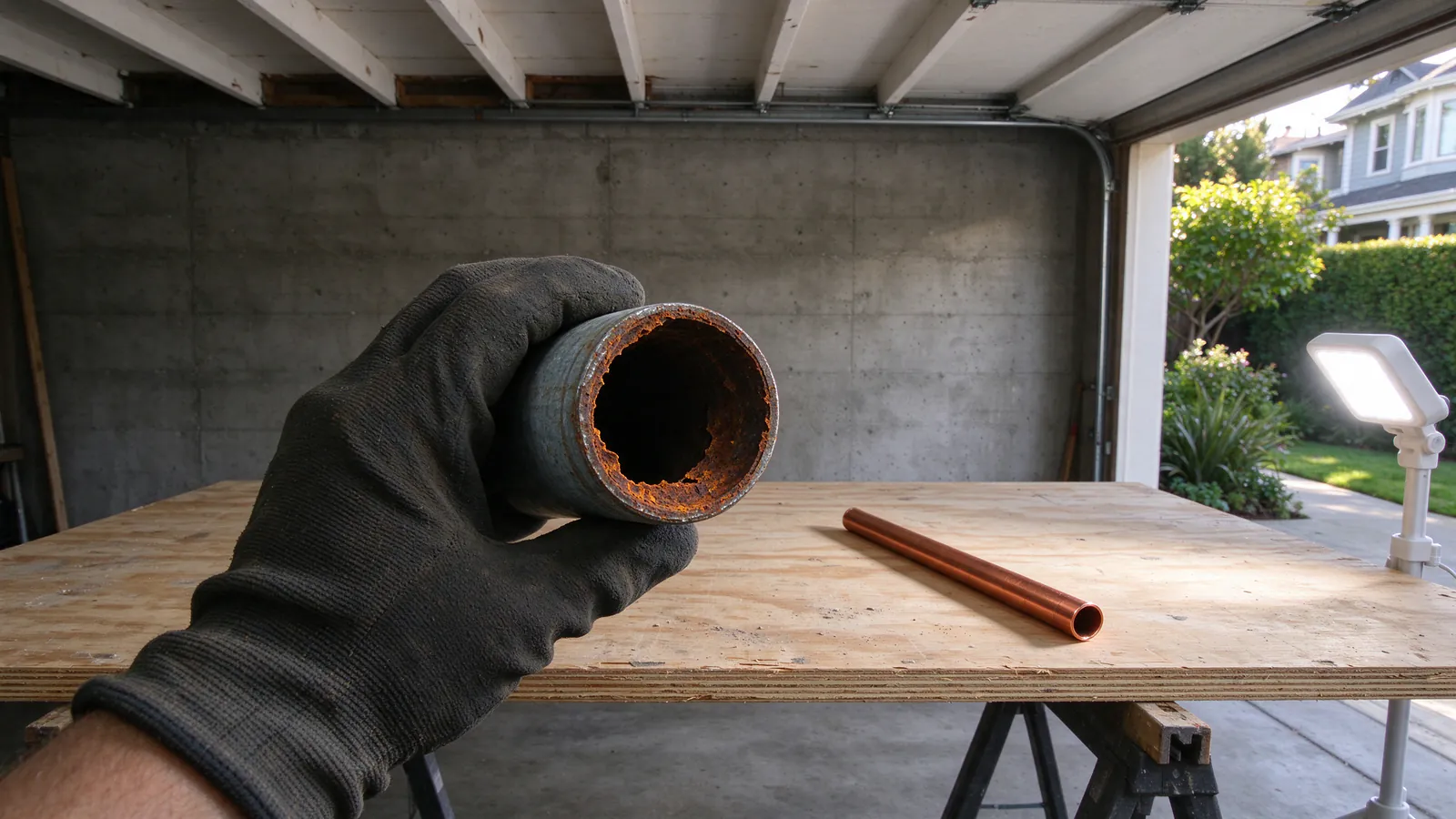
Galvanized pipe is steel dipped in zinc. The zinc corrodes first and protects the steel while it lasts, but over decades of water flowing through it the coating wears away and the steel underneath begins to rust. Rust takes up more room than the metal it came from, so it builds on the inside wall and narrows the bore. A 3/4-inch line can end up passing the water of a much smaller pipe while the outside still looks sound.
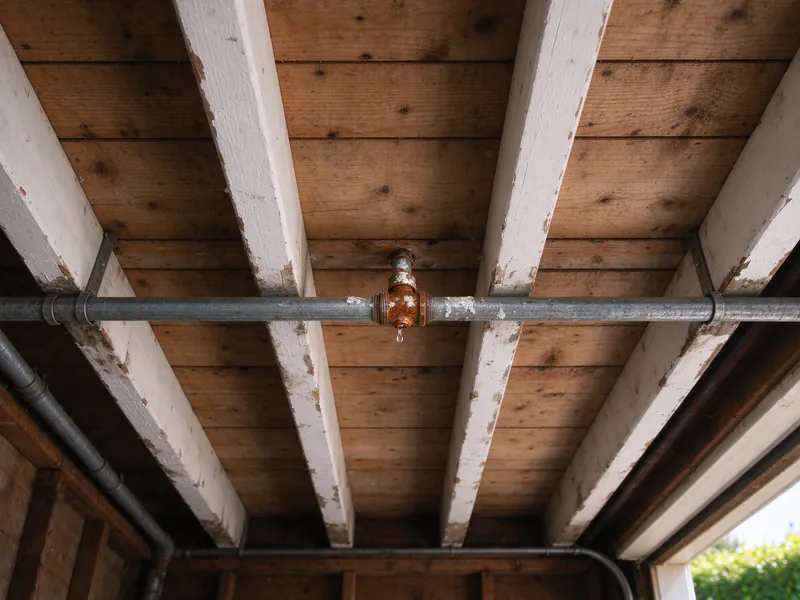
The threads are the weak point. Cutting threads removes part of the pipe wall and the zinc with it, so the thinnest, least protected metal sits at every joint. That is where galvanized usually leaks first, as a weep at a fitting under a sink or on a garage ceiling. When leaks start appearing at threaded joints in different parts of the building, the rest of the steel is usually close behind.
Scale and tuberculation in soft water
In hard-water cities, mineral scale adds to the narrowing. San Francisco’s water is soft: SFPUC reports average hardness of 62 ppm and adjusts the pH to about 9.3 for corrosion control. So a galvanized line that loses flow here is usually clogged by its own corrosion, in rough rust nodules called tubercles, rather than by hard-water scale. The utility’s pH control slows metal leaching into the water but cannot reverse rust that has built up over decades.
Tubercles break loose when flow changes suddenly. That is why rust-colored water often shows after the water has been shut off for work, after a weekend away, or after the utility works on a nearby main. Discolored water has other possible sources, including the water heater and utility work, so the source is checked before blaming the pipe; the rusty water guide explains how. The guide to whether galvanized pipes are safe covers what the corrosion means for drinking water.
Why replacing part of a galvanized system often disappoints
Galvanized pipe of the same age, carrying the same water, tends to fail on a similar schedule. Replacing the one run that leaked buys time on that run, but the steel beside it keeps narrowing and keeps shedding rust into whatever is downstream, including new pipe and fixture valves. Every cut between new and old needs a dielectric transition, and every future failure means another opening and another permit. Section-by-section replacement fits when most of the building is already copper and a single steel run remains. When galvanized runs through the building, replacing it all at once often costs less than the series of repairs it replaces. The repipe vs repair guide walks through the decision.
Not sure how much of your pipe is galvanized?
A walk-through traces the steel from the meter and marks every patch before anyone sets the scope.
Transitions, dielectric unions and brass fittings
Wherever new pipe meets steel that stays, the joint needs the right fitting. San Francisco’s code requires a dielectric or insulating fitting, or a brass nipple at least 6 inches long, where copper connects to ferrous pipe, and the state code accepts a copper-alloy adapter, a dielectric fitting or a dielectric union meeting ASSE 1079 or IAPMO PS 66. Without one, copper and steel form a galvanic couple and the steel corrodes faster right at the joint.
Brass shows up at most of these transitions and at every PEX fitting. California holds every wetted surface in a drinking water system to 0.25% lead as a weighted average, and brass fittings with more than 15% zinc used in plastic systems must resist dezincification under NSF/ANSI 14. Dezincification leaches zinc out of the brass and leaves it weak and porous, so the rating matters on a fitting meant to last as long as the new pipe.
Galvanized service lines and the lead question
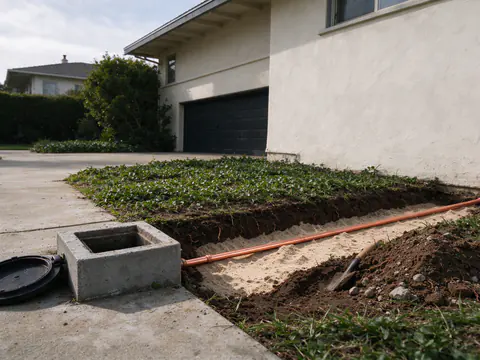
The steel inside a building often continues outside it. SFPUC has been replacing its own galvanized service lines, from the main to the meter, with copper, and has written to owners whose side, from the meter box to the building, it identified as galvanized. It recommends replacing those customer-side lines because they may have been connected to old lead pipe. SFPUC also estimates a 1% chance of lead in customer-owned lines and its plumbers have never observed a customer-owned lead service line, so a galvanized line is a reason to act, not evidence of lead.
Replacing the owner’s line at the same time as the interior steel avoids feeding new pipe through old rust and handles both in one shutdown. The water service line replacement page covers that work, and the lead pipes in San Francisco guide covers SFPUC’s program and its $25 tap test.
Cutting over and clearing the rust
The new lines are run while the old ones still serve, then each fixture group is switched over, so water is off in stages. Cutting into old steel loosens rust, and some of it travels. After the cutover the system is flushed with aerators removed, and aerators, shower heads and valve cartridges are checked and cleared, because a single flake can narrow a cartridge and look like the old low-pressure problem returning. Exposed steel in a garage or basement is usually cut out; steel sealed in finished walls is normally drained, capped and left in place, and the scope lists which is which.
Galvanized steel is metal, and in older houses it was often part of the electrical grounding path. Where metal pipe is removed, the scope flags it so a licensed electrician can confirm grounding and bonding.
Permit, inspection and cost
DBI requires a permit before pipe is cut into or replaced. A licensed contractor files it on PermitSF; the house permit is $549, or $809 with underground work, and condos and apartment units each need their own. The new system is pressure tested and inspected before walls close. In most San Francisco houses, replacing galvanized is a whole-house repipe, so the typical San Francisco-area range applies: $8,500 to $16,000 for one bath, $12,000 to $22,000 for two and $14,500 to $28,000 for three in PEX, with multi-story or hard-access homes running higher and copper usually more. Insurance generally responds to sudden water damage rather than paying to replace worn-out pipe. Buyers weighing a house with galvanized pipe can start with the buying a house with galvanized pipes guide, and the guide to identifying pipe material shows what to look for.