A like-for-like gas tank replacement typically costs about $2,200 to $4,300 in the Bay Area, with permit, straps and haul-away, and a heat pump water heater conversion about $5,500 to $8,000 for a typical San Francisco-area single-family home. Hilltop Repipe San Francisco offers and manages water heater replacement and installation across San Francisco, Daly City and South San Francisco, for gas tank, heat pump and tankless heaters, with the work carried out by licensed and insured contractors under a city permit.
A water heater swap looks simple from the outside. Most of the work is around the tank: the straps, the valves, the relief line, the vent, and for a heat pump, the space and the wiring. Those items are where San Francisco’s codes are specific, and where two quotes for the same heater differ.
What happens on the first visit
The visit starts at the heater: its fuel, size and age, where it stands, and how it is vented. The gas line feeding it is checked for size, and for a heat pump the electrical panel is checked for space and the route a new circuit would take. The room itself matters, because a heat pump draws heat from the air around it and needs enough of it, and a gas heater needs combustion air. Strapping, the relief valve and its discharge pipe, the cold-supply valve and any expansion tank are noted. In flats, the walk-through records whether one heater serves several units, which the apartment building repiping page covers in more detail.
The owner is asked what comes next: the same fuel, a heat pump or tankless. The result is a written scope and price that names the heater, the venting or wiring, the code items and the permits.
Gas, heat pump or tankless
California’s energy code sets the options for replacing a single-family water heater. A gas or propane heater is still allowed. A heat pump water heater with a storage tank qualifies when it is placed indoors on a rigid insulated surface of at least R-10 and has a communication interface, or when it meets the NEEA Advanced Water Heater Specification Tier 3 or higher. An existing electric-resistance heater has to be replaced with an electric one, resistance, instantaneous or heat pump. Newly installed and accessible hot water pipe has to be insulated.
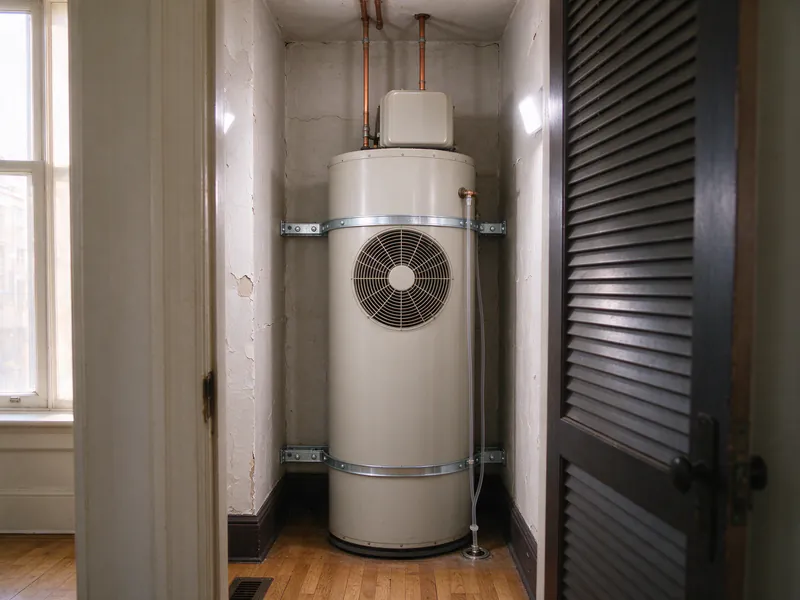
Each type moves the work to a different place. A gas tank turns on venting and combustion air. A heat pump turns on space, air volume, a condensate drain and the circuit: a 240 V unit usually needs a new circuit, while some 120 V units plug into an existing receptacle. Air District staff, using a Bay Area utility’s heat pump program data, put the average cost of ventilation measures such as a louvered door at about $208 and of space reconfiguration at about $1,287, which shows how much the closet decides. A tankless gas heater turns on the gas line and the vent, covered below. The heat pump vs tankless guide compares the two.
The Bay Area rule for gas water heaters
The Bay Area Air Quality Management District adopted zero-NOx standards on March 15, 2023 that apply when a heater is sold or installed, not to a working heater already in place. Under the rule as adopted, natural gas water heaters under 75,000 Btu per hour, the typical residential tank, must meet the standard if manufactured after January 1, 2027, and larger units from 75,001 Btu per hour up to 2 million, which include tankless heaters and many multifamily and commercial units, after January 1, 2031. Nobody has to remove a working heater. Amendments to the rule have been proposed that would move both dates later and add exemptions for some buildings, and the Air District’s Board decides whether they take effect, so check the rule’s current status before choosing a gas replacement. The rule covers all nine Bay Area counties, so San Francisco, Daly City and South San Francisco alike. The Bay Area gas water heater rule guide follows it in detail.
San Francisco’s own all-electric rule for existing buildings applies to a Major Renovation, which needs both a significant alteration and replacement of heating and hot water for the whole building. Replacing one water heater does not meet that definition on its own, so the city does not ban like-for-like gas water heater replacement in an existing building; DBI decides how the rule applies to a particular project.
Gas or heat pump?
Say where the heater stands and what is near it. The space, the vent and the circuit decide more than the label does.
Code items on every replacement
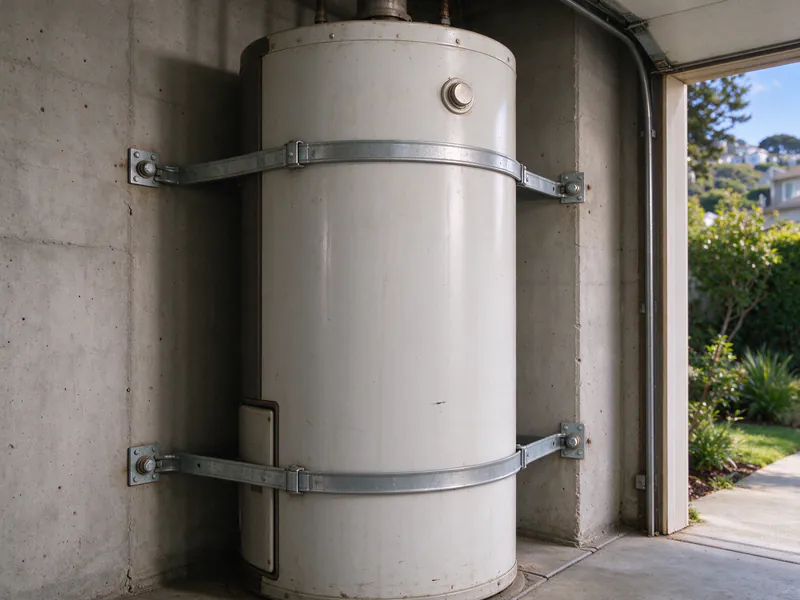
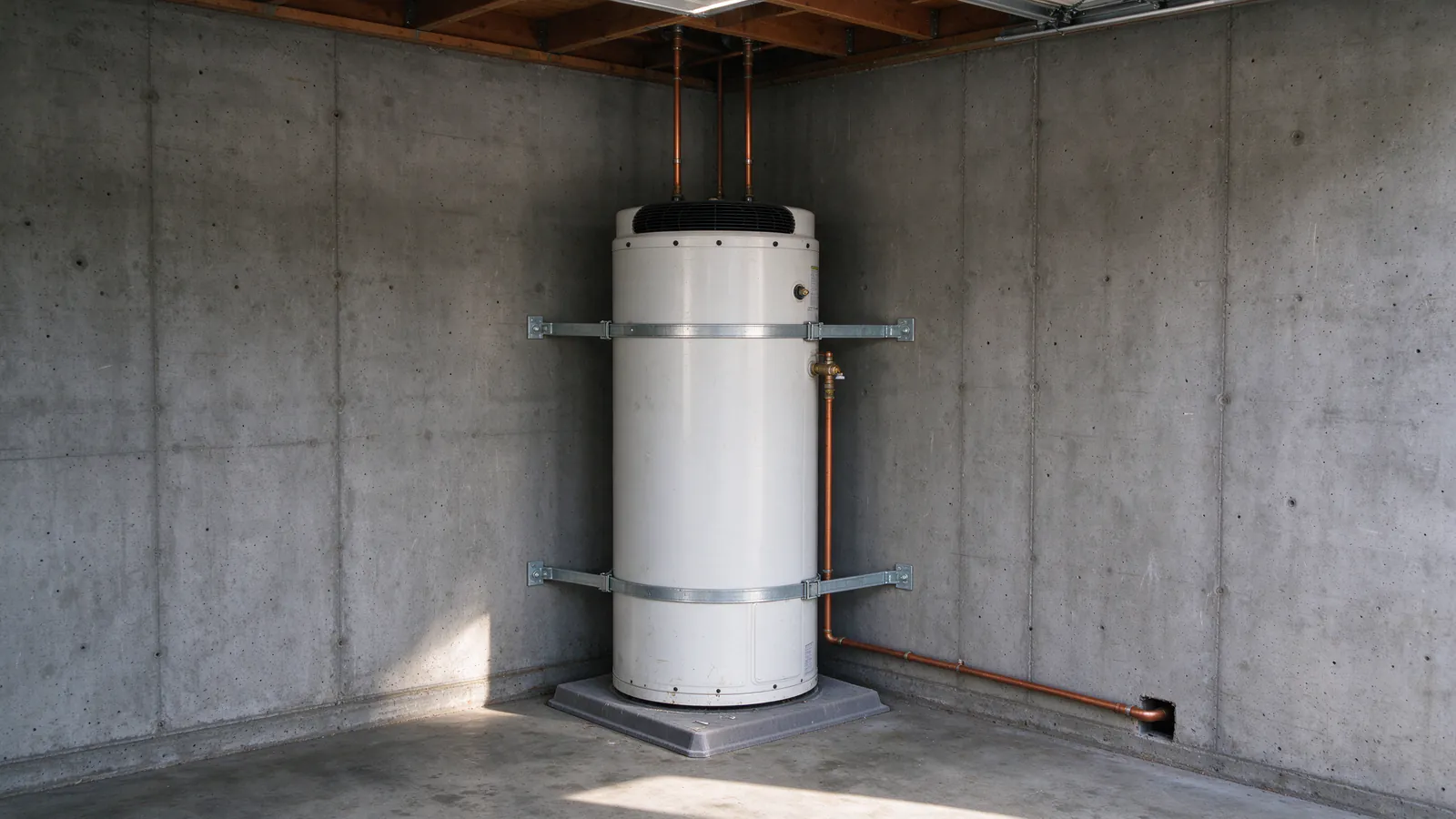
California requires every residential water heater, new, replacement or existing, to be strapped against earthquakes, with straps in the upper and lower thirds of the tank and the lower strap at least 4 inches above the controls. A seller has to certify compliance to the buyer in writing, and a landlord cannot evict a tenant on the ground that strapping a unit’s heater requires it. South San Francisco’s handout sets the count: two straps up to 52 gallons, three for 75 and four for 100.
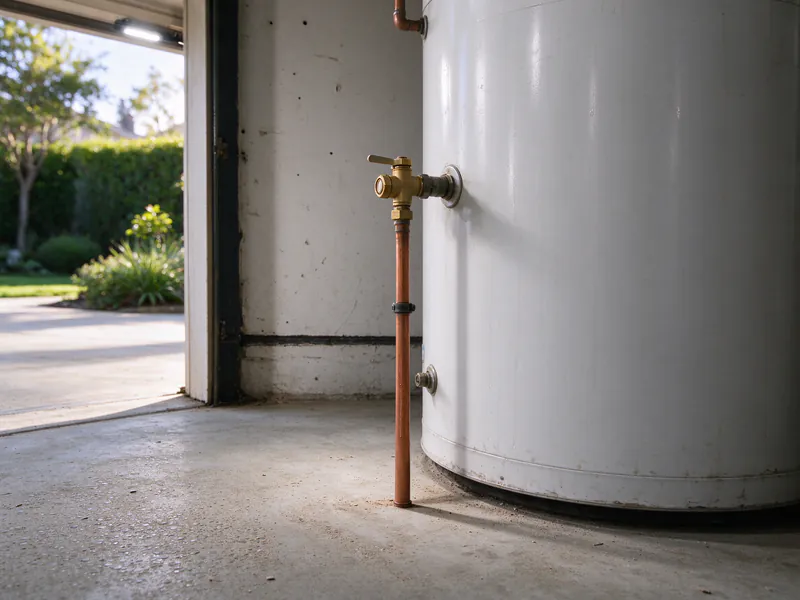
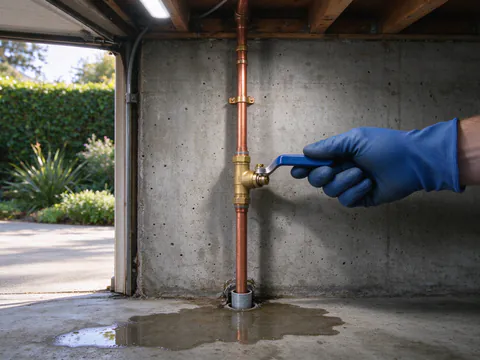
The temperature and pressure relief valve needs a discharge pipe the full size of the valve outlet, with no valve or trap in it, running by gravity to an approved point and ending 6 to 24 inches above grade pointing down, never into the drain pan. Where a check valve, backflow preventer or pressure regulator closes the system, an expansion tank keeps heated water from pushing pressure past 80 psi (the low water pressure guide explains how pressure is measured); a non-storage tankless heater does not need one. San Francisco requires a valve on every heater’s cold supply and, where one heater serves several units, valves so each unit’s hot water can be shut off without cutting it to the others.
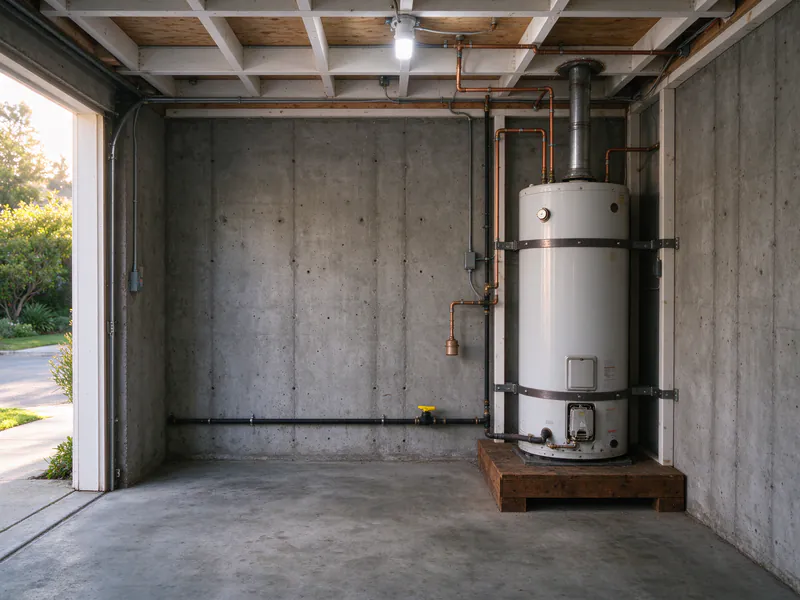
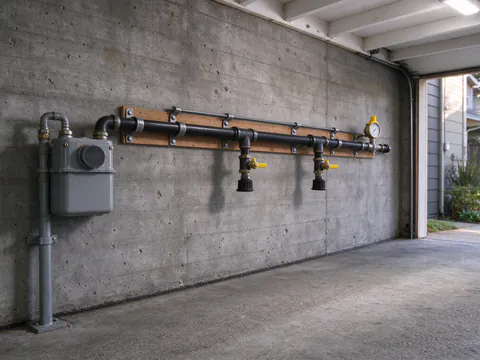
Location adds its own rules. In a garage, a gas heater’s burner and ignition must be at least 18 inches above the floor, which is why a gas heater in a garage, such as the ground-floor garages of many Sunset and Parkside houses, stands on a platform; South San Francisco lets a flammable-vapor-ignition-resistant model sit 3 inches above grade. A heater mounted outside 7 feet or more above grade needs a permanent platform under San Francisco’s code.
Venting in attached buildings
San Francisco’s mechanical code requires a gas vent, and a through-the-wall mechanical draft vent, to end at least 4 feet from a property line other than a public way. In rowhouses built wall to wall, a side-wall termination often cannot meet that, so a power-vent or tankless heater’s vent goes to the roof or the front of the building, and the price follows. South San Francisco’s handout adds that a tankless heater may require the existing gas piping to be evaluated for higher demand and the vent re-evaluated. A gas line that is too small for a tankless burner is replaced under gas line repiping.
Permits in each city
San Francisco exempts replacement water heaters of up to 100 gallons from a building permit when no new flue is installed, but every one needs a plumbing permit. Most single heater swaps in city records are filed as Category 1P, $290, including heat pump installs. A heat pump on a new circuit adds an electrical permit, $305 for a small residential job. A new flue, a new vent route or moving the heater makes it a building-permit job. Daly City charges $101 to issue a plumbing permit plus $28 per water heater and vent, about $129 for a gas swap. South San Francisco charges $164 for a gas water heater permit and $389 for an electric one, the reverse of the incentive direction. The Daly City and South San Francisco pages cover both cities.
Water and the tank
San Francisco’s water is soft, with average hardness of 62 ppm, so heavy mineral scale is not the usual way a tank fails here. South San Francisco is different: Cal Water blends local groundwater with SFPUC water there, and the groundwater averages 384 ppm, hard to very hard. Scale in tanks and in tankless heat exchangers is a real maintenance factor in South San Francisco, and flushing matters more. The guide to San Francisco water and your pipes covers the chemistry.
Rebates, credits and what has ended
In San Francisco, CleanPowerSF’s Electrify Your Home program pays $50 a month in bill credits for 24 months, $1,200 in all, for a heat pump water heater replacing a gas or electric-resistance heater, with 12 more months for CARE or FERA households. It is open to active CleanPowerSF residential customers who enroll in an electrification rate, install an ENERGY STAR integrated unit, provide proof of purchase, photos and proof the gas appliance was removed or capped, and meet the City’s permit requirements. Credits are first come while funds last, and they are forfeited if gas is reinstalled.
Daly City and South San Francisco are in WestLight Energy’s territory instead, where the rebate is $3,500 for a heat pump water heater replacing a gas, propane or oil heater and $500 for one replacing an electric heater, plus a $1,000 bonus for CARE or FERA households. Existing buildings qualify, and the owner applies within 90 days of installation. The federal energy efficiency tax credit ended for equipment placed in service after 2025, and the statewide single-family incentive program has closed. Rental owners in San Francisco should know the Rent Board treats a water heater as a fixture (the capital improvement guide covers passthroughs), amortized over 10 years in buildings of one to five units and 7 years in buildings of six or more.
Replacing the heater during a repipe
A whole-house repipe reconnects the water heater with a cold-supply valve and compliant straps whether or not the heater is replaced. When the heater is near the end of its life, replacing it in the same shutdown saves a second one. The repipe cost guide lists both ranges side by side, and a heater that fails without warning is handled under emergency pipe repair.