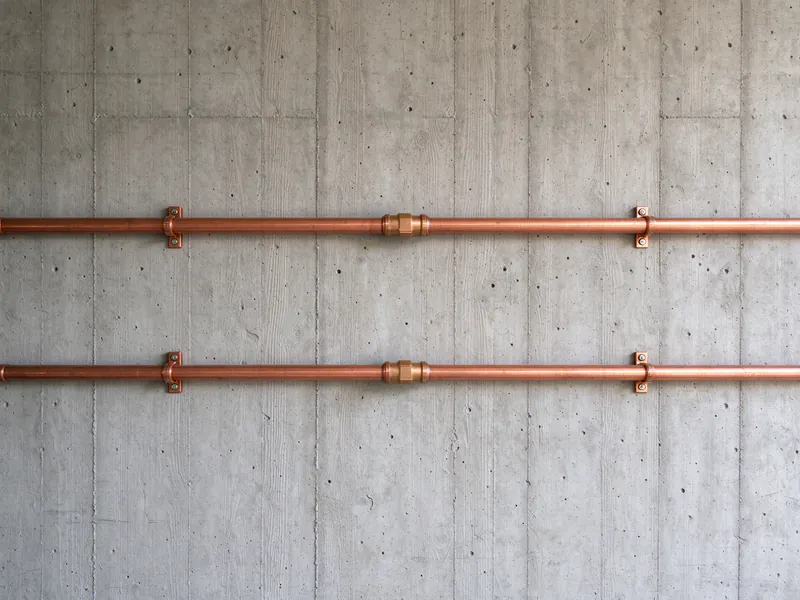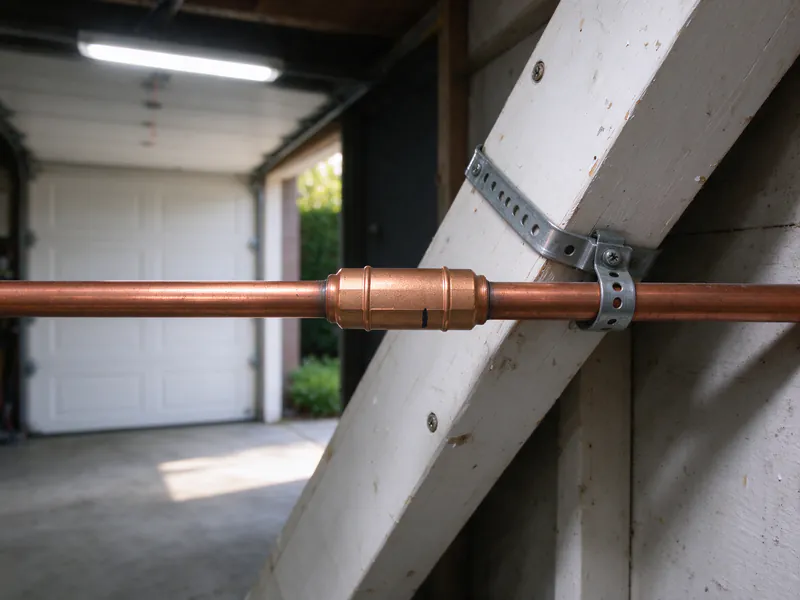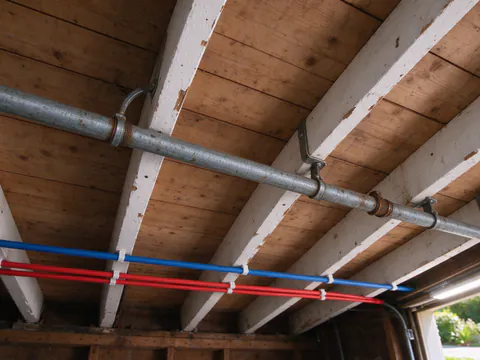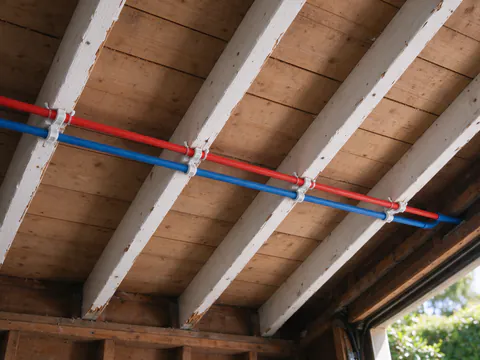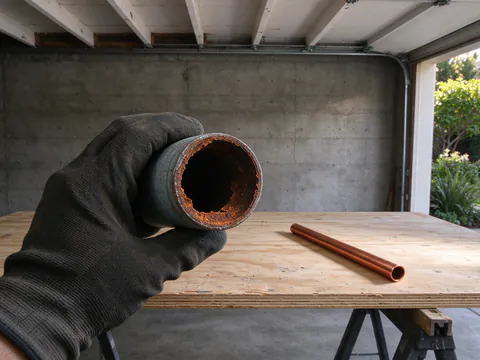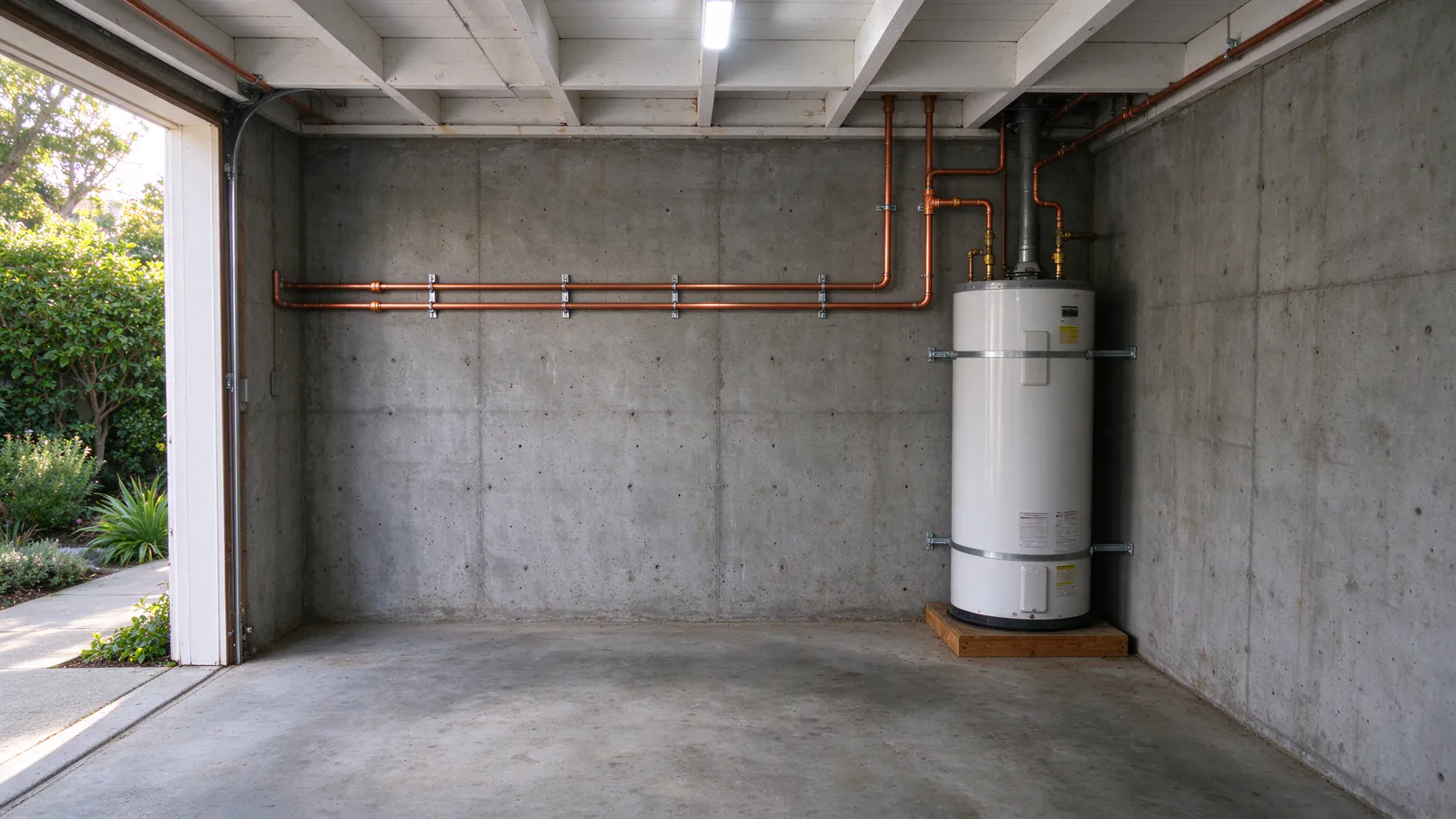
A copper repipe replaces a building’s hot and cold supply lines with rigid copper tube, from the main valve to every fixture. Hilltop Repipe San Francisco offers and manages copper repiping across San Francisco, Daly City and South San Francisco, with the work carried out by licensed and insured contractors under a plumbing permit and city inspection. It can cover the whole building, as on the whole-house repiping page, or a defined section under partial repiping.
Copper is still the material most San Francisco repipes are recorded with. Among 273 DBI permit descriptions from 2021 to 2025 that describe a domestic water repipe, 92 name copper, 76 name galvanized steel and 6 name PEX, and the usual pattern is old galvanized coming out and copper going in. Owners who choose copper tend to want a metal system: some because a building or association specifies it, some because they prefer rigid pipe they can see and support, some because it keeps the electrical grounding path continuous. Homeowners report contractors steering them to copper without a convincing reason and quotes for the same house landing far apart, so it helps to know what the material does and does not change.
What happens on the first visit
The walk-through starts at the meter box and the main valve, with static pressure measured, because San Francisco’s roughly 13 pressure zones make any assumed number unreliable. Then the existing pipe is traced and identified run by run. Many houses already hold some copper from past repairs, and the visit notes whether it is sound or showing green crust and old patch joints.
Copper changes what the route has to allow for. Rigid tube needs a fitting at every change of direction, so the visit looks for straight paths and for places where a joint can be reached with a press tool or a torch and heat shield. It notes every point where new copper will meet steel that stays, such as an old service line or a neighbor’s riser in a shared building, because each needs a dielectric transition. It checks whether the existing metal pipe is part of the grounding path. The written scope then names the tube type, the joining method for each area, the layout, every opening and the permit.
Type L, Type M and what the code allows
Copper tube comes in wall thicknesses identified by type. The California Plumbing Code makes Type L the minimum for water tube in general, and permits the thinner Type M aboveground in or on a building and underground outside of structures. Type L has the heavier wall, costs more and gives more margin against wear at elbows and high-velocity points. Whatever type is used, the code holds every surface that touches drinking water to 0.25% lead as a weighted average, and solder and flux to 0.2%, so modern copper work does not carry the lead solder of older systems.
Under a slab, the code asks for copper installed without joints where possible, and brazed joints with wrought copper fittings where joints are needed. That rule matters most in a ground-floor garage or an addition on grade; the partial repiping page covers rerouting around a slab leak.
Soldered, brazed and press-connected copper
Most copper above grade is joined with solder or press fittings, and the choice affects the job more than it affects the finished pipe. A soldered joint takes an open flame, a dry line and room to work. In an open basement or garage ceiling that is straightforward. Inside a finished wall of a wood-frame building, next to old framing, lath and painted trim, every torch joint needs heat shields and care, and DBI’s lead-safe guidance for pre-1979 buildings warns against open flames on painted surfaces.
Press fittings carry a sealing ring and are crimped onto the tube with a powered tool. They need no flame, they tolerate a damp line better when tying into old pipe, and they go in quickly in tight cavities. They cost more per fitting. Many copper repipes use both: solder on open runs, press fittings in finished walls and at tie-ins. Brazing, at higher temperature, is used where the code calls for it, such as joints under a slab.
How copper behaves in San Francisco water
SFPUC water is soft, with average hardness of 62 ppm, and its pH is adjusted to about 9.3 for corrosion control. Water at that pH is less aggressive toward copper than acidic water, and SFPUC’s tap sampling found the 90th percentile copper level at 72 parts per billion against an action level of 1,300. That is a citywide picture, not a promise about any one building.
Copper can still fail, usually as pinholes or leaks at joints, and no single cause explains every case. Flow velocity in undersized lines, workmanship at joints, sediment, electrical conditions and local water chemistry can each play a part. That is why a copper repipe is sized for the fixture load and why joints are made and supported carefully. The copper pinhole leaks guide covers the causes, and the guide to San Francisco water and your pipes covers the chemistry, including the chloramine SFPUC uses as its disinfectant.
Choosing between copper and PEX?
A walk-through shows where rigid pipe can run, where joints land and what each material means for the openings.
Where copper meets steel
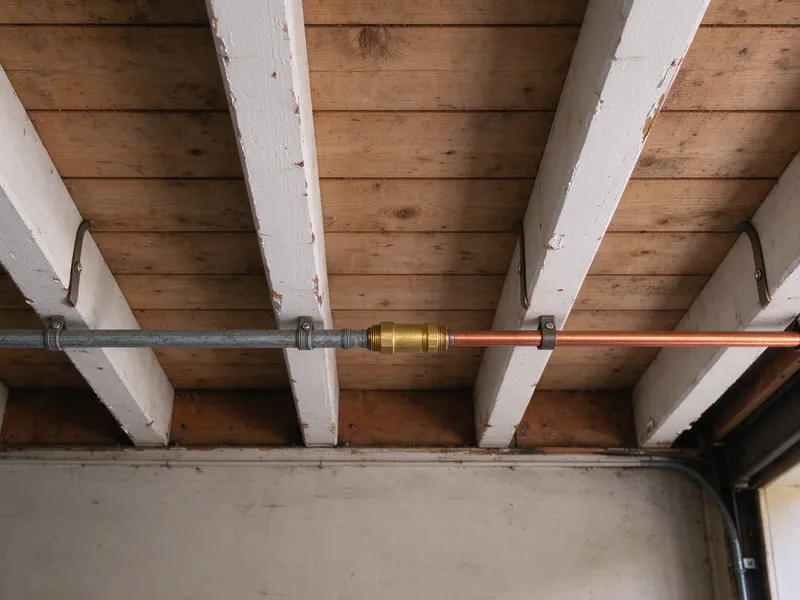
Copper and galvanized steel joined directly form a galvanic couple, and the steel corrodes faster at the joint. San Francisco’s code requires a dielectric or insulating fitting, or a brass nipple at least 6 inches long, wherever copper connects to ferrous pipe. The state code lists the accepted options as a copper-alloy adapter, a copper-alloy nipple of at least 6 inches, a dielectric fitting, or a dielectric union meeting ASSE 1079 or IAPMO PS 66.
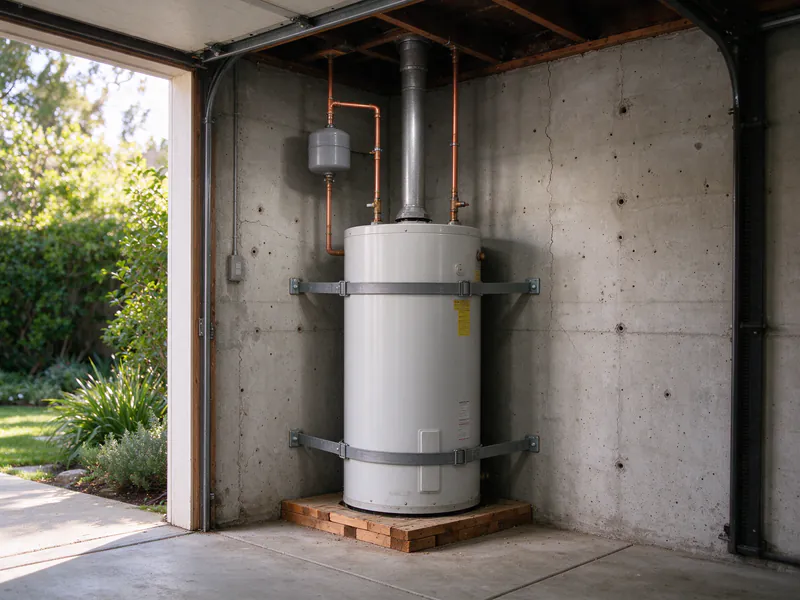
These transitions matter most when not everything is replaced. A repipe that leaves an old galvanized service line, connects to a steel gas-fired water heater nipple or meets a shared riser in a flats building has a transition at each of those points. The galvanized pipe replacement page explains why leaving steel upstream of new copper is often a false economy, and the water service line replacement page covers the owner’s line from the meter box.
Grounding, insulation and the rest of the system
Because copper conducts, a copper repipe keeps the metal water piping that older houses often used as part of their electrical grounding path. Where the buried building supply serves as a grounding electrode, the California Plumbing Code requires any replacement to be of like material, which copper satisfies. Remaining metal water pipe must still be bonded under the electrical code, and the scope notes where an electrician should confirm it.
Hot lines in an open garage or crawlspace lose heat on the way to the fixtures, and insulating them shortens the wait for hot water; California’s energy code requires insulation on newly installed hot water pipe in some work, such as a water heater replacement. Copper’s rigidity also means water hammer travels well through it, so the air chambers San Francisco requires at single-handle faucets, shower valves and solenoid valves are part of the scope, sized at 24 times the fixture supply diameter.
Testing, permit and openings
The finished copper system is tested with water at working pressure or above, or with air at 50 psi or more, held for at least 15 minutes without leakage, and the city inspector sees it before walls close. A licensed contractor files the DBI permit on PermitSF: $549 for a house, or $809 with underground work, with a separate permit for each condo or apartment unit and $259 per half hour for any re-inspection. The San Francisco repiping permit guide covers the steps.
Copper usually needs more openings than PEX, because the tube cannot bend around obstacles and every turn is a fitting. Where walls are original plaster, those openings are cut and patched with more care, which the old-house repiping page covers.
What a copper repipe costs
Copper usually costs more than PEX for the same home; sources put the premium anywhere from about 10% to 60%. For reference, a typical San Francisco-area range for a whole-house PEX repipe is $8,500 to $16,000 for one bath, $12,000 to $22,000 for two baths and $14,500 to $28,000 for three, with multi-story or hard-access homes running higher. The extra comes from labor per joint, more fittings and more openings. The PEX vs copper guide weighs the choice beyond price, and the repipe cost guide shows what sits inside a quote.