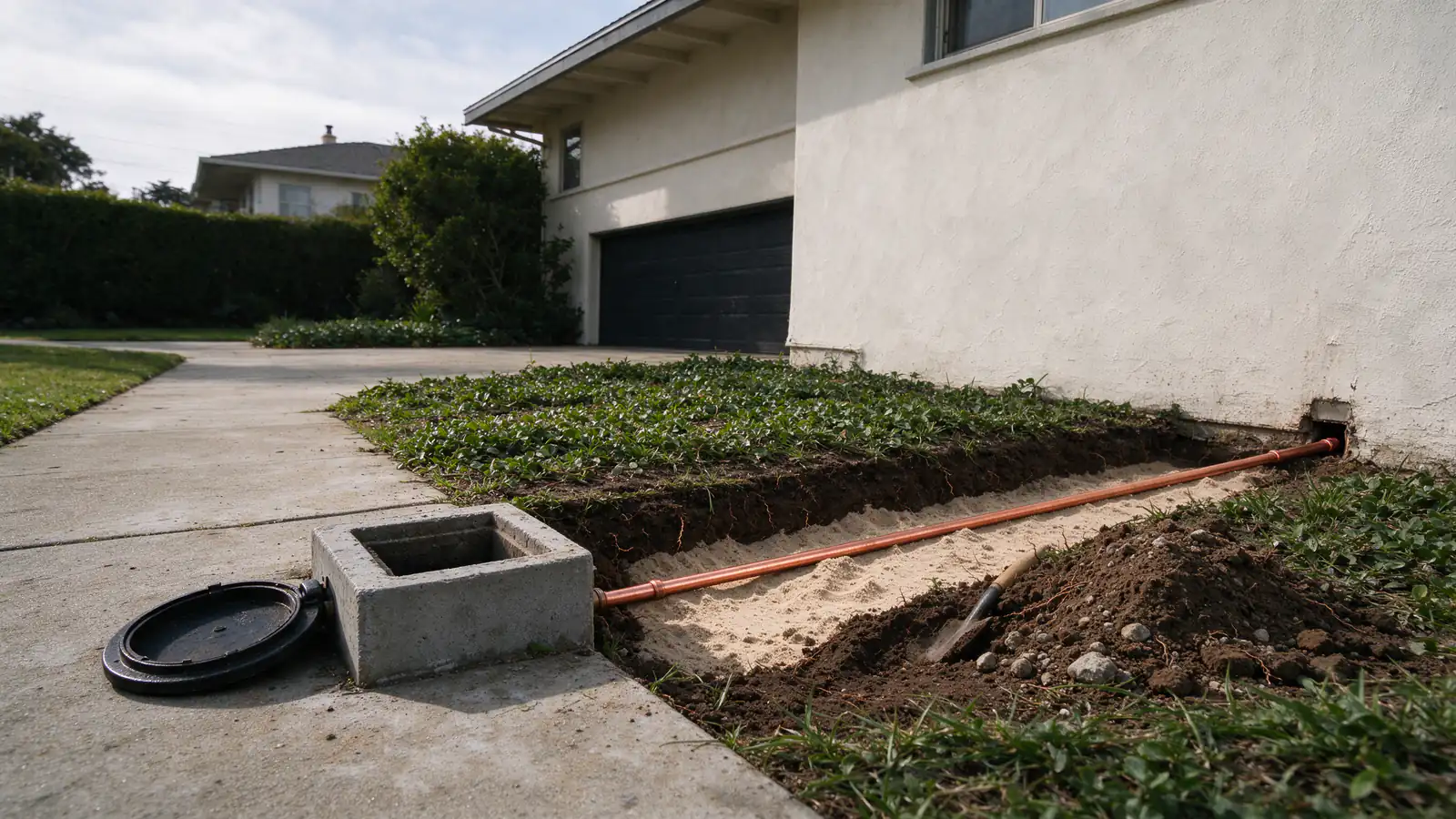
Water service line replacement replaces the owner’s buried water pipe from the meter box at the sidewalk to the building, where it meets the main valve and the house piping. Hilltop Repipe San Francisco offers and manages customer-side water service line replacement across San Francisco, Daly City and South San Francisco, with the work carried out by licensed and insured contractors under a plumbing permit and inspection. It is often done together with a whole-house repipe, so new interior pipe is not fed through an old line.
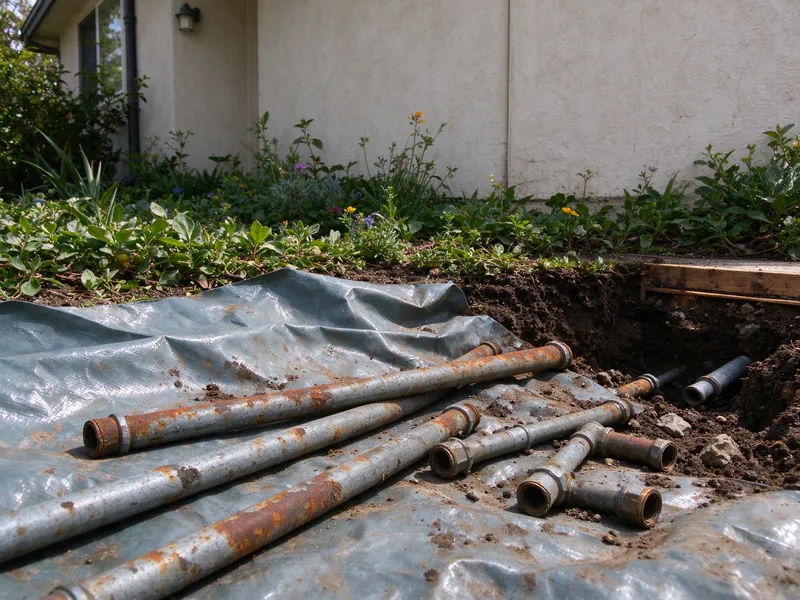
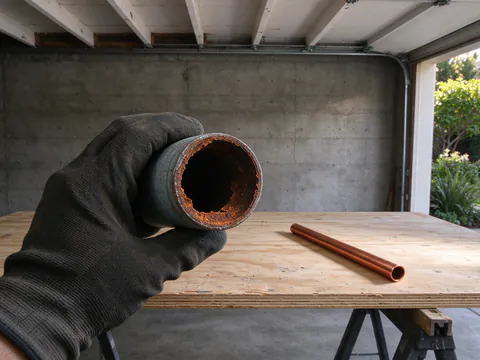
In San Francisco the trigger is usually galvanized steel. SFPUC has been replacing its own galvanized service lines and has written to owners whose side of the line it identified as galvanized, recommending they replace it. The material, the route and the ground it crosses decide the job.
What happens on the first visit
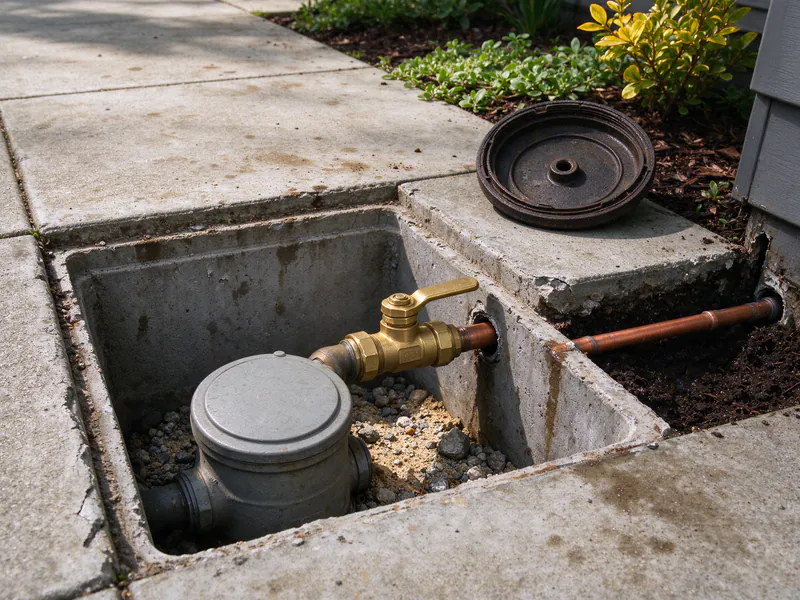
The walk-through starts outside. The meter box is located, along with the path the line takes to the house, and what lies over that path: lawn, a planting strip, concrete steps, a driveway, a garage slab, the public sidewalk. The meter itself belongs to SFPUC, and only SFPUC field staff may open or operate it, so the old line’s material is read where it leaves the meter box if it can be seen, and where it enters the building.
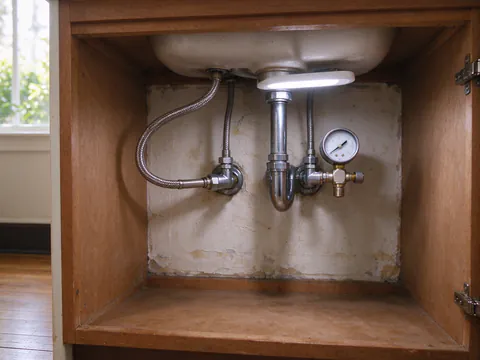
Inside, the main valve is checked and static pressure is measured. Low pressure at the house can come from a narrowed service line, but also from a supply zone, a regulator or a partly closed valve, so a measurement comes before any promise of better flow. The visit notes whether the old metal line is part of the electrical grounding system, which decides the replacement material. The scope that follows names the route, the method, the material, the permits and what gets restored.
What SFPUC owns and what you own
The water main under the street and the pipe from the main to the meter are SFPUC’s. So are the meter and the meter box. The line from the meter box to the building is the property owner’s. SFPUC states it plainly: “As the property owner, you are responsible for replacing the customer-owned portion of the water service line.” Its rules add that the customer has sole control of water beyond the meter and that SFPUC is not responsible for maintaining or repairing pipes and fixtures past it.
South San Francisco and Daly City follow the same split with their own utilities. In South San Francisco, Cal Water takes responsibility only on the utility side of the meter, customers maintain their side, and leaks Cal Water reports to an owner are to be repaired within five business days. Daly City’s water department asks owners not to turn off the meter themselves, because doing so can damage the service and leave the owner liable. Tenants who receive an SFPUC letter about a galvanized line are asked to pass it to the building owner, since the decision and the cost are the owner’s.
Main water line replacement: which line is meant
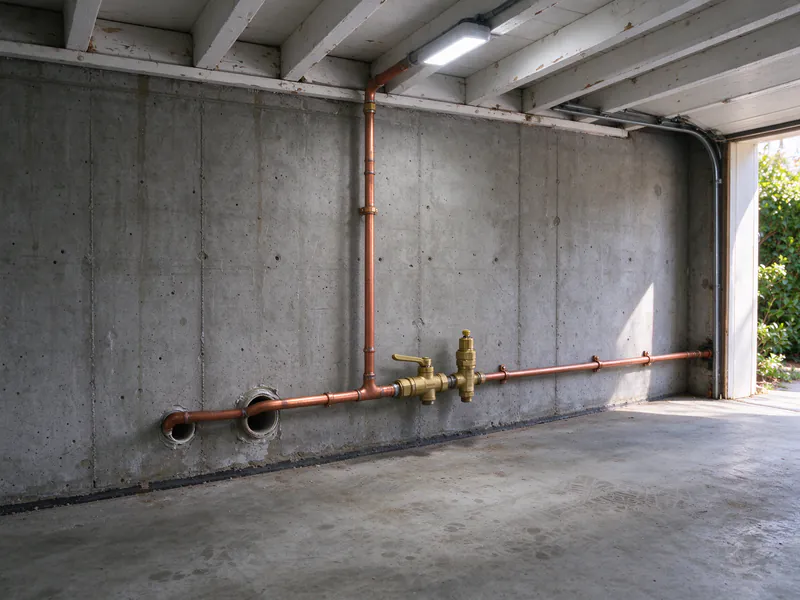
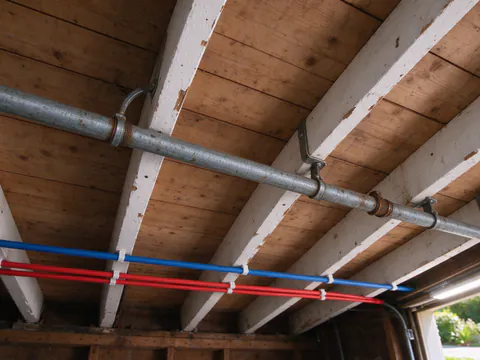
People say “main water line” for three different pipes, and only one of them is the owner’s service line. The city water main under the street is utility infrastructure; a break there is SFPUC’s to repair. The service line from the meter box to the building is what this page covers. The main line inside the building, the trunk that runs from the main valve across a garage ceiling or basement, is part of the interior piping and is replaced in a whole-house repipe or a galvanized pipe replacement. When a quote says “main line,” it should say which.
SFPUC’s galvanized program and the letter
SFPUC removed all known lead service lines in the 1980s, about 7,000 of them. Under state law it has since been replacing its galvanized service lines that may have had short lead connectors, called goosenecks or pigtails, between the main and the old pipe. It found lead connectors in 19% of the galvanized utility lines it removed, and scheduled the program to finish years ahead of the state’s 2030 deadline. That work stops at the meter. Where it has happened, new utility copper now meets the owner’s old galvanized line at the meter box.
SFPUC recommends replacing customer-owned galvanized lines because they may have been connected to old lead pipe. It has written to owners of lines it identified as galvanized, and to owners of lines whose material it is still confirming, offering a lead test and an inspection at no charge. A lookup map on SFPUC’s lead page shows identified locations. SFPUC does not pay for the owner’s side.
Lead and the service line
SFPUC estimates a 1% chance of lead in customer-owned lines, and its plumbers have never observed a customer-owned lead service line. In South San Francisco, Cal Water reports no known lead service lines in its systems. So a galvanized service line is a reason to replace it, not evidence of lead. A tap test answers the question for a particular building: SFPUC charges $25 per tap. The lead pipes in San Francisco guide covers the utility’s program in detail, and the guide to whether galvanized pipes are safe covers what old steel means for drinking water.
Got a letter about your service line?
A walk-through confirms the material at both ends, checks grounding and lays out the route before anyone digs.
Leaking or broken line between the meter and the house
A buried service line usually announces a leak through the bill or the meter rather than a puddle: a meter that keeps turning with every fixture closed, a soft or wet strip of ground, water in a garage at the wall where the line enters. SFPUC’s leak alert program flags continuous use from hourly meter data, and the SFPUC leak alert guide explains what an alert means. Locating the leak comes first, which the water leak detection page covers. A line spraying water into a basement is an emergency, and emergency pipe repair is available 24/7 for burst lines and leaks that cannot wait.
Whether to repair or replace depends on the line. A clean break in an otherwise sound copper line can be repaired. A leak in old galvanized steel usually means the rest of the line is close behind. Either way, a concealed underground leak qualifies for SFPUC’s higher leak allowance, 100% of the excess water rather than 50% for visible leaks, if the owner applies within 15 days of first notice of the high bill and documents the repair with an invoice.
Materials and grounding
California’s plumbing code approves copper, PEX and several other materials for building supply. Copper water tube must be at least Type L, though Type M is permitted underground outside of structures, and PEX placed in soil for drinking water must be sleeved in a material impermeable to solvents and petroleum.
The deciding factor is often electrical. A metal underground water pipe in direct contact with the earth for 10 feet or more counts as a grounding electrode under the electrical code, and many older service lines served that role. Where the metal building supply is used for grounding, the plumbing code requires its replacement to be of like material. So the replacement is often copper, unless a licensed electrician provides another grounding electrode, which can mean a separate electrical permit. Where the new line enters the building, a dielectric fitting is needed if copper meets steel that stays, and the city requires a fullway main valve there. Buildings of four or more stories also need a backflow assembly near the meter.
Trench, sidewalk and permits
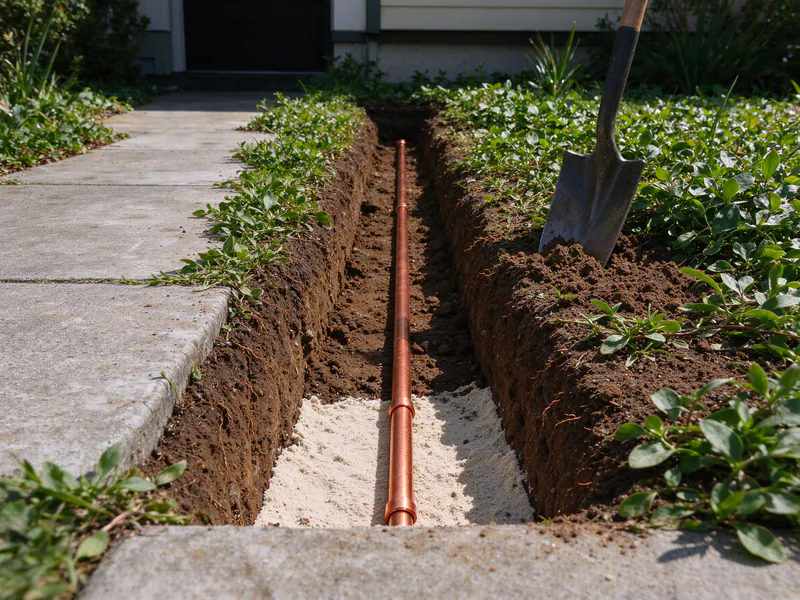
In San Francisco, DBI treats water service as plumbing work under a permit. Replaced on its own, it falls under the single-unit 1P category at $290. Replaced together with an interior repipe that includes underground work, it can sit on one 2PB permit at $809. If the work opens the public sidewalk, a San Francisco Public Works excavation permit is also needed, about $802 for a small project. The line is pressure tested and inspected before the trench is backfilled. The San Francisco repiping permit guide covers the DBI steps.
In Daly City, the Building Division’s online portal lists a Water Pipe Replacement permit type, and the fee schedule charges $101 for issuance plus $56.50 for each water piping item; the Daly City page has more. In South San Francisco, any replacement of plumbing requires a permit, and the fee is set by job valuation and confirmed per project; the South San Francisco page covers the city’s rules.
What it costs
A national budgeting range for replacing a typical customer-side service line is $2,000 to $6,000, with long runs, trenchless work and restoration of concrete, stairs or pavers running higher. San Francisco permit costs come on top. Labor costs more here than the national figure assumes: plumbers in the San Francisco-Oakland-Fremont metro earn a mean $44.41 an hour, about 28% above the $34.70 national mean, according to the Bureau of Labor Statistics. A wage is not a billing rate, since the hourly price on a quote also carries insurance, licensing, vehicles and overhead. Replacing the line in the same visit as an interior repipe shares the shutdown, the permit and the inspection. The repipe cost guide shows both side by side.