Repiping an old house means replacing its supply lines while working around a building that was never designed for the pipe going into it: plaster walls, original trim, stacked rooms with no attic above them and paint that is presumed to contain lead. Hilltop Repipe San Francisco offers and manages repiping of older houses and flats across San Francisco, Daly City and South San Francisco, with the work carried out by licensed and insured contractors under a plumbing permit and city inspection. The core scope is the same as a whole-house repipe; this page covers what an older building changes about it.
San Francisco’s housing is old. The Census Bureau puts the median year built at 1946, with 45.2% of units built in 1939 or earlier. In the Census ZIP areas covering much of the Mission and Noe Valley, more than 60% of units predate 1940, and the share runs between 56% and 63% in the areas covering Pacific Heights, the Marina and the Inner Richmond. Those numbers take in Victorian and Edwardian flats, 1920s to 1940s houses and small apartment buildings alike.
What happens on the first visit
In an old house, the walk-through is partly archaeology. The visit starts at the meter box and the main valve, measures static pressure, and then follows the pipe and records every generation found: original galvanized risers, a copper bathroom from a remodel, a run of PEX where a leak was cut out, sometimes an abandoned line that no longer carries water. Each change of material is a joint to check and a clue to where the old steel still is.
The visit also reads the building. Which walls are original plaster and which are newer drywall. Where the moldings, wainscot, built-in cabinets and tile are that nobody wants touched. Which rooms stack above each other so a line can climb through closets or a chase. Whether the house sits over a garage or basement that can carry the mains. When the building was finished, because that decides whether lead-safe rules apply. The scope then names the route, each opening and who patches it, before anything is cut.
What modernizing a pre-war system involves
Replacing the pipe is only part of bringing an old system up to date. Most pre-war houses were built before the valves San Francisco now requires. The city’s code calls for a fullway valve where the supply enters the building, a valve on the water heater’s cold supply and a control valve ahead of every fixture’s hot and cold supply. In flats, each unit must have its own shutoffs so it can be isolated without cutting off the others, and a unit that is remodeled has to meet that rule.
Faucets and shower valves added in later remodels are often single-handle, quick-closing types, and the city requires air chambers on those outlets to absorb the pressure spike that otherwise shows up as water hammer. The water heater must be strapped in the upper and lower thirds against earthquakes, and a missing strap found during a repipe is a code item. If measured static pressure is above 80 psi, a pressure regulator and expansion tank go in. These items are why a repipe of an old San Francisco house lists more than pipe.
Why age alone does not decide it
An old house does not automatically need a repipe, and a house of a certain decade does not automatically hold a certain pipe. Many pre-war buildings were partly or fully repiped in copper decades ago, and some of that copper is sound. Others still carry original galvanized steel that has narrowed to a fraction of its bore. Two Edwardian flats on the same block can be in opposite condition.
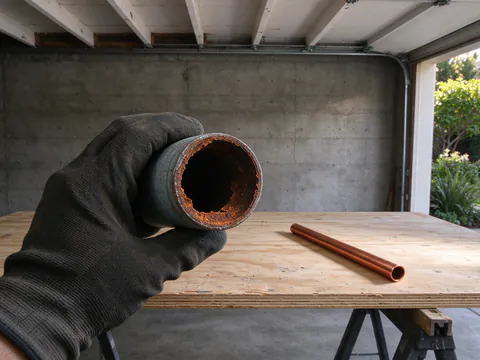
What decides it is evidence from the building itself: the material of each run, its condition where it can be seen, flow at the fixtures compared with pressure at the main, and the leak history. Galvanized throughout, leaking at threaded joints or shedding rust, points to a full replacement, covered on the galvanized pipe replacement page. Mostly sound copper with one bad run points to a partial repipe or a repair. The repipe vs repair guide walks through the decision, and the guide to identifying pipe material shows how to check what you have.
Routing through garage ceilings, chases and closets
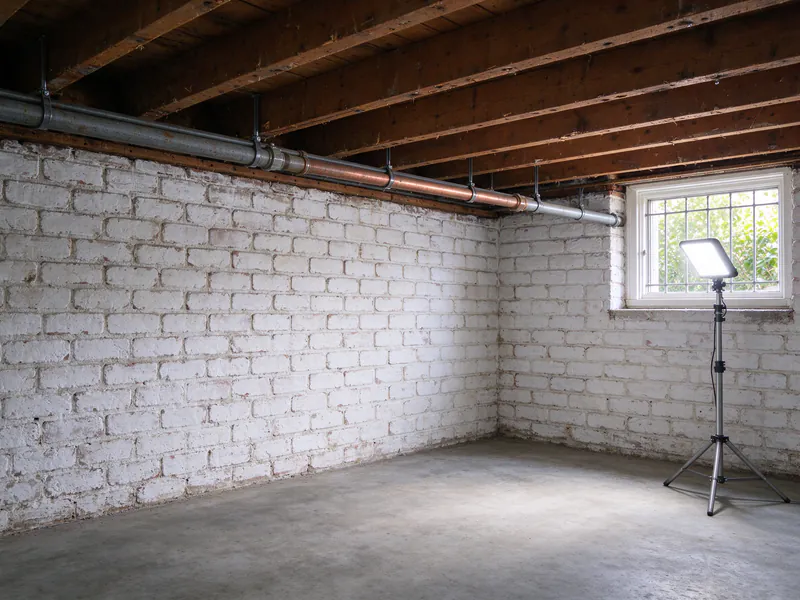
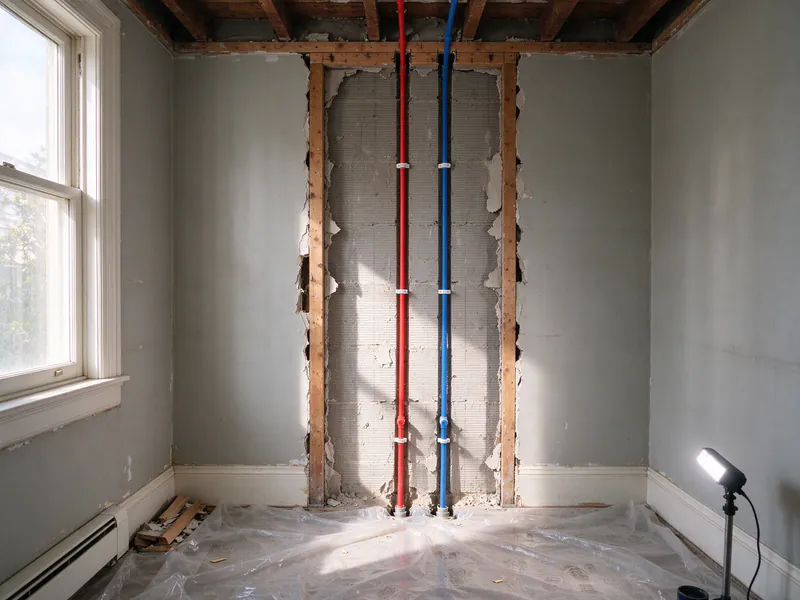
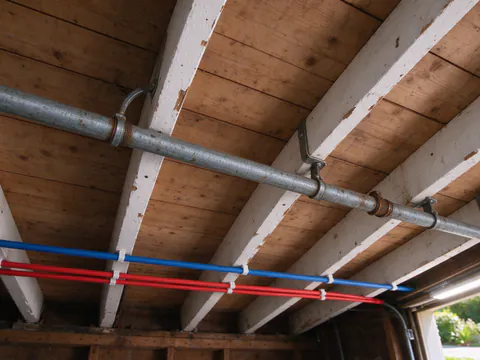
Old San Francisco houses often lack the open attic that makes repiping simpler in many newer houses. Many have flat roofs, and the rooms are stacked. So the route comes from below and from the middle. Where a house sits over a garage or basement, as many Sunset and Parkside houses do, the mains run along the open ceiling and branches come up through the floor; the Sunset and Parkside page covers those houses. In multi-story Victorians and Edwardians, bathrooms and kitchens often stack, so a single chase or a run of closets can carry risers to several floors with openings only at each fixture group. The Mission and Noe Valley page covers the flats belt.
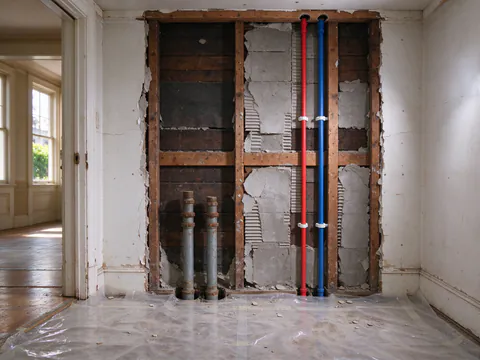
PEX helps here because it can be fished through bays and around old blocking in long lengths. Copper can be routed through the same paths with more fittings and usually more openings. Either way, old pipe sealed inside finished walls is normally drained, capped and left in place rather than torn out, because removing it would mean opening every wall it runs through.
Worried about your original walls?
A walk-through looks for closets, chases and ceilings that can carry pipe before anyone plans an opening in plaster.
Plaster and lath
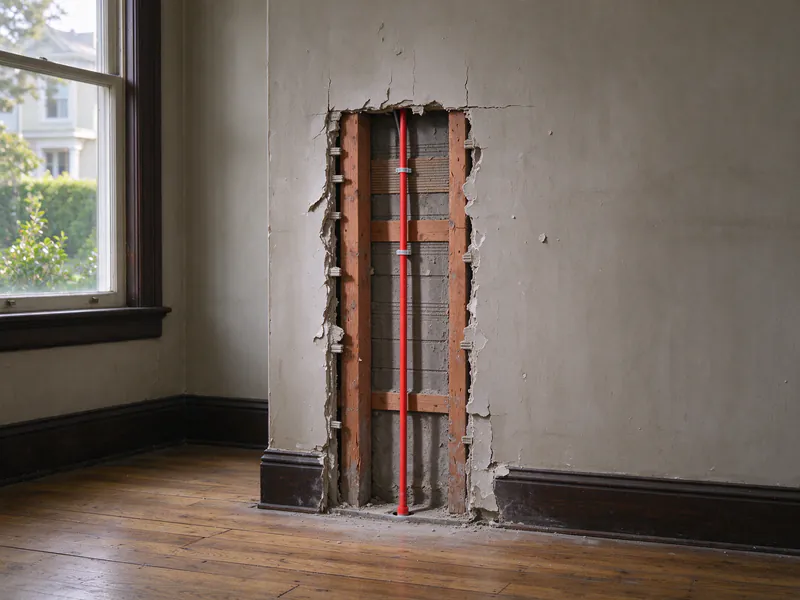
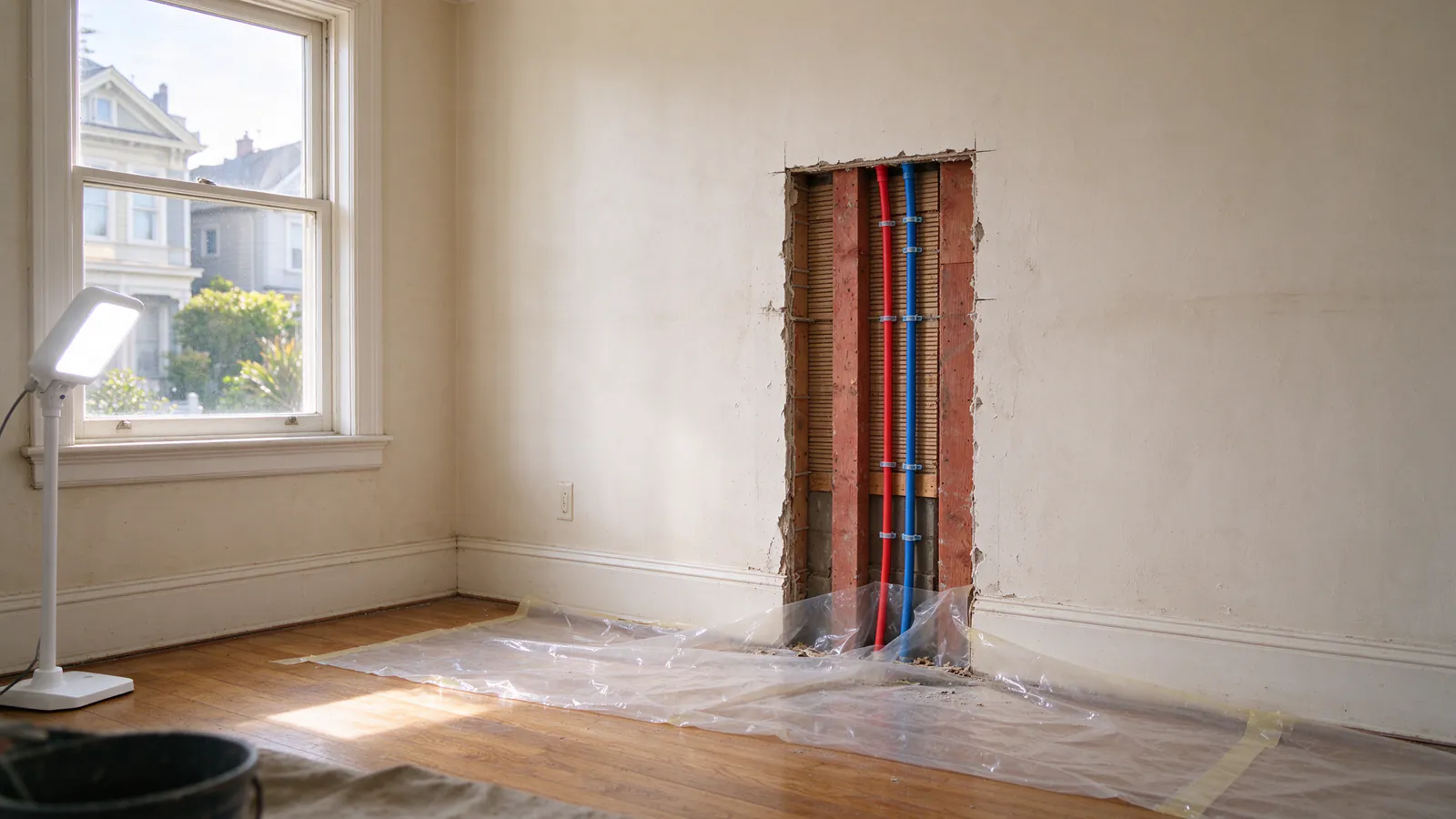
Where walls are original plaster on wood lath, an opening is a different job from cutting drywall. Plaster is hard and brittle, the lath behind it is nailed to the studs, and careless cutting can crack plaster well beyond the opening or loosen it from the lath. Openings are cut with a scored outline and a fine blade, kept as small as the work allows, and placed where a patch is least visible: inside closets, behind fixtures, along a baseboard. Patching is a skilled finish trade, and matching old plaster texture costs more than taping drywall. The scope should list each opening and say who closes it and how far the finish goes. The guide to how invasive repiping is shows what to expect.
Lead paint and asbestos before walls open
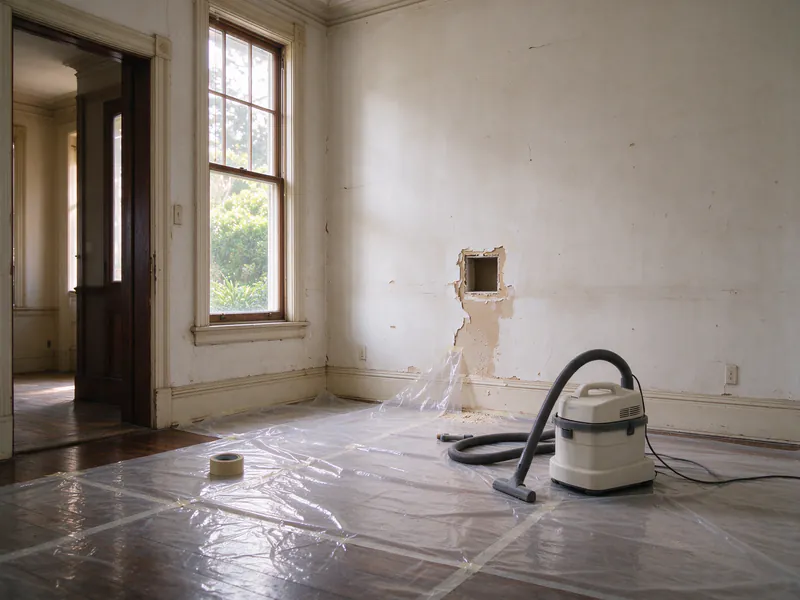
Paint in a San Francisco building built before 1979 is presumed to contain lead. In rentals and shared buildings, Section 327 of the city’s Existing Building Code requires work that disturbs it to be contained with plastic sheeting, posted with a “Lead Work in Progress” sign, preceded by three business days’ notice to residential occupants and cleaned up with wet cleaning and HEPA vacuuming. An owner-occupied unit is exempt from the interior rules but not from keeping dust out of shared areas and off the street. Penalties run up to $500 per violation per day.
Air district rules add a separate check. Before textured or skim-coated walls are disturbed in a building of one to four units, they may need asbestos sampling under Regulation 11 Rule 2, and larger buildings need a survey. Both sets of rules add setup time at each opening, which is part of why old-house repipes take longer to stage.
Grounding and the metal pipe being removed
Older houses often used the metal water pipe as part of the electrical grounding system. When metal pipe is replaced with plastic, that path can be broken. The California Plumbing Code requires like-material replacement where metal building supply pipe serves as a grounding electrode, and the electrical code requires remaining metal water pipe to be bonded. The scope flags it so a licensed electrician can confirm the grounding, sometimes under a separate electrical permit.
Old rental buildings
Many of San Francisco’s oldest buildings are rentals. For a building of one to five units, the Rent Board’s schedule lists new plumbing piping among improvements amortized over 20 years, with 100% of certified cost eligible to pass through, capped at 5% of base rent or $30 per 12 months, whichever is greater. Certification is the Rent Board’s decision, made after the work is finished. Work that would make a unit uninhabitable falls under separate temporary relocation rules, so a repipe in an occupied building is normally planned in phases that keep each unit habitable, with water restored at the end of each day. The capital improvement guide covers the rules.
What it costs
Older houses use the same typical San Francisco-area range as any whole-house PEX repipe: $8,500 to $16,000 for one bath, $12,000 to $22,000 for two baths and $14,500 to $28,000 for three, with multi-story or hard-access homes running higher and copper usually more. Plaster, lead-safe setup, extra stories and the valves the city requires push an old house toward the upper part of its range. The DBI permit for a house is $549, or $809 with underground work. The repipe cost guide breaks down what sits inside a quote.