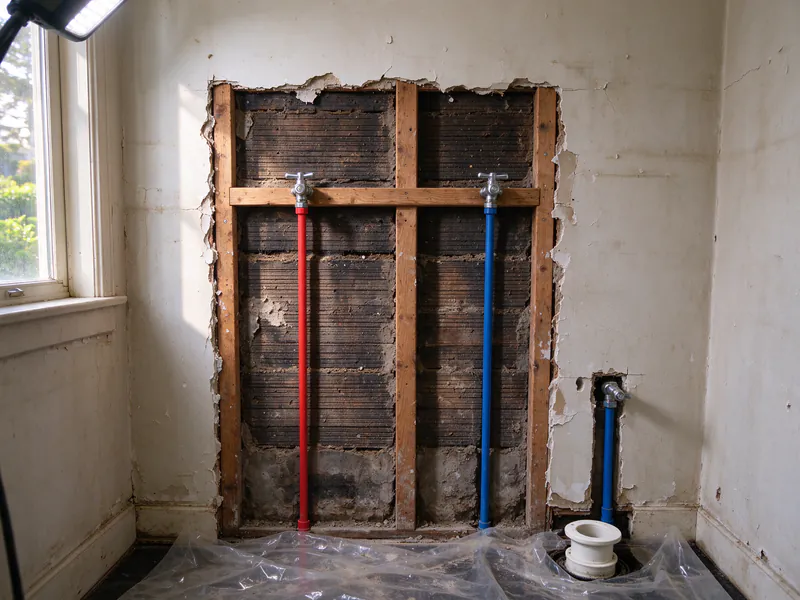
A partial repipe replaces one defined part of a building’s supply system and leaves the rest in service: the hot side, one floor, one riser, one bathroom group or one flat in a building. Hilltop Repipe San Francisco offers and manages partial repiping across San Francisco, Daly City and South San Francisco, with the work carried out by licensed and insured contractors under a plumbing permit and city inspection. When the failure turns out to be system-wide, the same visit can scope a whole-house repipe instead.
The defining feature of a partial repipe is what it leaves behind. A good scope says exactly where the new pipe starts and stops, what material sits on the other side of each joint, and what condition that old pipe is in. “Part of the house was repiped” means little to a later buyer, inspector or plumber; a written boundary means a great deal.
What happens on the first visit
The visit starts like any repipe, at the meter box and the main valve, with static pressure measured. Then the trouble is located. A run of pinholes on one copper line, a bathroom with weak flow on one floor and a leak under a garage slab are three different problems, and each suggests a different boundary. The pipe on both sides of the trouble is identified, because a partial repipe only works if the pipe that stays is sound.
The visit looks especially hard at what is upstream. If the new section will be fed through old galvanized steel, the rust and the low flow will keep coming. If the old pipe outside the boundary is copper in good shape, a partial job can be a lasting fix. The result is a written scope naming the boundary, the material, the transitions, each opening and who patches it.
Where the boundary goes
Hot side only
The hot lines in an old system often fail before the cold, because heat speeds corrosion. Replacing the hot side from the water heater to each fixture is a common partial repipe. It usually follows the same route as the cold lines, so the openings are planned with the possibility that the cold side follows later. The scope records that the cold side is old pipe and remains in service.
Cold side and branch-only replacement
Sometimes the cold side, or one branch to one fixture group, is the problem: a kitchen line that was patched three times, a branch to a laundry added in a different era. A branch replacement runs from the trunk to the fixtures it serves and leaves the trunk in place. It fits when the trunk is sound copper. It is a poor fit when the trunk is the narrowed galvanized line starving every branch.
One floor or one bathroom group
In a two- or three-story house, a top-floor bathroom group can be replaced from its riser upward, or one floor can be replaced from a valve at the riser. This is often the scope when that floor is being remodeled, which the repiping during renovation page covers.
One flat in a shared building
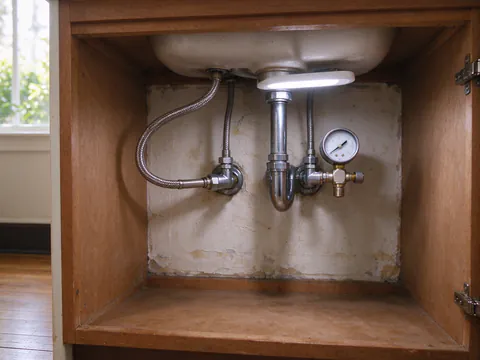
In San Francisco flats and apartment buildings, a partial repipe is often one unit. The city’s code requires shutoffs in each dwelling unit so its hot and cold supply can be turned off without interrupting the others, and any unit that is remodeled has to be brought up to the city’s valve rules. DBI requires a separate permit for each condo and apartment unit. Shared risers stay the building’s responsibility; the apartment building repiping and condo repiping pages cover how unit work and riser work divide.
The joints between new and old pipe
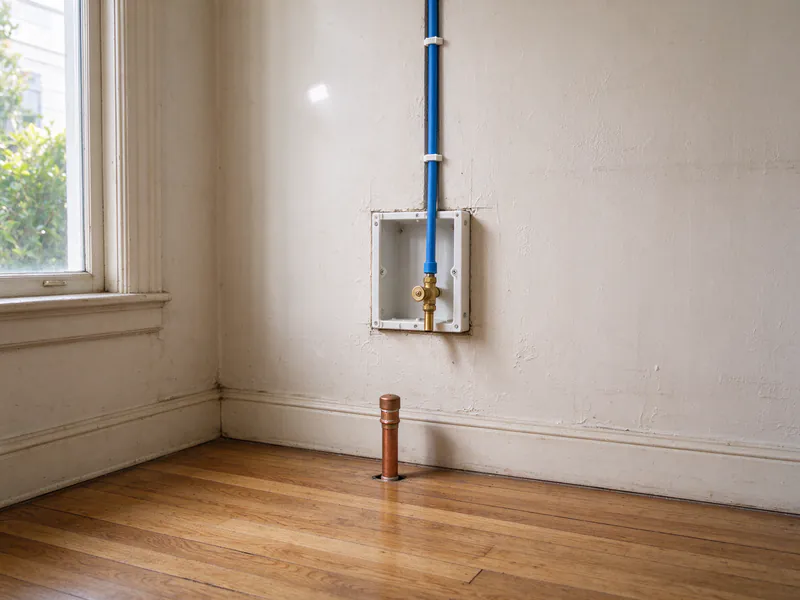
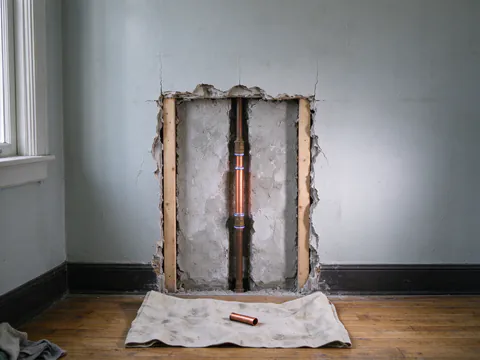
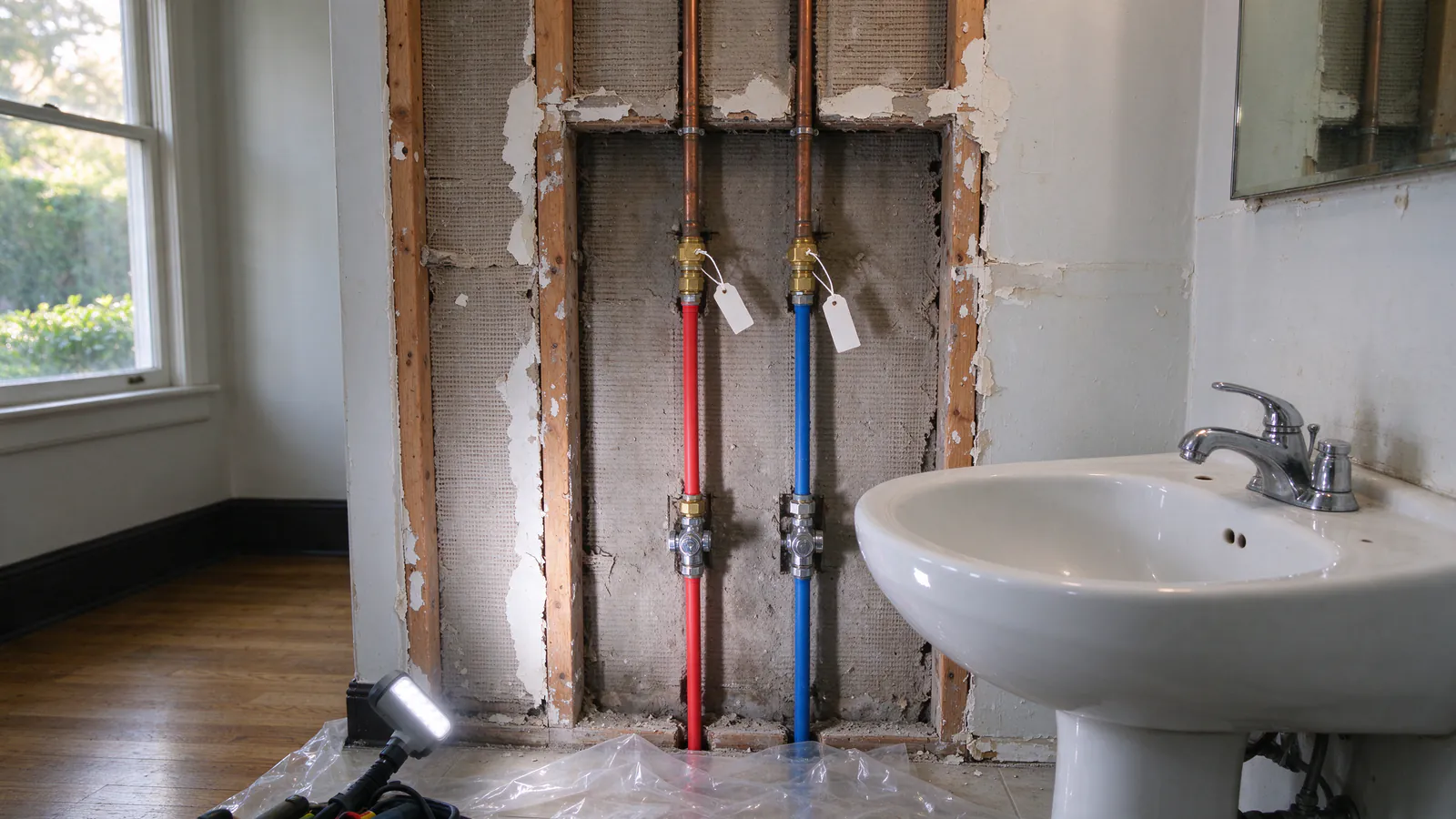
Every boundary has joints, and they are where a partial repipe is won or lost. Where new copper meets remaining steel, San Francisco’s code requires a dielectric or insulating fitting, or a brass nipple at least 6 inches long, to stop galvanic corrosion at the joint. Where PEX meets old pipe, the transition is a listed fitting from the PEX system in use. A valve at the boundary, where there is room for one, makes the next stage of work simpler.
The new section is pressure tested before it is concealed, at working pressure with water or at 50 psi with air for at least 15 minutes. The old pipe outside the boundary is not part of that test, which is another reason the scope should describe its condition rather than imply it is new.
Know where your trouble starts?
A walk-through traces the pipe on both sides of the problem before anyone draws a boundary.
Slab and under-floor leaks: reroute or repair
Where a supply line runs in or under a concrete floor, such as a ground-floor garage slab, an addition on grade or a house built on a slab, a leak under the concrete shows as a warm spot on the floor, a meter that turns with every tap closed, or water at the base of a wall. Whether a particular house has pipe under concrete is found on the walk-through; it varies with how and when the house was built.
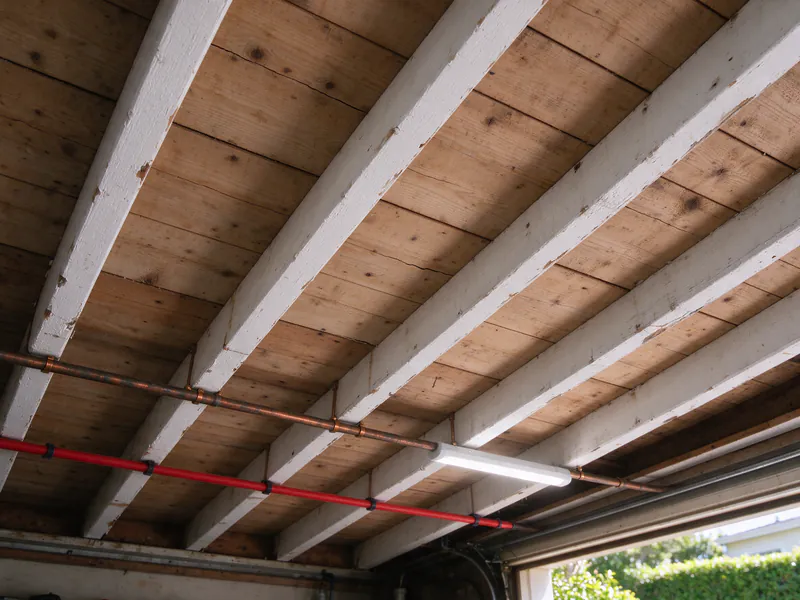
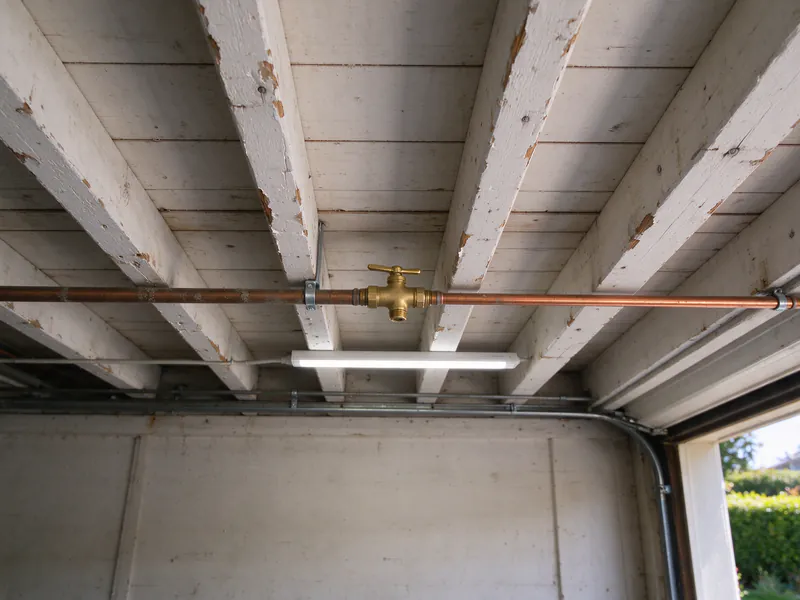
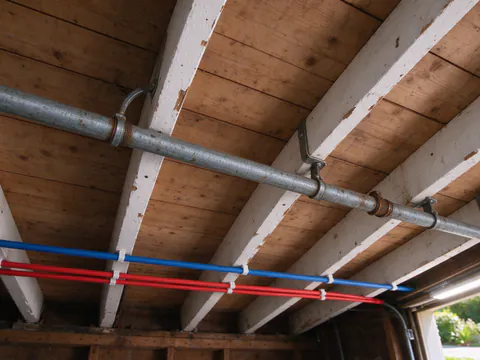
There are two ways to deal with it. A reroute abandons the leaking line where it lies and runs a new one overhead, through a garage ceiling, a wall or a soffit, so nobody breaks concrete. A repair opens the slab at the leak and replaces the damaged section. Rerouting is usually the first choice because it avoids jackhammering and replaces a whole run rather than a few feet. Where new pipe must go under a slab, the California code asks for copper installed without joints where possible, with brazed joints where needed, and PEX placed in soil must be sleeved. Finding the leak precisely comes first, which the water leak detection page covers. An active leak flooding a floor is an emergency, and emergency pipe repair is available 24/7 for burst pipes and leaks that cannot wait.
San Francisco owners have a billing reason to document the repair. SFPUC’s leak allowance can credit 100% of the excess water from a concealed leak, behind a wall or underground, compared with 50% for a visible one such as a running toilet. The application is due within 15 days of first notice of the high bill, is granted only after the repair, and needs proof such as a plumber’s invoice. The SFPUC leak alert guide explains the alerts that often flag these leaks first.
When a partial repipe stops making sense
A partial repipe makes sense when one part of the system is clearly worse than the rest. It stops making sense when the same pipe is failing in several places, when galvanized steel stays upstream of the new section, or when the walls being opened are the same walls a later whole-house repipe would open. Each stage needs its own visit, permit, transitions and patching, and homeowners report going room by room to spread out the cost, which pays those fixed costs again at every stage. The repipe vs repair guide covers the decision, and the copper pinhole leaks guide covers whether a run of pinholes is local or system-wide. For a single leak with sound pipe around it, pipe repair may be all that is needed.
Permit and cost
DBI requires a permit before pipe is cut into or replaced. San Francisco’s code exempts only leak repairs that do not cut or remove piping and swaps of faucets, angle stops and hose bibbs. The category DBI assigns to a partial repipe depends on the building and the scope: the single-unit category is $290, and the house categories are $549, or $809 with underground work such as a slab reroute below grade. Re-inspections cost $259 per half hour.
There is no published local price range for a partial repipe that holds up, so it is priced from its drivers: the length and number of runs, the fixtures fed, access, the walls opened, the transitions, the permit and the patching. The repipe cost guide shows how those drivers move a price, and the guide to how invasive repiping is shows what the openings look like.