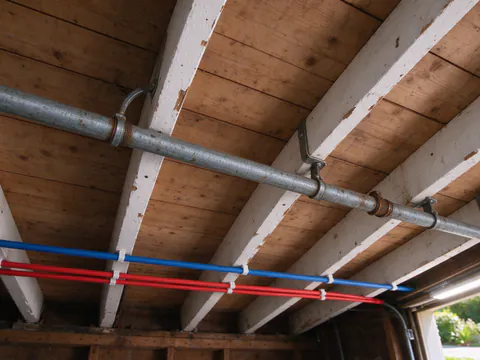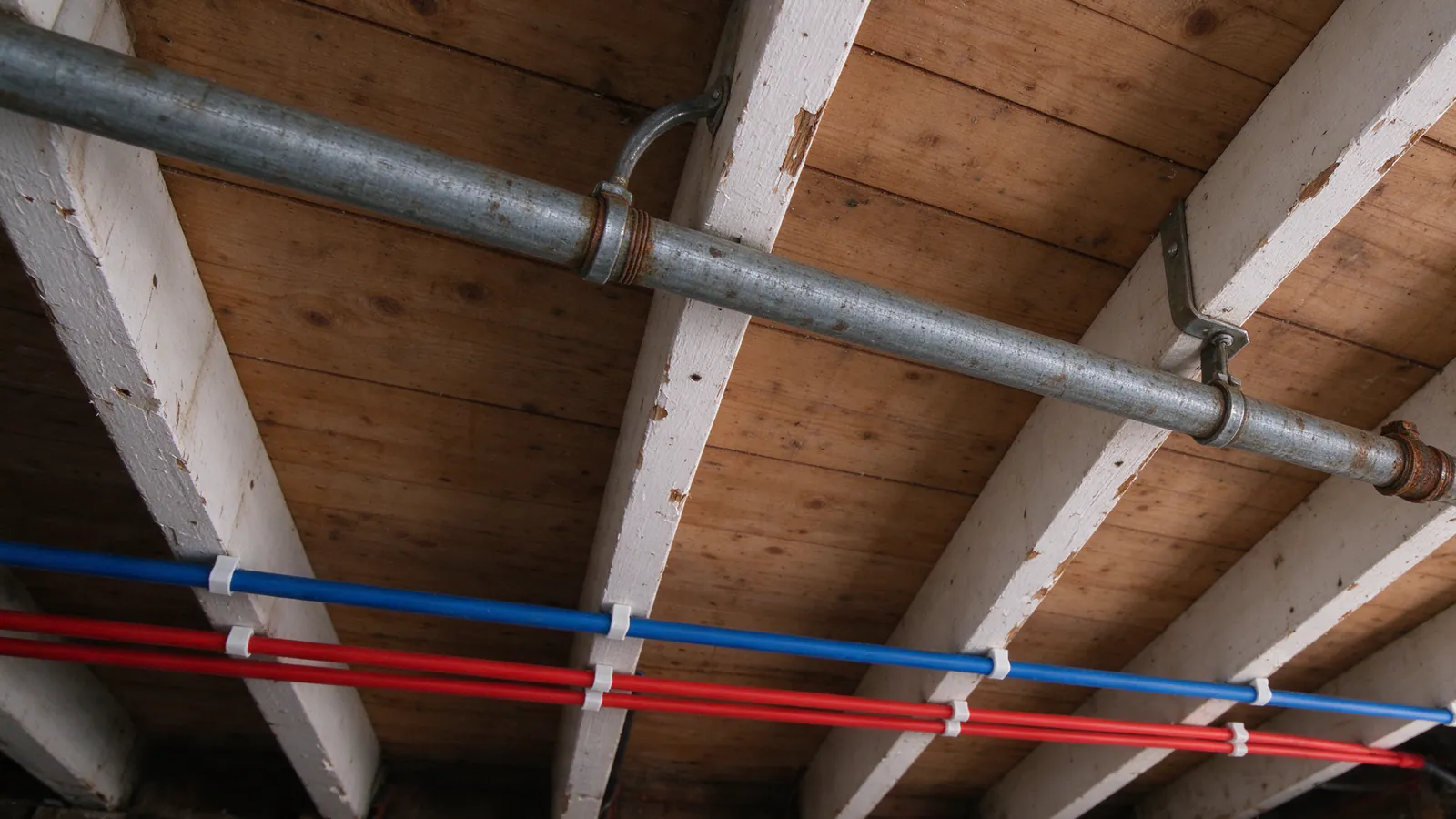
Repair when the failure is a single defect in pipe that is otherwise sound: one bad joint, one damaged section, one pinhole. Repipe when the material itself is failing across the system: galvanized rusted throughout, pinholes on several copper runs, or flow lost at many fixtures. A partial repipe sits between the two, and the choice should follow evidence, not a single leak.
Hilltop Repipe San Francisco handles both sides of that decision, from pipe repair to whole-house repiping, across San Francisco, Daly City and South San Francisco, with the work carried out by licensed and insured contractors. This guide sets out what separates a repair from a repipe and how to weigh the cost of each.
First, find the leak
The decision starts with knowing where the water is coming from and what the pipe is. A stain on a ceiling can be a supply line, a drain or a shower pan, and only the first is a repiping question. SFPUC’s leak alert flags continuous use from its hourly meter data, and hourly use that never drops to zero suggests a leak is still running. Finding a concealed leak without opening walls blindly is the job of water leak detection, and the SFPUC leak alert guide explains the utility’s numbers.
Once the leak is found, three things decide what comes next: the material, the cause of the failure and the condition of the pipe around it.
One leaking joint vs a failing system
A leak at a joint is the most common failure, and where it happens matters.
In galvanized steel, the threads are the weak point. Cutting a thread removes part of the wall, so corrosion breaks through there first. A leak at one galvanized thread is a strong hint that the others, cut the same way and corroding at the same rate, are not far behind. In a house where galvanized runs from the main to every fixture, one thread leak is often the start of a series.
In copper, a joint that weeps usually comes from how it was made: too little solder, too much heat, flux left behind or a fitting that was never fully seated. That is a defect at one joint. It is repaired, and the copper around it may be sound for a long time. A pinhole in the body of the pipe, away from any joint, is a different signal, covered in the copper pinhole leaks guide.
Workmanship failures vs material failures
That distinction runs through the whole decision.
Workmanship failures are local defects. A burr left inside a cut copper end, a joint underfilled with solder, a pipe hung without support so it rubs, or copper joined straight to steel without the dielectric fitting San Francisco now requires. Each one can cause a leak, and each one is fixed by correcting that spot. Replacing the whole system to fix a workmanship defect is spending money on pipe that wasn’t the problem.
Material failures are spread across the system because the cause is everywhere the material is. Galvanized pipe corroding from the inside, copper pitting across several runs, or polybutylene aging as a whole. Repairing one spot buys time until the next. Here, a repipe is the fix and repairs are maintenance on the way to it.
Homeowners report being told to repipe when their pressure and water seemed fine, and wondering whether neighbors who replaced their pipes were oversold. Asking which kind of failure a recommendation rests on is a fair test of any proposal, for a repair or a repipe.
When repairs keep coming back
Repairs make sense while they stay rare. A useful way to judge is to list every leak: where it was, when, and what the pipe was. Three patterns tip the balance toward replacement:
- The same material, different places. Leaks spread around the house on the same pipe point to a material failure.
- Shortening intervals. Leaks arriving faster than before mean the material is accelerating, not stabilizing.
- Other symptoms alongside. Falling flow, rusty water and leaks together describe galvanized at the end of its life. The low water pressure guide and the rusty water guide cover those signs.
Each repair also carries a cost that doesn’t show on the invoice. In San Francisco, cutting out and replacing a section of pipe needs a DBI permit and an inspection before the wall closes; a repair without cutting pipe is exempt. Every repair inside a wall means an opening and a patch. And every leak that runs unseen costs water. A leak at SFPUC’s alert threshold of 7.5 gallons an hour, left for a 30-day month, adds roughly $233 to a single-family bill at current rates, before any damage to walls, floors or the unit below.
The middle option: a partial repipe
A partial repipe replaces one floor, one riser, one bathroom group, the hot side or one unit, and leaves the rest. It fits when the failure is confined: pinholes concentrated on the hot lines, one galvanized riser in a mostly copper house, or one flat in a building where each unit has its own shutoffs.
Its weakness is the boundary. Old galvanized left upstream keeps shedding rust into new pipe, and every place new copper meets old steel needs a dielectric fitting. A partial scope should name exactly which pipe is new and which old pipe stays, so nobody believes the house is fully repiped when it is not.
Epoxy lining is another alternative sometimes offered; that guide compares it with replacement.
Repair or repipe?
A walk-through traces the pipe from the meter, reads the leak history and measures flow, then sets out the options in writing.
How the costs compare
| Repair | Partial repipe | Whole-house repipe | |
|---|---|---|---|
| Fits when | One defect in sound pipe | Failure confined to one run, floor, side or unit | Material failing throughout |
| Price | Set by access, opening and patching; no published local range | Priced from the same drivers as a repipe; no published local range | Typically $8,500 to $16,000 (1 bath), $12,000 to $22,000 (2 baths), $14,500 to $28,000 (3 baths) in PEX |
| Permit in San Francisco | None if no pipe is cut; otherwise a DBI permit | DBI permit | DBI permit: $549 for a house, or $809 with underground work |
| What stays | Everything else | The old pipe named in the scope | Only abandoned pipe sealed in walls |
| Risk left behind | Next failure on the same material | Rust and transitions at the boundary | Lowest; new pipe throughout |
Copper usually costs more than PEX for a repipe, by a margin sources put anywhere from about 10% to 60%. The repipe cost guide breaks down the price.
Moments when a repipe makes more sense
Some moments lower the cost of replacing pipe because walls are already open or decisions are already being made:
- A kitchen or bath remodel that opens the walls the pipe runs in. Repiping during renovation covers it.
- A seismic retrofit opening ground-floor walls, where coordinating saves opening them twice. No rule links the two.
- A letter from SFPUC about a galvanized line on the owner’s side.
- A sale, where an inspection names galvanized and both sides need a number.
Making the call
The quickest planning answer comes from the repiping assessment, which asks a few questions about the building and its symptoms. A written answer for your own building comes from a walk-through that traces the pipe, reads the leak history and measures pressure and flow before anyone recommends a scope. To book one, call or send the form.