A PEX repipe replaces a building’s hot and cold supply lines with crosslinked polyethylene tubing, run from the main valve to every fixture. Hilltop Repipe San Francisco offers and manages PEX repiping across San Francisco, Daly City and South San Francisco, with the work carried out by licensed and insured contractors under a plumbing permit and city inspection. The scope can be the whole building, as described on the whole-house repiping page, or a defined part of it under partial repiping.
PEX is the newer material in San Francisco’s repipe record. Among 273 DBI permit descriptions from 2021 to 2025 that describe a domestic water repipe, 92 name copper and only 6 name PEX. Among the first PermitSF plumbing permits filed with repipe wording, 15 of 40 were per-unit permits at a single apartment building, mostly reading “repipe water with PEX.” The material has moved from rare to routine in larger buildings, and the questions owners ask about it are practical ones: whether the code allows it, how it is joined, where it can and cannot run, and what changes when metal pipe comes out.
What happens on the first visit
The visit starts at the meter box and the main valve, where static pressure is measured. San Francisco is served through about 13 pressure zones, so the pressure at one address is no guide to the next, and the fittings and any regulator are chosen on a measured number. From there the existing pipe is traced to each fixture group, and the route for the new tubing is worked out at the same time.
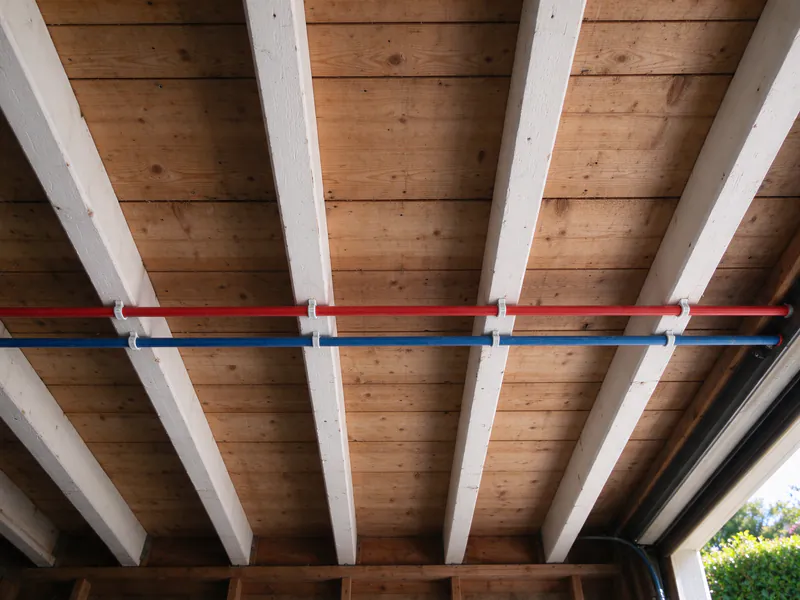
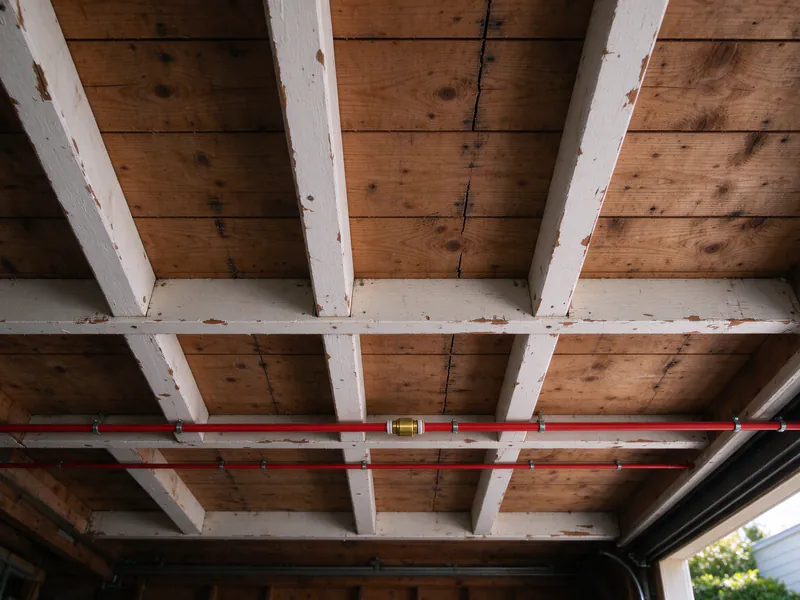
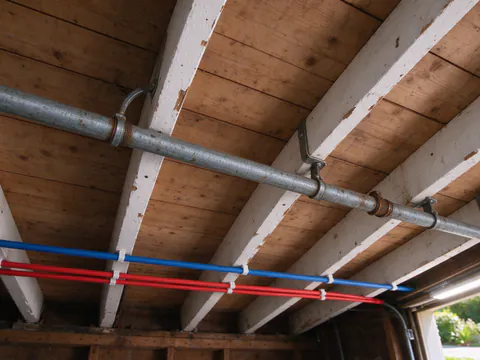
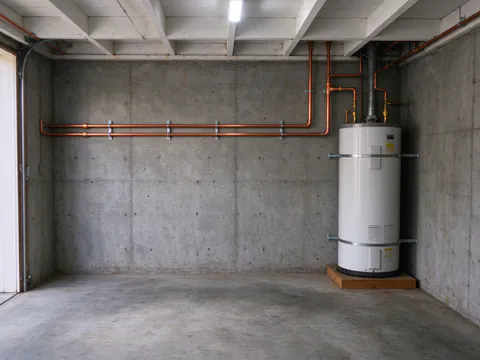
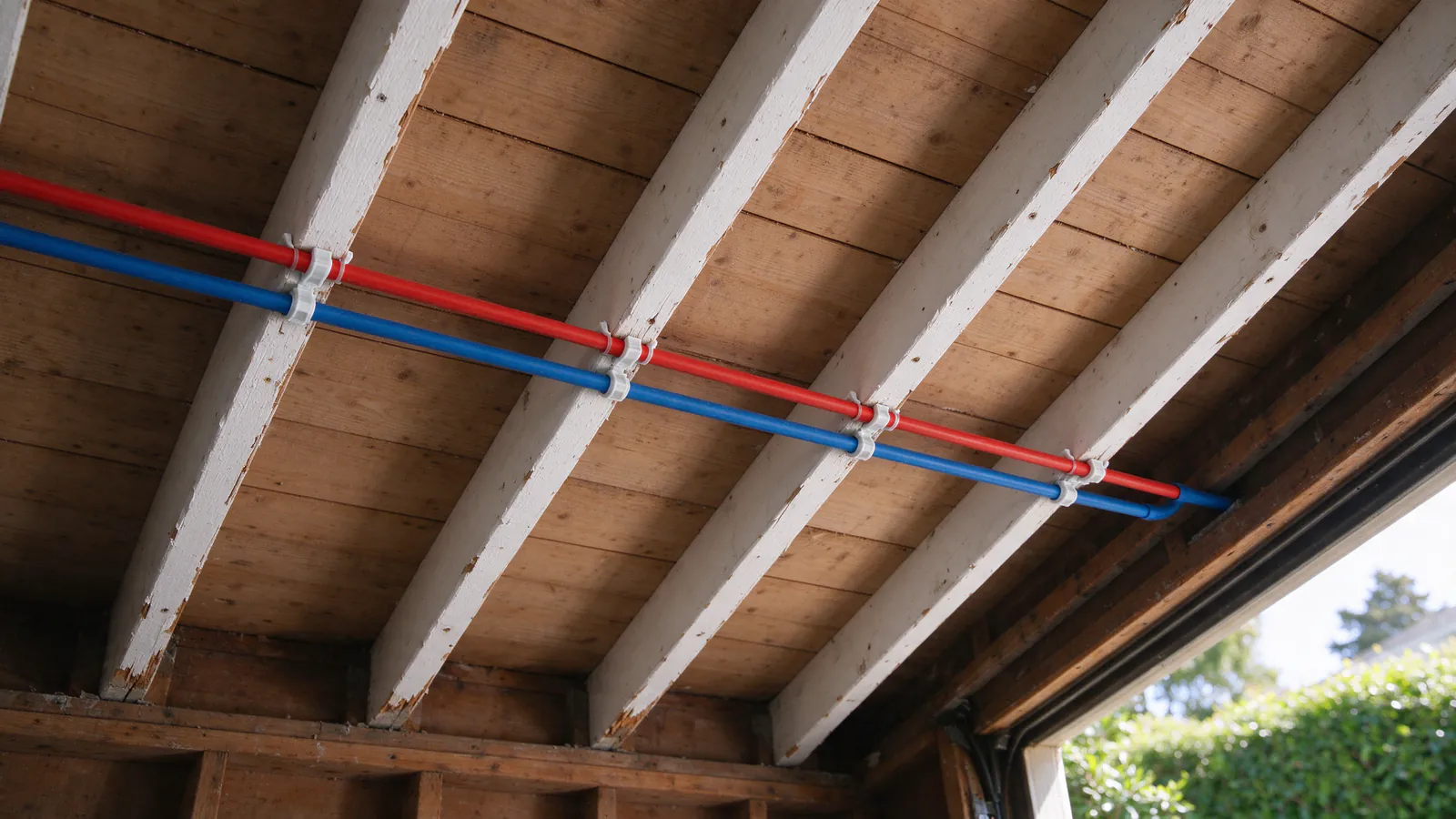
For PEX, the route is the whole question. The visit looks for the long, open corridors a coil can follow: a garage ceiling, a basement, a crawlspace, a closet stacked under a bathroom. It notes what the tubing must stay away from, such as a gas water heater’s flue, recessed light housings and any garage window or vent that lets daylight in. It decides where a manifold could sit, if one is used, so that it stays accessible. It notes where metal pipe will be removed, because that raises a grounding question for an electrician. The result is a written scope naming the PEX system, the layout, the openings, the permit and who patches each opening.
Is PEX allowed in San Francisco?
Yes. The 2025 California Plumbing Code, which San Francisco adopts with local amendments, lists PEX in Table 604.1 as approved for both building supply and water distribution. A full-text search of San Francisco’s amendments finds no local restriction on PEX; the city’s changes to the water chapter deal with dielectric fittings, valves and air chambers. The state code does add rules of its own:
- All PEX installed in California must have at least 30-day UV protection, and joints are made according to the manufacturer’s instructions.
- Push-fit fittings must comply with ASSE 1061, and brass fittings used with PEX must meet NSF/ANSI 14, which covers resistance to dezincification.
- PEX-AL-PEX, the aluminum-layered composite, is not adopted for drinking water in housing.
- PEX placed in soil for drinking water must be sleeved with a material impermeable to solvents and petroleum.
- The two-flush, one-week tagging procedure applies to PEX only as the first piping in new construction, so it does not add a week to a repipe.
The guide to whether PEX is allowed in California covers the code history. For the material choice itself, the PEX vs copper guide sets out the tradeoffs, and copper repiping covers the metal alternative.
Fitting systems: expansion, crimp and clamp
A PEX repipe is only as good as its joints, and PEX is joined by a system rather than by a universal technique. Expansion fittings are used with PEX-A: the tube end is stretched, slipped over the fitting and allowed to shrink back until it grips. Crimp and clamp fittings compress a metal ring over the tube on a barbed fitting, and can be used with PEX-A or PEX-B depending on the system. The PEX-A vs PEX-B guide compares the two tube types.
The practical rule is consistency. A scope should name one listed system, and the tubing, fittings, rings and tools should come from that system, so that every joint is made to one maker’s instructions. Barbed insert fittings narrow the bore at each joint, which is one reason a long trunk is sized with the fittings in mind rather than by tube size alone.
Expansion, support and routing
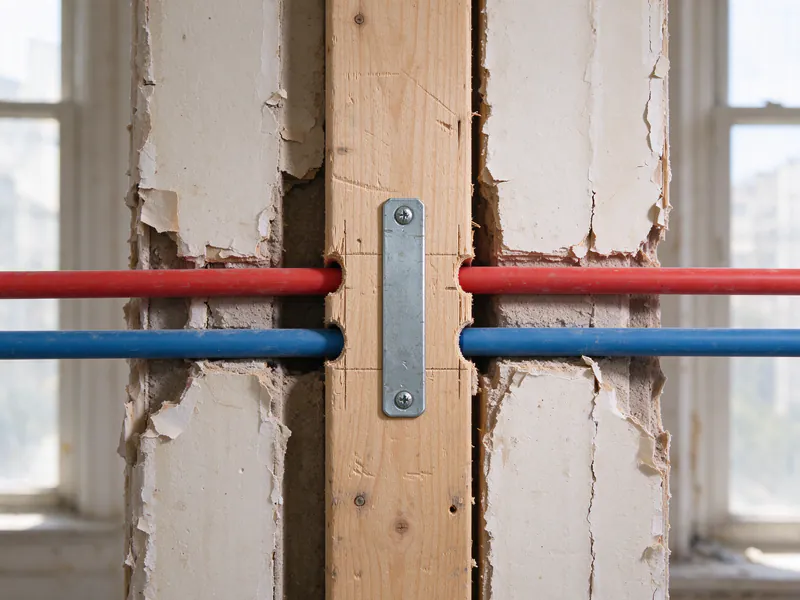
PEX grows and shrinks with temperature far more than copper does. A hot line that runs tight between two fixed points can bow, tick against framing or pull at a fitting as it heats and cools. Good PEX work leaves gentle slack in long runs, uses offsets or loops where a run is long and straight, and holds the tubing with hangers that let it slide rather than pinching it. Supports go at the spacing the maker specifies, and tubing that passes close to the face of a stud or joist gets a steel nail plate so a later drywall screw cannot reach it.
Freezing is not what governs these routes in San Francisco: NOAA’s normals for downtown record no nights at or below 32 F in an average year. Heat and light are. Tubing is kept clear of flue pipes and recessed fixtures, and away from daylight at garage windows and vents. Insulation on hot lines in an open garage is about heat loss and the wait for hot water, not freeze protection.
Manifold or trunk-and-branch
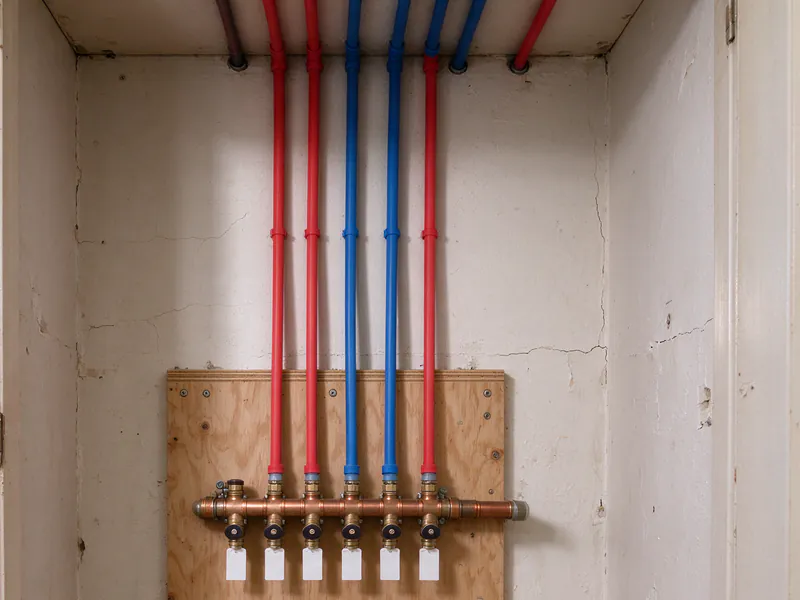
PEX allows two layouts. Trunk-and-branch follows the old system, with a main line and tees to each fixture group. A home-run manifold gives each fixture its own line from a central valve board, which means more tubing and fewer hidden joints, and an accessible shutoff for every fixture in one place. In a San Francisco house with the mains on a garage ceiling, as in much of the Sunset and Parkside, a manifold can sit in the garage with home runs climbing to each fixture. In stacked flats, a manifold can sit in each unit, which also helps meet the city’s rule that every unit can be shut off without interrupting the others; the apartment building repiping page covers riser work.
Layout affects how long hot water takes to arrive, but it does not settle it. A smaller line to a far bathroom holds less cold water than a large trunk, so it clears sooner. A very long run may still need a recirculation line, and tubing in a continuously recirculating hot loop must meet ASTM F876-2015a or better under the California code. The manifold vs trunk-and-branch guide goes further.
Water chemistry and fittings
SFPUC water is soft, with average hardness of 62 ppm and a pH adjusted to about 9.3, and it is disinfected with chloramine. Scale buildup is not a concern for PEX in this water. The questions are about the parts the water touches: the tubing’s chlorine rating and the brass in the fittings. PEX makers publish chlorine resistance ratings for their tubing, and the system chosen is checked against those ratings for continuous hot use. Brass fittings in plastic systems must resist dezincification under NSF/ANSI 14, and every wetted surface in a drinking water system is held to the state’s lead-free limit. The guide to San Francisco water and your pipes covers the chemistry.
Wondering whether PEX suits your building?
A walk-through traces the old pipe, measures pressure and shows where tubing can run before any price is set.
Grounding and bonding when metal pipe comes out
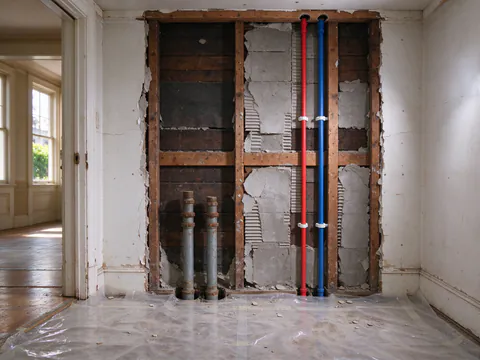
Older San Francisco houses often relied on the metal water pipe as part of the electrical grounding system. PEX does not conduct, so replacing metal pipe with PEX can break a path the electrical system was counting on. The California Plumbing Code addresses this directly: where metal building supply piping is used for grounding, its replacement must be of like material. The electrical code requires any metal water piping that stays in the building to be bonded to the service. In practice, a PEX repipe that removes metal pipe includes a note for a licensed electrician to confirm the grounding electrode and bonding, sometimes under a separate electrical permit. Where the buried service line is the electrode, the water service line replacement page explains why that run may stay copper.
Pressure test, inspection and openings
Before any wall closes, the finished system is tested with water at working pressure or above, or with air at 50 psi or more, and held for at least 15 minutes without leakage. Plastic pipe may be air tested only where its maker allows it, and PEX makers may. The city inspector then sees the work under test on a permit filed on PermitSF by a contractor holding the license a San Francisco plumbing permit requires. The DBI permit for a house is $549, or $809 with underground work, and condos and apartment buildings need a separate permit for each unit. The San Francisco repiping permit guide covers the steps.
Because PEX bends around obstacles, it usually needs fewer and smaller openings than rigid pipe, but some openings are certain: wherever a line has to reach a fixture inside a finished wall. In a building built before 1979, paint is presumed to contain lead, and in rentals and shared buildings each opening is set up with containment and notice under the city’s lead-safe rules. The guide to how invasive repiping is shows what the openings look like.
What a PEX repipe costs
A typical San Francisco-area range for a whole-house PEX repipe is $8,500 to $16,000 for one bath, $12,000 to $22,000 for two baths and $14,500 to $28,000 for three; multi-story or hard-access homes can run higher. The repipe cost guide breaks down what sits inside the price, and the cost estimator gives a range from the baths, floors and material you choose. Homeowners insurance generally responds to sudden water damage under the policy’s terms rather than paying for planned pipe replacement, so a repipe is usually budgeted as an owner’s project.