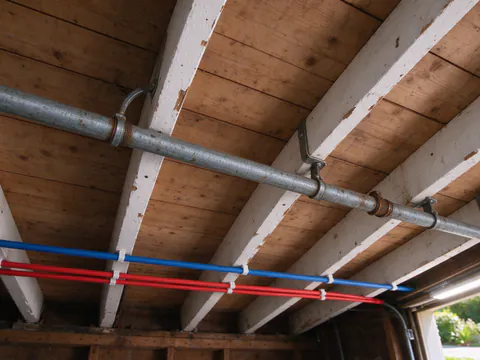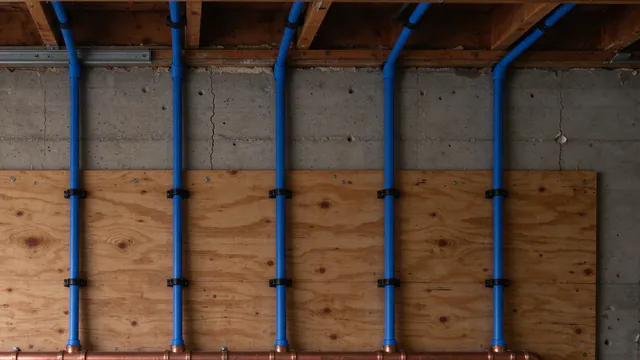
No. Repiping replaces the water supply system: the pressurized hot and cold lines that bring drinking water from the main valve to each faucet, toilet, shower and appliance. Drain, waste and vent pipes, which carry used water out by gravity, and the sewer lateral under the yard or sidewalk are separate systems and separate jobs. Hilltop Repipe San Francisco offers and manages repiping across San Francisco, Daly City and South San Francisco, with the work carried out by licensed and insured contractors; it does not replace drains, drain stacks or sewer laterals.
Two systems that meet at the fixtures
A building’s plumbing is two networks that share walls and meet at each fixture but otherwise have little in common.
The supply side is under pressure. Water arrives through the service line from the meter box, passes the main valve, and runs through a trunk, risers and branches to each fixture, with a parallel set of hot lines leaving the water heater. Supply pipe is small in diameter, and it has to hold working pressure every hour of the day. A whole-house repipe replaces this side, and the guide to how repiping works describes it in detail.
The drain, waste and vent side is not under pressure. Used water falls through traps and drain lines into larger stacks that run down through the building to the building drain and out to the sewer lateral. Vent pipes rise through the roof so that water can flow without siphoning traps dry. These pipes are much larger in diameter, and they rely on slope, not pressure.
The two systems meet at each fixture. Under a sink, the angle stop on the wall and the flexible line to the faucet are supply; the tailpiece, trap and arm into the wall are drain. A repipe ends at the stop. Everything below the basin belongs to the drain side.
Why they wear out differently
Supply pipe in San Francisco is mostly galvanized steel or copper, and it fails from the water side. Galvanized corrodes from the inside until its bore closes and its threaded joints leak, and copper tends to develop pinholes or leaking joints for a mix of reasons. Because the line is pressurized, a failure leaks continuously until the water is shut off.
Drain pipe in older buildings is commonly cast iron, sometimes galvanized steel for smaller lines, with ABS or PVC plastic in later work. San Francisco’s code amendments limit ABS and PVC drainage installations to buildings of not more than two stories of residential use, which is one reason cast iron remains in many taller flats. Drain pipe sees air, wastewater and debris rather than constant pressure, so it fails by different routes: corrosion, cracked or separated joints and blockages. A drain leak usually appears only when water is flowing through it from above.
These different lives are why replacing one system says little about the other. A building can need a repipe while its cast-iron stacks have years left, or the reverse.
How to tell which one is leaking
A water stain on a ceiling or a damp wall is the most common reason people ask this question, and the stain alone does not tell you which system failed.
- Leaks whether or not anything is running. Points to the supply side, because supply pipe is always under pressure. A water meter or SFPUC’s hourly usage data that never reaches zero supports it; the SFPUC leak alert guide explains how to read it.
- Leaks only when a fixture above is used. Points to a drain fitting, a shower pan, a tub overflow or a toilet seal.
- Smells of sewage. Points to the drain or vent side, not the supply.
- Rusty or low-flow water at the taps. A supply symptom; see the low water pressure guide.
Tracing comes before pricing. A repipe quote written for a leak that turns out to be a shower pan solves the wrong problem, and the water leak detection page covers how a hidden leak is located.
Not sure which pipe is leaking?
A walk-through traces the supply side from the meter and separates supply leaks from drain problems before anyone writes a scope.
When both need work
Sometimes both systems are worn. A bathroom remodel in a 1920s flat may expose galvanized supply lines and a cast-iron stack in the same wall. In that case the sensible plan is to coordinate the openings, so a wall is opened, worked on by both trades and patched once. The supply work and the drain work stay separate scopes, each with its own materials, tests and inspections, and often separate contractors.
Where both are replaced in one wall, it makes sense for the larger drain and vent pipes to take the space they need first, with the supply lines routed around them. Both are inspected before the wall closes. The repiping during a remodel page covers how a repipe fits into a renovation, and the how invasive is repiping guide shows where openings tend to land.
Permits for supply and drain work
In San Francisco, DBI’s plumbing permit categories are written to cover the whole plumbing system. Category 2PA, residential construction with six or fewer units without underground plumbing, includes water, gas, waste and vent work, at $549; 2PB, with underground plumbing, is $809. Category 1P, $290, covers a single residential unit’s water service, sewer replacement, single fixture or single kitchen or bath remodel. Which category a combined job falls in is confirmed when the permit is filed. The San Francisco repiping permit guide explains the process.
Daly City prices plumbing permits by item: $101 to issue, $56.50 for each installation, alteration or repair of water piping and $56.50 for each repair or alteration of drainage or vent piping. Plumbing outside a Daly City building, including the sewer lateral, is inspected by the city’s Department of Water and Wastewater Resources rather than the Building Division. South San Francisco lists a separate lateral replacement permit at $220.
Other places the systems touch
A few parts of a repipe connect to the drain side without making it drain work:
- The water heater’s relief valve. Its discharge pipe must run full size, by gravity, to the drainage system or outside, ending 6 to 24 inches above grade. The pipe is part of the heater installation, and a repipe that reconnects the heater checks it.
- Washing machines and dishwashers. The repipe supplies them; their drain hoses empty into the drain system.
- Heat pump and condensing water heaters. They produce condensate that needs a drain. The water heater replacement page covers it.
Gas piping is a third system again, with its own permit and test. The gas line repiping page covers it.
Reading a quote
When a quote says “repipe,” check that it lists the supply lines it replaces and does not imply new drains. When a quote for drain work is described as a “sewer repipe,” read it as drain or sewer replacement, which is a different scope. A clear repipe scope names the material and layout, the boundary between new and old supply pipe, the fixtures reconnected, the valves the city requires, every opening and who patches it. The repipe cost guide lists what a full scope should include, and the whole-house repiping page describes the job.
For a supply-side scope that states exactly what it covers, call or send the form, and say whether drain work is planned in the same walls.