Epoxy lining coats the inside of existing water pipe and can seal small leaks with fewer wall openings than a repipe. Repiping replaces the pipe, which restores full bore, removes weak threads and lets the city’s required valves and air chambers go in. Lining fits sound pipe that is hard to reach; replacement fits pipe that is failing as a material, which is the usual San Francisco galvanized case.
Hilltop Repipe San Francisco manages whole-house and partial repiping across San Francisco, Daly City and South San Francisco, with the work carried out by licensed and insured contractors. Lining is a different method from the one this service uses, and this guide sets out what each can and can’t do so the comparison is fair.
How epoxy lining works
Lining systems for water pipe follow the same basic steps. The building’s water is shut off and the pipes are drained. Heated air dries them. An abrasive, usually a fine grit blown through with compressed air, scours rust and scale from the inside. Then epoxy is blown or drawn through each run to coat the wall, and it is left to cure before the system is flushed and the water comes back on. The pipe is reached at fixtures, at the main and at a few access points, rather than along its length.
That access is the appeal. Where pipe is buried in a slab, encased in concrete or runs behind finishes that are expensive to disturb, lining can avoid the openings a repipe would need. Bay Area homeowners report weighing lining when a slab leak would otherwise mean jackhammering floors or rerouting over the roof.
What lining doesn’t change
A coating changes the inside surface of the pipe. Everything else stays as it was:
- Wall strength. The blast removes corrosion and some metal with it. Galvanized pipe is thinnest at its threads, which is where it usually fails. A thin epoxy layer seals but does not restore the steel.
- Size and layout. Pipe that was undersized stays undersized, a little smaller for the coating. The trunk-and-branch route, the long runs and the dead ends all remain.
- Valves and fittings. Old gate valves, stops and unions are usually replaced or bypassed separately, and fittings that were already restricted keep their shape.
- What can be inspected. Once the walls are closed, nobody can see whether every branch and fitting was fully coated. A repipe’s new pipe is visible to the inspector before the walls close.
Drinking water standards
The 2025 California Plumbing Code requires materials in contact with drinking water to comply with NSF/ANSI/CAN 61. With lining, the epoxy is that material. Before choosing it, ask for the product name, its certification for drinking water, the cure time and temperature it needs, and how the installer confirms the cure before the water is used. Ask also whether the work will be permitted and inspected (the San Francisco repiping permit guide covers the rules): DBI requires a permit before pipe is cut into or replaced, so any section replaced during lining falls under that rule.
What a repipe adds in San Francisco
A repipe is new pipe, so it is built to current code. In San Francisco that means a fullway valve where the supply enters, a shutoff for each dwelling unit so one unit can be worked on without cutting water to the others, a control valve at each fixture, dielectric fittings or 6-inch brass nipples wherever copper meets steel that stays, and air chambers at single-handle faucets, shower valves and other quick-closing valves. A unit that is remodeled has to be brought up to the valve rules, which matters most in apartment buildings. Lining keeps the old system’s valves and layout, so those items are separate work, if they are done at all.
A repipe also ends with a pressure test of the new system, with water at working pressure or air at 50 psi or more for at least 15 minutes without leakage, and a city inspection before the walls close. The repiping guide covers the full sequence.
Galvanized, copper and slab pipe
Galvanized
Most San Francisco repipes replace galvanized. Among 273 DataSF repipe permit descriptions from 2021 to 2025, 76 name galvanized. Galvanized at the end of its life is narrowed by rust, thin at the threads and often mixed with copper repairs. Lining is weakest in exactly that case: the cleaning step removes what was holding the bore shut, the threads stay thin, and the mixed joints stay mixed. The guide to whether galvanized pipes are safe covers the condition questions.
Copper with pinholes
Lining is more often offered for copper with pinholes, because the coating can bridge small holes. Whether that holds depends on how much wall is left and whether the cause of the pitting is still active, such as a recirculating line running too fast. The copper pinhole leaks guide covers the causes.
Pipe under a slab or in concrete
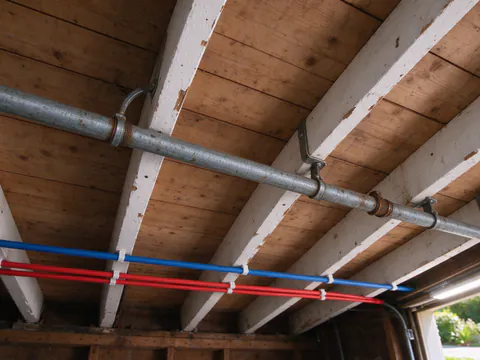
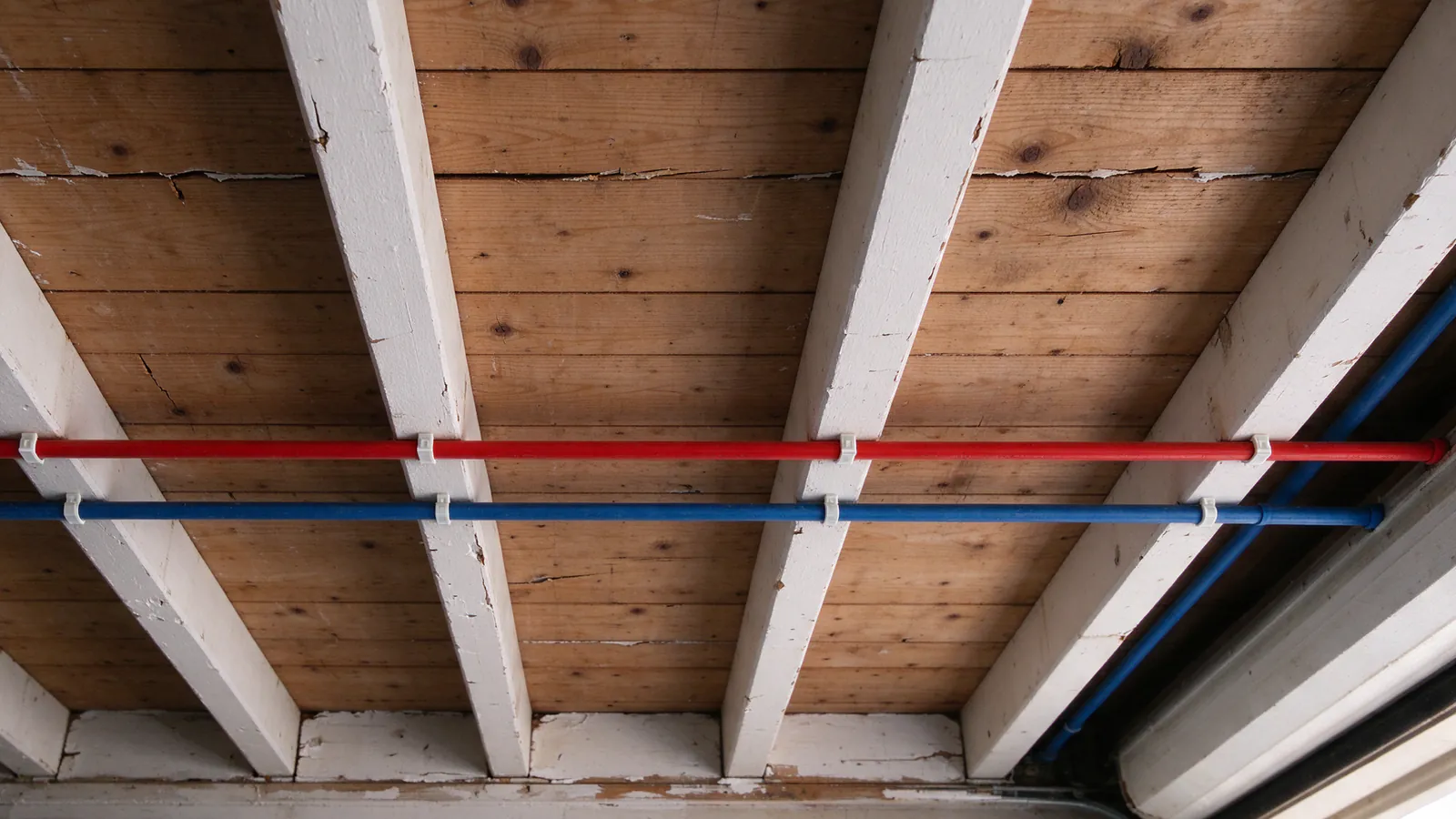
This is lining’s strongest case. Where a house has its water lines in a slab, the alternatives are breaking the floor or rerouting through walls, ceilings or the roof. Many San Francisco houses are built differently: where a house has living space over a ground-floor garage, as the Sunset’s builders favored, the trunk lines usually hang from an open garage ceiling, and a repipe can reach them without opening finished rooms. The Sunset and Parkside page describes those houses.
Lining or replacement for your building?
A walk-through looks at the pipe's material, condition and access, then sets out what replacement would involve in a written scope.
Side by side
| Epoxy lining | Repiping | |
|---|---|---|
| What happens to the old pipe | Cleaned by blasting, then coated inside | Replaced; exposed pipe removed, sealed pipe abandoned |
| Openings | Fewer, at access points and fixtures | More, planned at each route and fixture group |
| Pipe size and layout | Unchanged, slightly smaller bore | New sizing and layout, trunk-and-branch or manifold |
| Weak threads and joints | Remain, coated | Removed |
| San Francisco valves and air chambers | Separate work | Built into the scope |
| Inspection | Coating cannot be seen once closed | New pipe pressure tested and inspected before walls close |
| Drinking water | Coating must comply with NSF/ANSI/CAN 61 | Pipe and fittings must comply with NSF/ANSI/CAN 61 |
| Usually fits | Sound pipe in slabs, concrete or hard-to-open finishes | Pipe failing as a material, or a building being upgraded |
Cost and disruption
Lining prices depend on the system, the product and the access, and there is no reliable local range for it, so this guide does not quote one. A repipe in the San Francisco area typically runs $8,500 to $16,000 for one bath, $12,000 to $22,000 for two and $14,500 to $28,000 for three in PEX, with copper usually higher; the repipe cost guide explains what moves the number. When comparing a lining bid with a repipe bid, check that both include the valves, the permit, any service-line work and the patching, because the scopes differ more than the totals suggest.
Lining usually opens fewer walls, but it needs the whole system drained and dry while the coating goes on and cures. A repipe runs new lines while the old ones still serve, so the water is off in stages. The guide to how invasive repiping is shows where repipe openings tend to land.
Making the choice
Lining makes the most sense when the pipe walls are sound, access is the main obstacle and the layout works. Replacement makes more sense when the material is failing, flow is restricted, the threads are thin or the building needs the shutoffs and devices the code now requires. The repipe vs repair guide covers the wider decision. For a written scope that shows what replacing the pipe in your building would involve, call or send the form.