A house on the Daly City side of the county line can share its form with houses in the Sunset and still answer to a different permit counter, a different water utility and a different fee schedule. Hilltop Repipe San Francisco brings whole-house repiping, galvanized pipe replacement and copper repiping to Daly City, working through licensed and insured contractors who pull the Daly City permit.
Those differences change the paperwork and the inspections more than the pipe. Knowing them up front keeps a repipe from stalling between agencies.
Built after the war
Daly City’s housing is younger than San Francisco’s. Of its 35,922 housing units in the Census Bureau’s count, 8.9% were built in 1939 or earlier, 32.9% between 1940 and 1959 and 36.5% between 1960 and 1979, for a median year built of 1965. About 63% are single-unit buildings and roughly a quarter are in buildings of five or more units.
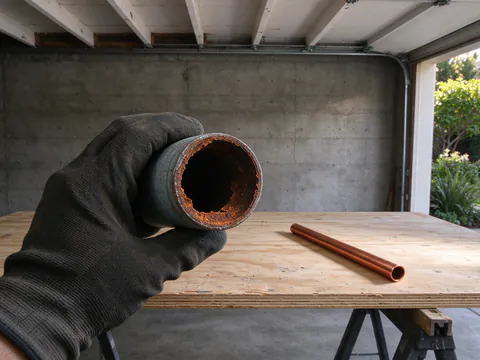
That timeline matters for what is in the walls. Houses of the 1940s and 1950s straddle the change from galvanized steel to copper, so a house from those years may have either, or galvanized mains with copper added in a later remodel. Houses of the 1960s and 1970s are more likely to have been built with copper. The two fail differently: galvanized narrows from the inside as it rusts and leaks at its threads, while copper tends to fail at pinholes and joints, with no single cause behind every pinhole. The rusty water guide and the copper pinhole leaks guide cover each. Age is context only; tracing the pipe in the house is what tells.
Houses over a garage, south of the county line
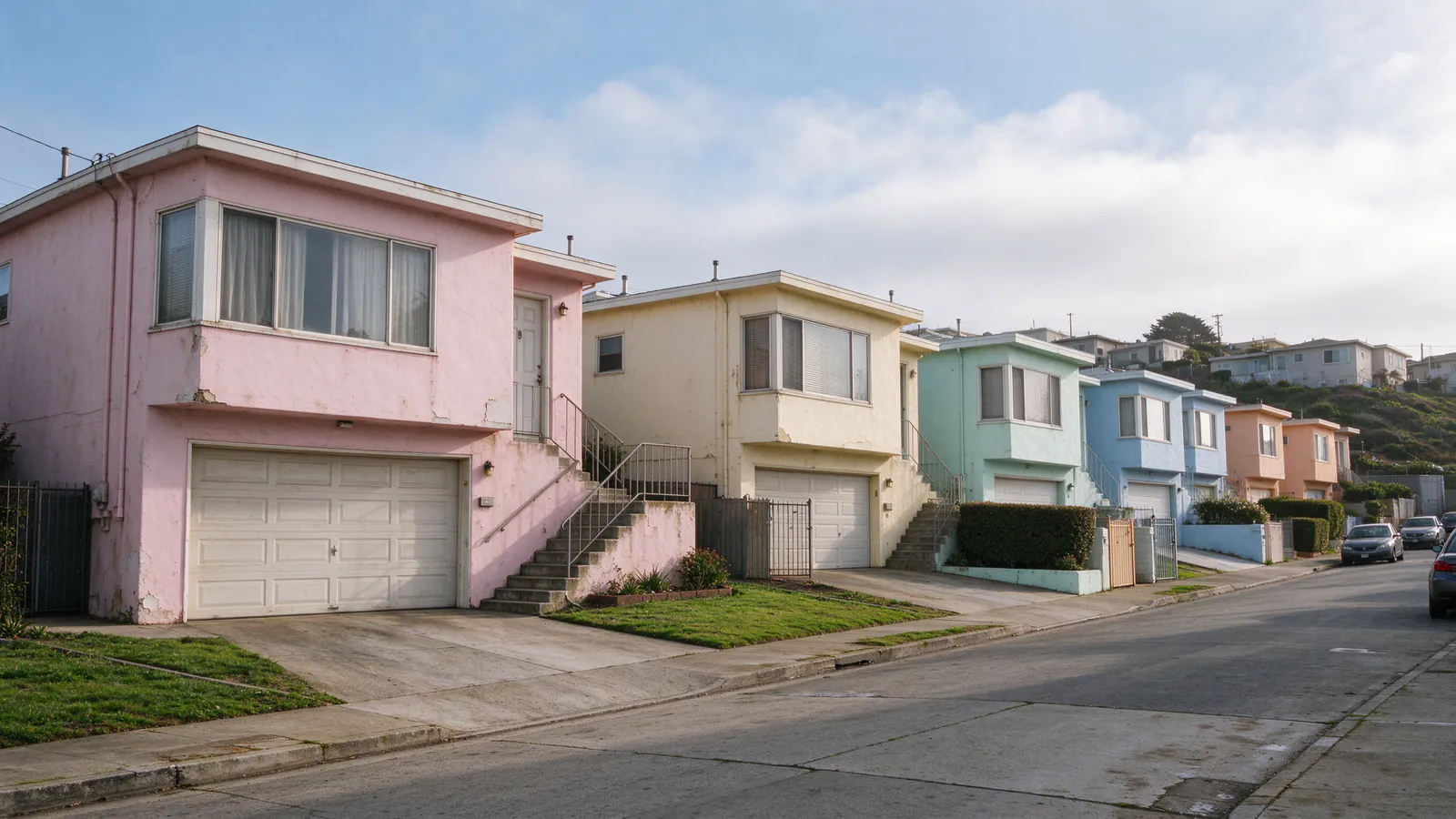
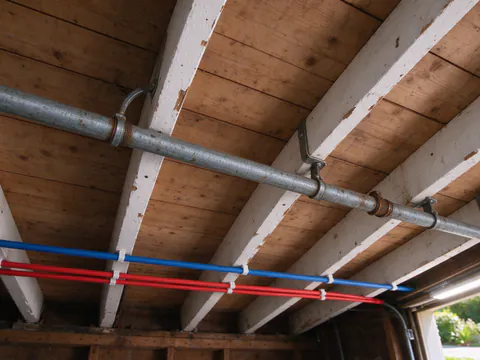
San Francisco Planning’s context statement on Sunset District builders describes houses with living space over an integrated ground-story garage and says the format has no known examples outside San Francisco, “and later, Daly City.” Where a Daly City house follows that pattern, the main supply lines usually run along the garage ceiling, and a repipe can replace that trunk from below and bring each branch up to its fixture, with openings upstairs limited to where lines climb into walls. Where the garage has been finished into living space, the ceiling is opened and patched like any other. The Sunset and Parkside page describes the same layout across the line.
A permit type named for the job
Daly City’s Building Division takes permit applications through its online portal, which lists a “Water Pipe Replacement” application type for water pipe repair and replacement at a residential property, alongside separate types for drain repair, gas pipe repair and water heater installation. Quick permits are applied for there. Whether a particular whole-house repipe is issued as a quick permit or needs more review is not published, so it is confirmed with the Building Division for each address.
The city also requires a Daly City business license to work there, and home improvement projects over $500 in labor and materials must be done by a licensed contractor. An owner who pulls their own permit signs the city’s owner-builder disclosure.
Fees counted by the item
San Francisco charges a plumbing permit by category; Daly City builds it from items. Its fee schedule sets plumbing permit issuance at $101, then adds $56.50 for each installation, alteration or repair of water piping or water treating equipment, $14 per plumbing fixture and $28 per water heater or vent. An electrical permit, if the bonding of remaining metal pipe needs electrical work, has its own $101 issuance fee. How many water-piping items a given repipe counts as is set when the permit is issued, so the permit line in a Daly City estimate is itemized rather than a flat figure.
Two inspecting agencies
Inside the house, the Building Division inspects. Its residential guidelines call for a rough plumbing, or top-out, inspection after the supply piping is installed and tested and before walls are covered, an under-floor inspection before floor sheathing goes down, and a final once fixtures work. Outside the house it is different: all plumbing beyond the building envelope, including the sewer lateral, is inspected by the Department of Water and Wastewater Resources, and water service inspections are listed among its utility inspections. A repipe that also replaces the line from the meter to the house therefore has two agencies to schedule. The pressure test the state code requires, at least 15 minutes at working pressure or 50 psi of air where the pipe allows it, happens before the rough inspection. Water service line replacement covers that outside run.
DWWR also turns water off at the meter on request, around the clock, and asks owners not to operate the meter themselves, since a damaged meter or service can become the owner’s cost.
Water from Hetch Hetchy and from wells
Daly City’s tap water is a blend. Its latest Consumer Confidence Report puts SFPUC’s Hetch Hetchy supply at about 60% of average daily demand and local groundwater at about 40%, pumped from Westside Basin wells averaging about 300 feet deep, three of the city’s five wells in service. The report’s table of non-regulated minerals describes the SFPUC-supplied water, so it gives no hardness figure for the blended tap water, and none is assumed here.
Lead monitoring is clean: at 50 homes sampled, none exceeded the lead or copper action level, and the city reports no known lead service lines in its system. A Daly City repipe is a decision about the age and material of the house’s own pipe, not about lead in the street.
Repiping a Daly City house?
Tell us the year it was built, whether the mains run along a garage ceiling and how many baths it has. The scope, the Daly City permit items and the inspections come back in writing.
What changes, and what doesn’t, at the county line
San Francisco’s local plumbing amendments, such as a shutoff for each dwelling unit and air chambers at quick-closing valves, are San Francisco’s. Daly City enforces the 2025 California Plumbing Code, and any amendments of its own are confirmed before the scope is written. San Francisco’s Rent Board rules and SFPUC’s service-line letters do not reach Daly City either.
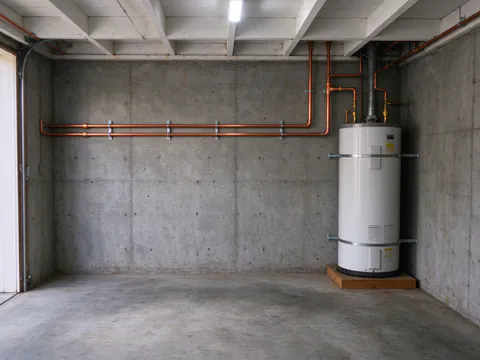
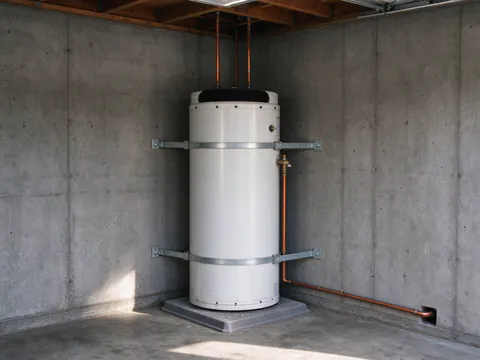
Much stays the same. The state code still lists PEX and copper for water distribution, requires dielectric unions where dissimilar metals meet in housing, calls for a pressure regulator and expansion tank where static pressure exceeds 80 psi, and requires water heaters to be strapped in their upper and lower thirds. The Bay Area Air Quality Management District’s asbestos rule covers Daly City as it does San Francisco, so textured or skim-coated walls can need sampling before they are opened. The PEX vs copper guide compares the two materials.
Pricing a Daly City repipe
A Daly City house follows the same typical San Francisco-area range as one across the line: about $8,500 to $16,000 for a one-bath whole-house PEX repipe, $12,000 to $22,000 for two baths and $14,500 to $28,000 for three, with multi-story or hard-access homes running higher and copper usually costing more. The permit line is Daly City’s itemized fee rather than DBI’s. The repipe cost guide explains what moves a price within the range.