Part of the water that reaches a South San Francisco tap comes from wells averaging 384 ppm of hardness, about six times the 62 ppm average of the Hetch Hetchy supply San Francisco drinks. In South San Francisco, Hilltop Repipe San Francisco offers whole-house repiping and galvanized pipe replacement, plus the water heater replacement a hard-water house may need alongside them; licensed and insured contractors carry out the work under a city permit.
Hard water changes how old pipe fails here, so the diagnosis starts somewhere different than it does a few miles north.
Two sources in one system
California Water Service runs South San Francisco’s water as part of its Bayshore District: 160 miles of main, 13 storage tanks, 18 booster pumps, six groundwater wells and one groundwater treatment plant. Its water quality report describes the supply as a combination of local groundwater and SFPUC surface water. The two are very different. The groundwater ranges from 287 to 461 ppm of hardness, averaging 384, with average alkalinity of 235 ppm and calcium of 83 ppm. The SFPUC water averages 62 ppm of hardness.
The report does not say what share of each source reaches a particular address at a particular time, so a household’s water can sit anywhere between those figures. What it does settle is that South San Francisco cannot borrow San Francisco’s soft-water reasoning. Cal Water reports no known lead service lines in its systems; in its latest household tap sampling the 90th percentile for lead was below detection, with 2 of 31 samples above the action level.
Scale and rust together
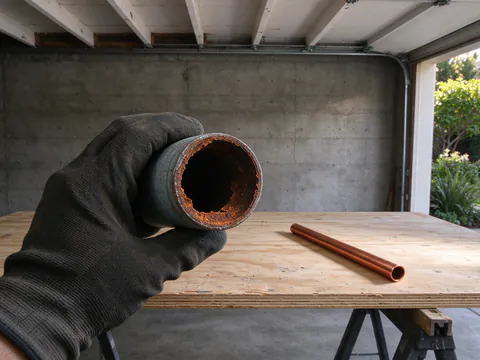
In San Francisco’s soft water, a galvanized line that loses flow is usually clogged by its own corrosion. Here, the groundwater share adds a second mechanism: calcium carbonate scale settling out of hard water. On old galvanized pipe, the rough, rusted inner wall gives scale a place to build, so the bore can narrow for two reasons at once. Scale also collects where water slows or heats: at aerators, showerheads, valve seats and inside the water heater.
That has a practical consequence for diagnosis. Low flow at one faucet in South San Francisco can be a clogged aerator or a scaled valve, not the pipe, and low flow everywhere can still be a pressure question. Static pressure is measured first; Cal Water’s system runs on tanks and booster pumps, and where static pressure exceeds 80 psi the state code requires a regulator and an expansion tank. The low water pressure guide sorts the causes, and the repipe vs repair guide covers when the pipe itself is the problem.
What hard water means for each material
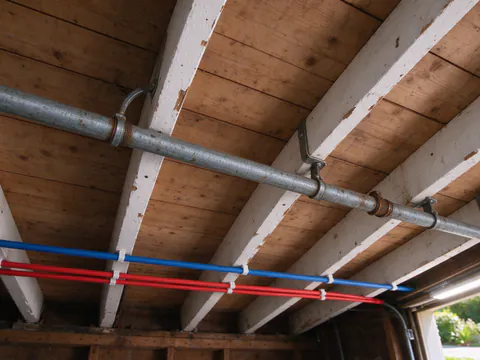
No pipe material is immune to what hard water does at fixtures, valves and heaters, and hard water does not make one material right for every house. The California Plumbing Code lists both PEX and copper for water distribution, and the choice in South San Francisco turns on the same things it does anywhere: the route through the house, the number of openings, the budget and the joints each system needs. Where new copper meets galvanized pipe that stays in service, the state code requires a dielectric union or listed transition at the joint, because two metals in contact corrode the steel faster. The PEX vs copper guide compares them.
Houses from the 1940s through the 1970s
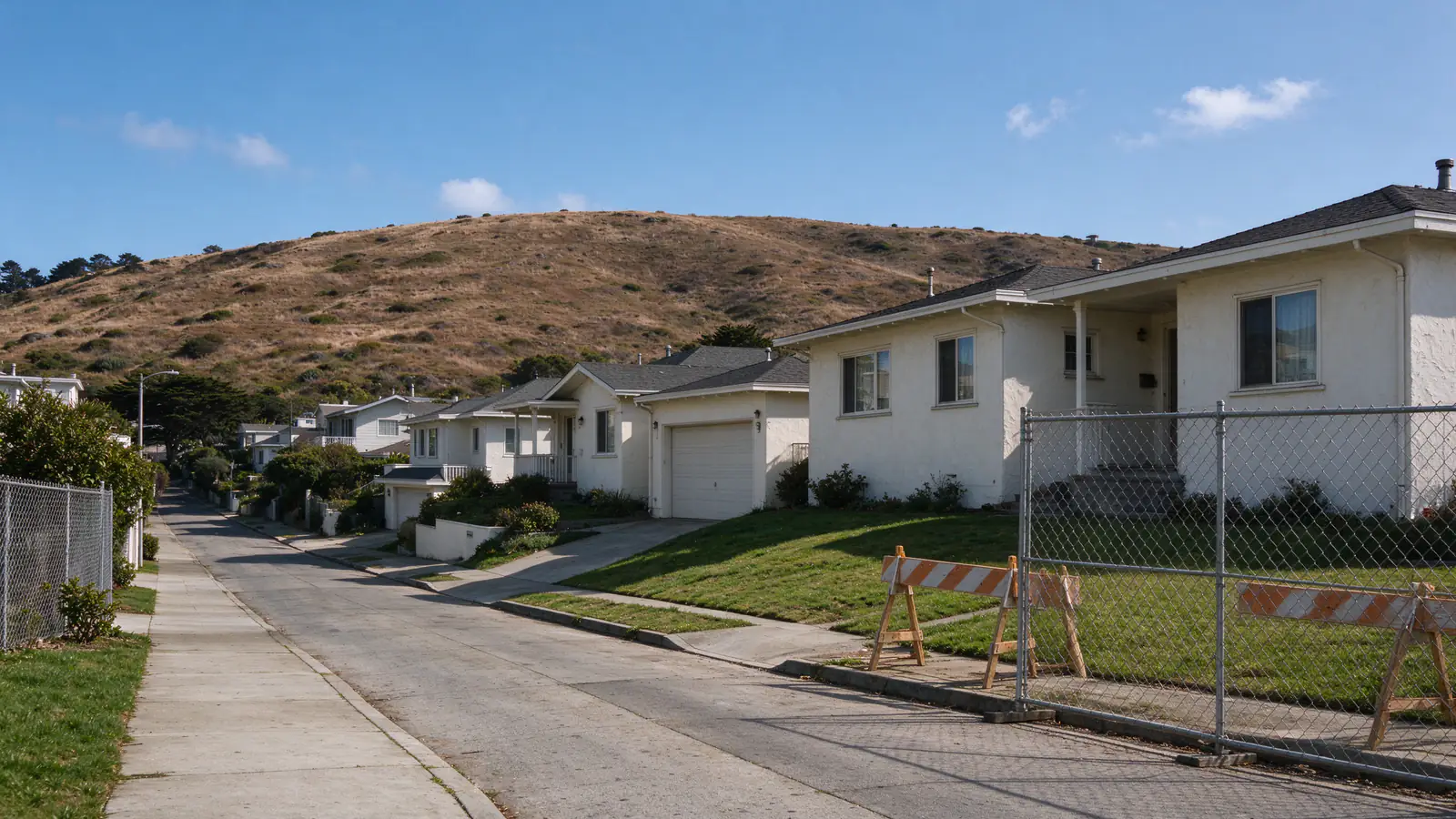
South San Francisco’s housing is mid-century. Of 23,515 housing units in the Census Bureau’s count, 6.9% were built in 1939 or earlier, 35.9% between 1940 and 1959, 27.0% between 1960 and 1979 and 30.2% in 1980 or later, with a median year built of 1965; 68.1% are single-unit buildings. The 1940s and 1950s houses fall in the years when galvanized steel was giving way to copper, so either can be in the walls. Houses built since 1980 are unlikely to have galvanized supply pipe, so a problem there usually starts as a repair question unless the pipe shows a pattern of failure. Tracing the pipe in the house decides it; the city’s age profile only says where to look.
Repiping a South San Francisco house?
Tell us when it was built, what the pipe looks like where it shows and whether the fixtures are crusting. The scope and the SSF permit come back in writing.
Permits at 400 Grand Avenue
The South San Francisco Building Division, at 400 Grand Avenue, takes permit applications online. Its residential handout requires a plumbing permit to install, alter, repair, remove or replace any plumbing system. Stopping a leak is exempt, and so is a repair that does not replace or rearrange valves, pipes or fixtures, but when concealed water pipe is defective and replaced with new material, the city treats it as new work that needs a permit and an inspection.
A repipe is not on the city’s over-the-counter list, and the fee schedule has no flat repipe line: single-family plumbing permits are priced by the job’s valuation, so the fee is confirmed for each project. Licensed contractors pull permits for their own trade, owner-builders may pull their own, and anyone paid for permitted work needs a South San Francisco business license. At inspection, the work stays exposed until it is approved, with the job card and plans on site, and corrections are re-inspected.
Cal Water’s side of the meter and yours
Cal Water takes responsibility only on the utility side of the meter; the line from the meter to the house and everything inside belong to the owner. Cal Water’s rules require leaks, breaks and other water problems on the customer side to be repaired within five business days of its notice, and SFPUC’s leak allowance does not apply here. Its high-bill guidance includes a simple meter test: turn off all water in the house and watch the meter’s test hand. A buried owner’s line that keeps failing is a candidate for pipe repair or for replacement as part of the repipe.
The water heater in a hard-water house
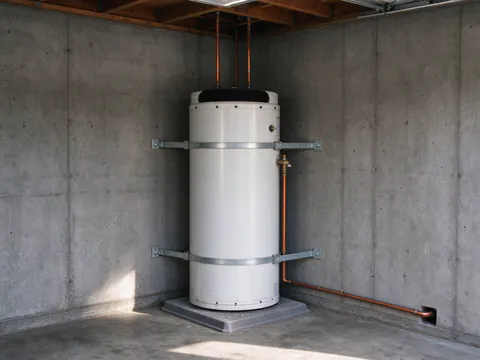
Scale settles in a storage water heater and coats its heating surfaces, which is one reason a repipe and a water heater replacement often get considered together here. South San Francisco issues water heater permits separately, and its residential water heater handout spells out local inspection items: gas heaters in garages on an 18-inch platform unless the model is rated to sit lower, two straps for heaters up to 52 gallons, a temperature and pressure relief drain of at least 3/4 inch to the outside, and the first 5 feet of hot and cold pipe insulated. WestLight Energy, San Mateo County’s community electricity provider, offers rebates on heat pump water heaters that replace gas units for customers on its service, with terms set by the program.
Budgeting a South San Francisco repipe
Hard water doesn’t create a separate price band. A whole-house PEX repipe here budgets within the typical San Francisco-area range: roughly $8,500 to $16,000 for one bath, $12,000 to $22,000 for two and $14,500 to $28,000 for three, higher for multi-story or hard-access homes, with copper usually above PEX. The permit line is South San Francisco’s valuation-based fee, confirmed per project. The repipe cost guide explains the drivers, and the cost estimator gives a range in a minute.