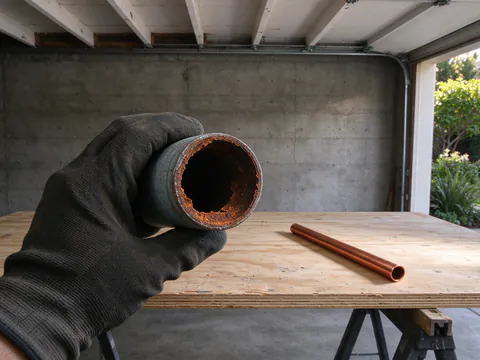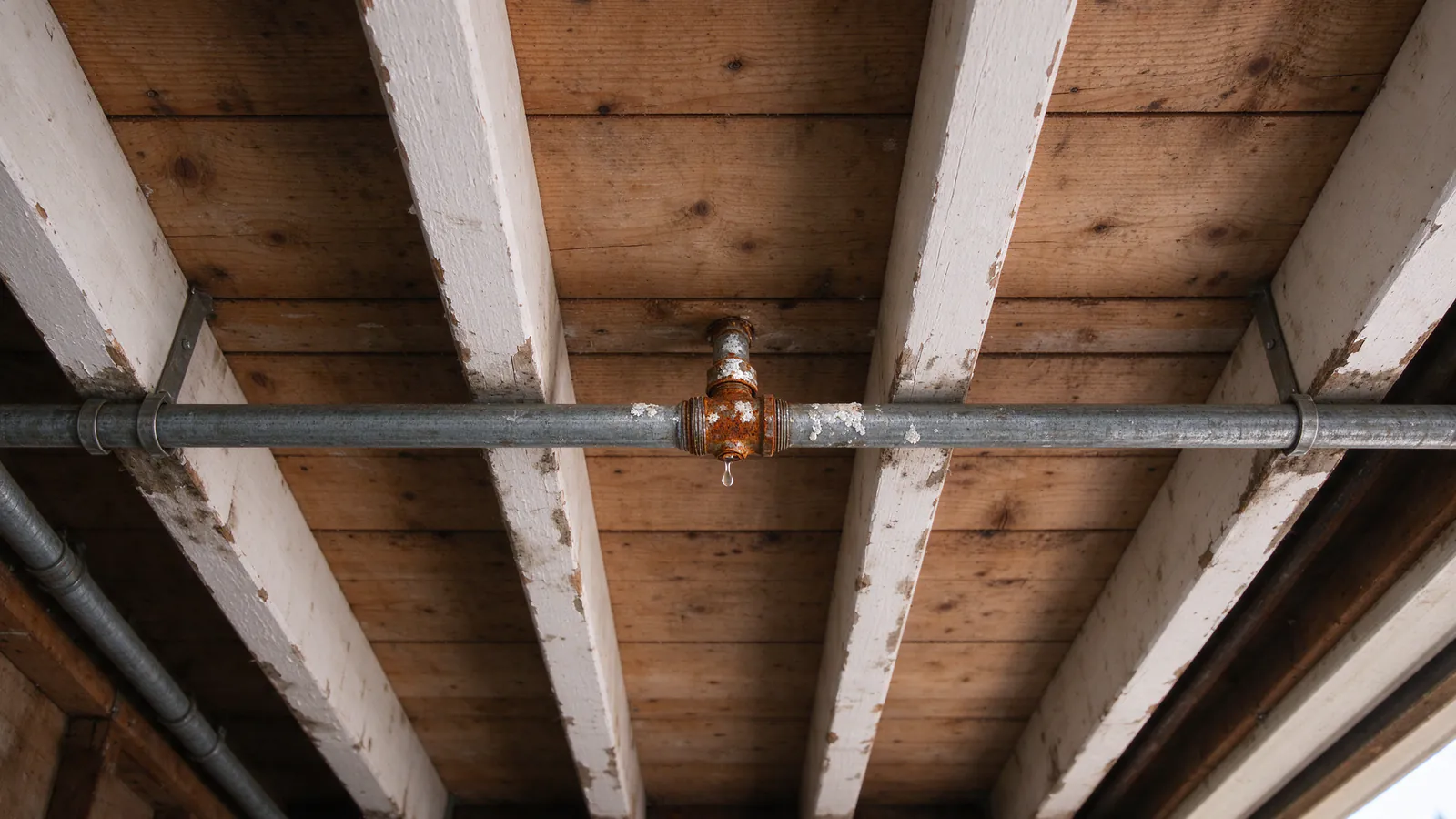
Rusty water usually comes from one of three places: the utility’s mains after work or a break in the street, a water heater rusting inside, or galvanized pipe in the building corroding from within. Which taps run brown, whether it is hot, cold or both, and whether it clears or keeps coming back point to the source before anyone blames the pipe in the walls.
Hilltop Repipe San Francisco traces water quality complaints to their source and handles the work when the building is the cause, from water heater connections to galvanized pipe replacement, across San Francisco, Daly City and South San Francisco, with the work carried out by licensed and insured contractors. This guide covers how to find the source yourself and what each finding means.
Finding the source
Work through these questions in order. Each one takes a minute and rules a source in or out.
- Is it only you? If neighbors have discolored water too, or crews are working on the street, the cause is likely the utility’s mains. Hydrant flushing, a main break or service line work stirs up sediment that settles back out. In San Francisco, SFPUC’s 24-hour line for water emergencies is 3-1-1; in Daly City, the city’s water department; in South San Francisco, Cal Water.
- Hot, cold or both? Run each side separately at the same tap. Hot only points to the water heater. Cold only, or both, points to the pipe or the supply.
- Which taps? Every tap at once points upstream: the service line, the main or the street. One bathroom or one end of the house points to the branch that feeds it.
- When? Brown first thing in the morning, after a weekend away or after the water was shut off, then clearing, is the pattern of rust settling in old pipe and washing out when flow starts.
- Does it clear? Water that clears in a minute or two and stays clear is settled sediment. Water that stays brown, or comes back every day, means the source is active.
The pipe material is the last piece. A magnet sticks to galvanized steel and nothing else in a water system; the guide to identifying pipe material walks through the check.
Brown, yellow and cloudy water
Not every discoloration is rust. Brown, orange or red water, often with fine particles that settle in a glass, is iron from corroding steel: galvanized pipe, a steel water heater tank or old iron mains. A pale yellow or tea-colored tint can be the same iron at a lower level. Cloudy or milky water that clears from the bottom of the glass upward is usually dissolved air, common after work on the pipes, and goes away on its own. Black particles can come from deteriorating rubber in supply hoses or washers. Green or blue staining in sinks points to copper rather than iron.
The utility side
SFPUC’s water starts out clear and is treated for corrosion control, with a pH of about 9.3. Work on the mains or on service lines can still send sediment into homes for a while. SFPUC has been replacing its galvanized service lines, the pipe from the main to the meter, with copper; the owner’s side, from the meter box to the building, is the owner’s responsibility. Homeowners report rusty water and a pressure drop at a tap after a utility replaced their meter, which is the kind of disturbance that loosens rust in old pipe downstream. If the utility’s work is the trigger and the building’s pipe is sound, the water clears after flushing.
The water heater
A tank water heater is a steel tank lined with glass and protected by a sacrificial anode rod that corrodes in place of the tank. Once the anode is used up or the lining cracks, the tank rusts from the inside, and only the hot water turns brown. Sediment flushed from the bottom of the tank can also color hot water for a while. A heater that is rusting inside is usually near the end of its life; the water heater replacement page covers that decision.
Galvanized pipe
Galvanized steel rusts from the inside once its zinc coating wears through. The rust builds on the pipe wall and narrows the bore, and pieces break loose whenever flow changes suddenly. That is why it shows up after the water sat overnight, after a shutoff or when a second fixture opens. In hard-water cities, mineral scale mixes with the rust. San Francisco’s water is soft, with average hardness of 62 ppm, so what comes out of old galvanized here is mostly the pipe itself. The same corrosion narrows the pipe, so rusty water and falling flow often appear together; the low water pressure guide covers that side.
South San Francisco is different: Cal Water blends groundwater with average hardness of 384 ppm into its supply, so scale and sediment are a bigger share of what comes loose there.
Brown water that keeps coming back?
A walk-through checks the hot and cold sides, the water heater and the pipe from the meter, then names the source in writing.
Is it a health problem?
Color alone doesn’t answer that. Rust stains fixtures and laundry, tastes metallic and clogs aerators and valve cartridges. Where the pipe is galvanized, the more important question is lead, because galvanized pipe that once sat downstream of a lead connector can hold lead in its rust. SFPUC tests tap water for lead at $25 per tap, free for owners who received a letter about a galvanized line on their side. In SFPUC’s 2024 tap sampling, the 90th-percentile lead level was 4.9 parts per billion against an action level of 15. The guide to whether galvanized pipes are safe and the lead pipes in San Francisco guide cover it.
What fixes each source
- Utility work. Run cold water at the tap nearest the meter until it clears, then the others. Remove and rinse aerators. If it does not clear, call the utility.
- Water heater. Flushing helps sediment. A tank rusting inside is replaced, not repaired.
- Galvanized pipe. Flushing clears the moment but not the cause. Replacing the pipe ends it. A whole-house repipe in PEX typically runs $8,500 to $16,000 for one bath, $12,000 to $22,000 for two and $14,500 to $28,000 for three in the San Francisco area, and copper usually costs more.
Why a partial fix can keep the rust coming
A partial repipe replaces some runs and keeps others. If the galvanized that stays is upstream, such as the service line from the meter box or the main across the garage, it keeps shedding rust into the new pipe, and brown water can continue at fixtures that were just replumbed. That is why the boundary between new and old pipe matters, and why a galvanized service line is often replaced with the interior. The water service line replacement page covers that line, and the repipe vs repair guide covers where to draw the boundary.
After any repipe, the new lines are flushed with aerators off, because rust loosened from old pipe during the work can lodge in valve cartridges.
If the brown water is coming from the building rather than the street, call or send the form, and the walk-through starts at the meter.