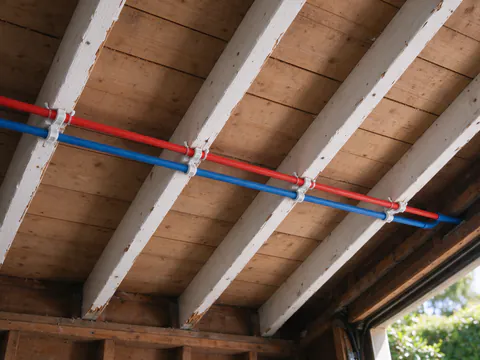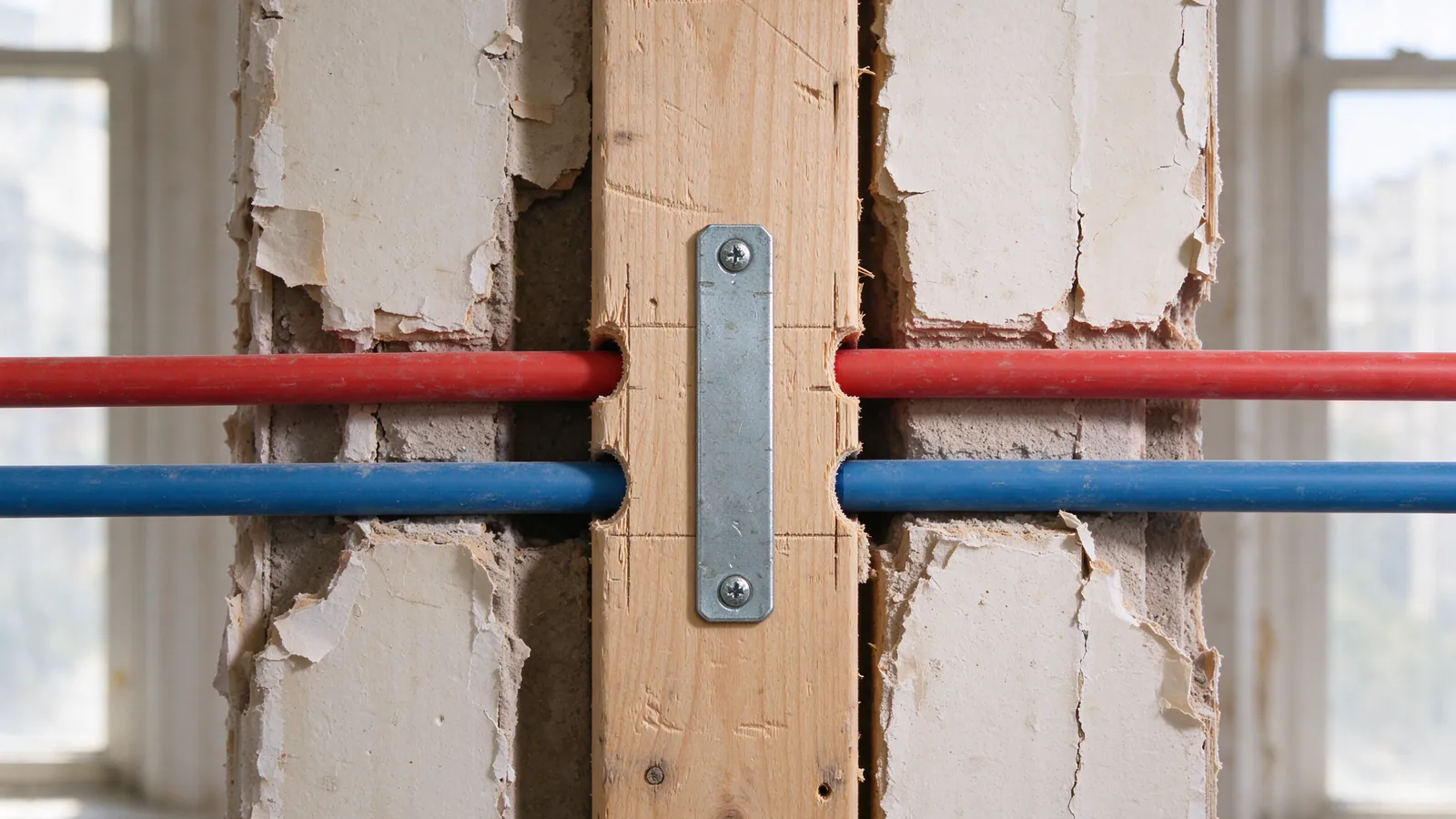
Yes. PEX is approved for drinking water throughout California: Table 604.1 of the 2025 California Plumbing Code lists it for both building supply and water distribution, and San Francisco’s local amendments add no restriction. The state attaches a few conditions to PEX, and one of them, the new-construction flushing rule, specifically does not apply to a repipe of an existing house.
Hilltop Repipe San Francisco offers and manages PEX repiping in San Francisco, Daly City and South San Francisco under those rules, with the work carried out by licensed and insured contractors who pull the plumbing permit. This guide sets out what the code says, where the idea of a California PEX ban comes from, and which conditions shape a repipe.
What the California Plumbing Code says
California adopts a statewide plumbing code, and the current edition is the 2025 California Plumbing Code. Its Table 604.1 lists the materials approved for building supply and water distribution piping. Copper, CPVC, PE-RT, PEX, stainless steel and several others are marked approved for both uses. PE and PVC are allowed only for building supply and exterior cold water.
Any material in contact with drinking water, PEX included, must comply with NSF/ANSI/CAN 61, the standard for health effects of drinking water system components. Lead content of wetted surfaces is limited to a weighted average of 0.25%. So the answer to whether PEX is safe for drinking water in California is the same as for copper: the code accepts products that are certified to those standards.
San Francisco adopts the state code with local amendments as the 2025 San Francisco Plumbing Code, in force since January 1, 2026. A full search of those amendments finds none that restricts PEX, PE-RT or CPVC water piping. The local water-piping amendments add a main valve and a shutoff for each dwelling unit, a control valve at each fixture, dielectric fittings where copper meets steel and air chambers at quick-closing valves, and they apply whichever material is used. The San Francisco repiping permit guide covers them.
The conditions California attaches to PEX
UV protection
The code states that all PEX pipe installed in California must provide at least 30-day UV protection. Daylight degrades polyethylene, so tubing is kept covered on site, protected in the building and kept out of windows and open roofs. Makers set their own exposure limits within that rule.
Joints and fittings
PEX joints must be made according to the manufacturer’s instructions, and fittings must be listed in Table 604.1. Brass fittings used with PEX must meet NSF/ANSI 14 so they resist dezincification, and push-fit fittings must comply with ASSE 1061. In practice that means tubing and fittings from one system the maker lists together. The PEX-A vs PEX-B guide explains the fitting systems.
Recirculating hot water and soil
Notes to Table 604.1 add conditions for PEX used in continuously recirculating hot water systems, which must meet ASTM F876-2015a or better, and for PEX placed in soil for drinking water.
PEX-AL-PEX
PEX-AL-PEX, tubing with an aluminum layer between two layers of PEX, is listed in the table but not adopted for drinking water by the state agencies that regulate housing. For a house, flat or apartment building, the PEX choices are PEX-A, PEX-B or PEX-C tubing, not the composite.
The flushing rule, and why a repipe is exempt
California has a procedure for PEX in new homes: the system is flushed, filled, left to stand at least a week, flushed again and tagged at each fixture before final approval. The code limits that to PEX “where it is the initial plumbing piping installed in new construction” and says it “shall not apply to the installation of PEX pipe where it replaces an existing pipe system of any material.”
A PEX repipe of an existing San Francisco house or flat therefore does not add a week of flushing and tagging. It is still pressure tested before any wall closes, flushed with aerators off, and inspected by the city like any repipe. The guide to how long repiping takes shows where the real waits are.
CPVC carries more conditions
CPVC is also approved, but inside homes the code lets the local building official authorize it by permit only when the contractor signs a worker-safety certification and a certification to follow the flushing procedure, the system is flushed twice over at least a week with tags at each fixture, enclosed spaces such as low crawlspaces and attics are ventilated or workers wear organic-vapor respirators, and nitrile gloves are used. None of that makes CPVC wrong, but it adds paperwork and schedule that PEX and copper do not, which helps explain why repipes in California are mostly PEX or copper.
Where the idea of a ban comes from
California accepted PEX for homes later than many states, after years of review, and searches for a “California PEX ban” mostly trace back to that period. The code in force today lists it. Homeowners also report older push-fit fittings tagged as not for sale in California and plumbers in other states saying PEX was not allowed where they work. Code status varies by state and city, so a rule from Chicago or an old forum thread says nothing about San Francisco now. A lawsuit over a particular product is not a ruling on the material either: what decides whether a product can be installed is its listing and the code.
In San Francisco, PEX is still the less common material on paper. Among 273 DataSF permit descriptions from 2021 to 2025 that describe a water repipe, 92 name copper and 6 name PEX. More recent PermitSF filings include per-unit permits at an apartment building mostly described as repiping with PEX. Either material passes inspection when it is installed to the code and the maker’s instructions; the PEX vs copper guide covers how to choose.
Planning a PEX repipe?
The scope names the tubing, fittings, layout and every place the PEX meets metal, and the permit is filed before work starts.
Daly City and South San Francisco
Both cities are in California, so the state code’s PEX listing and conditions apply there as well. San Francisco’s local amendments do not. South San Francisco’s Building Division states that it enforces the 2025 California codes and requires a plumbing permit with pipe left exposed until it is inspected. Daly City’s permit portal has a “Water Pipe Replacement” permit type, with a rough plumbing inspection before walls are covered. The Daly City and South San Francisco pages cover each city’s permit office.
What else a PEX repipe has to account for
Replacing metal pipe with plastic changes one thing outside plumbing. Where metal water pipe served as part of the electrical grounding path, the plumbing code requires replacement building supply to be like material, and the electrical code requires any remaining metal water pipe to stay bonded. A licensed electrician confirms bonding after the work. The new system also connects to metal at the water heater and wherever old pipe stays, through listed transition fittings.
For the whole picture of what a repipe involves, the repiping guide walks through it from the meter to the last patch, and the whole-house repiping page describes the service. To get a written scope for a PEX repipe of your building, call or send the form.