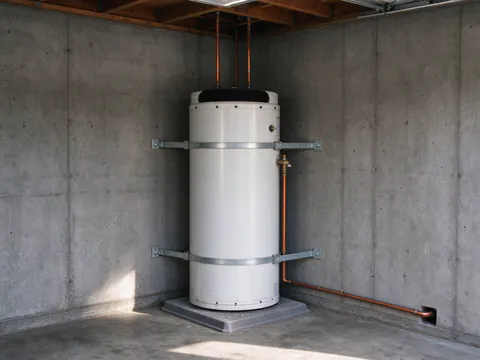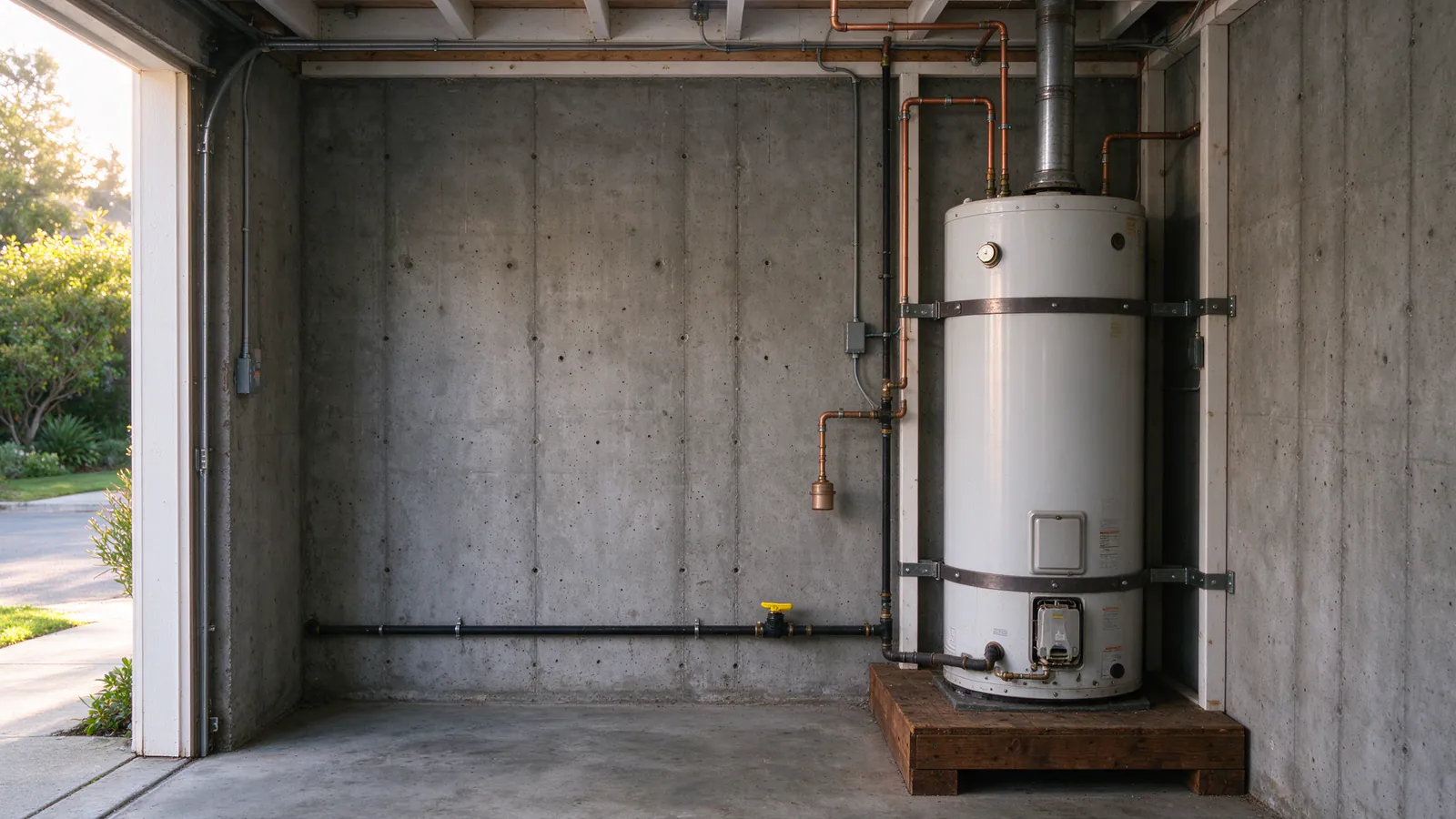
It is the Bay Area Air Quality Management District’s Regulation 9, Rule 6, as amended on March 15, 2023. As adopted, natural gas water heaters under 75,000 Btu/hr, the typical home tank, must meet a zero-NOx emission standard if manufactured after January 1, 2027, and larger units after January 1, 2031. It applies when equipment is sold or installed, not to working heaters already in homes. Hilltop Repipe San Francisco offers and manages water heater replacement across San Francisco, Daly City and South San Francisco, with the work carried out by licensed and insured contractors.
What the rule is
The Air District regulates nitrogen oxide (NOx) emissions from combustion across the Bay Area. Rule 9-6 covers natural gas-fired water heaters and boilers, and its companion, Rule 9-4, covers furnaces. On March 15, 2023 the Air District amended both to set a zero-NOx standard, 0 nanograms of NOx per joule, phased in by appliance size and type. A gas burner produces NOx, so a conventional gas water heater cannot meet that standard; an electric heat pump water heater can.
As adopted, the compliance dates are:
| Equipment | Typical use | Zero-NOx standard applies to units manufactured after |
|---|---|---|
| Natural gas water heaters under 75,000 Btu/hr | Typical residential tank | January 1, 2027 |
| Residential and commercial furnaces (Rule 9-4) | Home and small-building heating | January 1, 2029 |
| Water heaters and boilers 75,001 Btu/hr to 2 million Btu/hr | Commercial, multifamily and most tankless units | January 1, 2031 |
The rule works at the point of sale and installation. It does not reach into homes to remove equipment that works, and owners are not required to replace a gas water heater before it fails. The standard is tied to the date a unit was manufactured.
Where it applies
The Air District covers all nine Bay Area counties, including San Francisco and San Mateo County, so the rule is the same in San Francisco, Daly City and South San Francisco. Local building rules sit on top of it and differ by city; those are covered below.
The proposed amendments
Air District staff have proposed amendments to Rule 9-6, released with a staff report for public comment and set for a public hearing before the Air District’s Board of Directors. They change nothing unless and until the Board adopts them, and the Board can adopt, change or reject them. As proposed, they would:
- Move the tank date. For gas storage water heaters over 30 gallons and up to 75,000 Btu/hr, the compliance date would move from January 1, 2027 to January 1, 2028, by manufacture date.
- Move the larger-unit date. For units from 75,001 Btu/hr to 2 million Btu/hr, including tankless heaters, it would move from January 1, 2031 to January 1, 2033.
- Add income-based exemptions. Owners in low-income programs, households at or below 80% of area median income, and owners whose mortgage plus property tax is at least 28% of gross income could obtain an exemption certificate before installation.
- Add one-time building exemptions. Per address, for existing buildings where the heater sits in an enclosure under 700 cubic feet that cannot take louvers, a transfer grille or a duct; a garage ceiling under 7.2 feet or other indoor ceiling under 6 feet; or contractor-certified electrical constraints such as knob-and-tube wiring needing more than 50 feet of conduit, a panel under 100 amps, a new 240-volt circuit needing more than 50 feet of conduit, or no open breaker space.
- Add time-limited exemptions. For units manufactured before January 1, 2033, in situations including hydronic heating, residential buildings of five or more units and deed-restricted affordable housing.
- Allow a temporary gas replacement. A licensed contractor could install a non-compliant gas replacement for up to 12 months with a certificate and reporting, so a household is not left without hot water while a heat pump installation is arranged.
Whether these take effect, and in what form, is the Board’s decision. Before relying on any date or exemption, check the current text of Rule 9-6 on the Air District’s website.
Gas water heater getting old?
Planning the replacement before it fails gives you time to check space, power and permits for a heat pump model.
What it means for your water heater
If your gas water heater works, the rule asks nothing of you today. The decision arrives when it fails or you choose to replace it. After the applicable compliance date, a new gas tank of the regulated size can only be installed if it was manufactured before that date or an exemption applies; otherwise the replacement is a zero-NOx unit, which for a home usually means a heat pump water heater.
That makes the time to plan before the failure, not during it. A heat pump water heater needs things a gas tank doesn’t:
- Space and air. It pulls heat from the surrounding air, so it needs room around it or ventilation, such as a louvered door or transfer grille, in a closet. The proposed exemptions name small enclosures and low ceilings precisely because these are the hard cases.
- Power. Many models need a dedicated 240-volt circuit; some 120-volt models plug into an existing receptacle. Panel capacity and breaker space decide which is practical.
- A drain. Heat pump units produce condensate that has to go somewhere.
- Code items that don’t change. California still requires seismic straps in the upper and lower thirds of the tank, and San Francisco still requires a valve on the cold supply.
California’s energy code allows a single-family gas water heater to be replaced with another gas unit, or with a heat pump water heater installed under listed conditions, so the state code alone does not force the switch. The Air District rule is what changes the gas option, at the manufacture date. The heat pump vs tankless guide compares the two common replacements.
City rules on top
San Francisco has required new buildings with permit applications filed on or after June 1, 2021 to be all-electric. Since July 1, 2026, a Major Renovation must also be all-electric when it is a significant alteration and it replaces space and water heating for the entire building or installs new systems serving 80% or more of the conditioned floor area. Appliances regulated by federal Department of Energy standards are exempt from that ordinance, so gas models remain allowed under it, but state energy and regional air rules still apply. South San Francisco’s reach code requires electric energy in new residential construction, with exceptions. Neither Daly City nor South San Francisco publishes a rule that requires an existing water heater to be switched to electric.
Cost, rebates and permits
A typical San Francisco-area range for a heat pump water heater replacing a gas tank in a single-family home is $5,500 to $8,000; larger tanks, closet rebuilds, long circuit runs or panel work can run higher. A like-for-like gas tank replacement typically runs $2,200 to $4,300 in the Bay Area, with power venting, relocation or venting changes costing more.
Two programs reduce the heat pump figure. CleanPowerSF’s Electrify Your Home program gives active CleanPowerSF customers in San Francisco $1,200 in bill credits ($50 a month for 24 months) for a heat pump water heater replacing a gas or electric-resistance unit, with conditions including an ENERGY STAR model, an electrification rate, a licensed contractor, a permit in good standing and proof that the gas appliance was removed or capped. Capping the old gas line is gas work, covered on the gas line repiping page. In Daly City and South San Francisco, WestLight Energy offers a $3,500 Home Upgrade rebate for a heat pump water heater replacing a gas, propane or oil unit, applied for within 90 days of installation.
In San Francisco a water heater replacement needs a plumbing permit, typically Category 1P at $290, and a new circuit for a heat pump unit adds an electrical permit, $305 for a residential job of up to 10 outlets or devices. A new flue or relocating the heater makes it a building-permit job. The gas line permit guide covers gas work, and if the heater is replaced during a whole-house repipe, the repipe cost guide and the guide to how repiping works explain how the two fit in one shutdown.
To plan a replacement around your space, panel and the current rule, call or send the form with the heater’s age and where it sits. If it is already leaking, emergency pipe repair is available 24/7 to stop the leak while the replacement is planned.