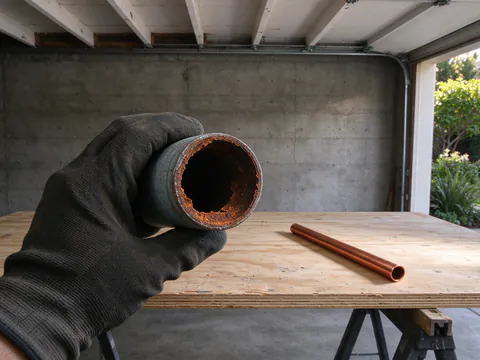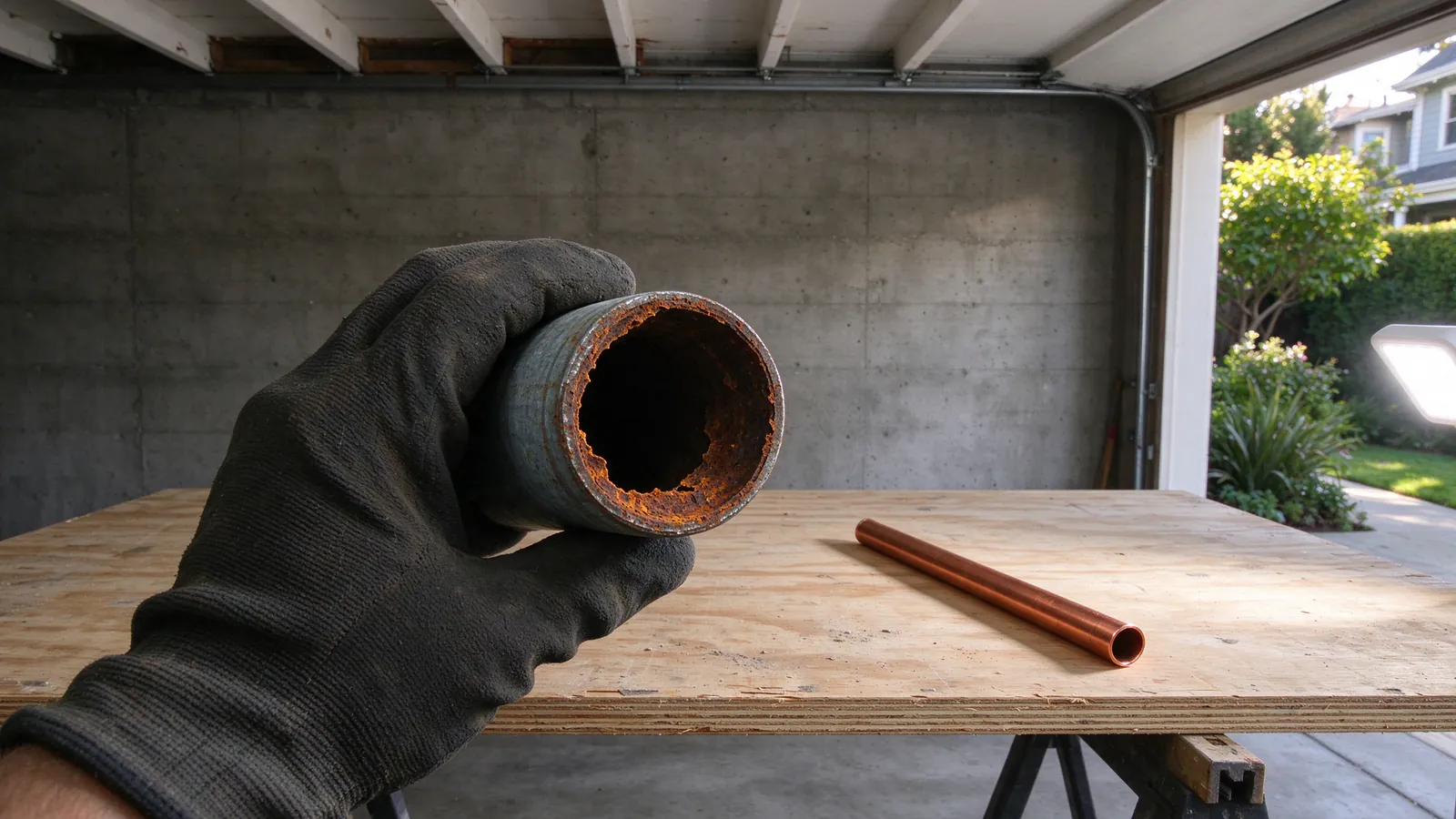
Usually yes, if the price reflects what the pipe will need. Galvanized steel is common in San Francisco’s older houses and flats, and a whole-house repipe is a known, priceable job. The useful work before buying is finding out how much galvanized there is, what the service line is made of and whether past work was permitted, then negotiating with a written scope and price. Hilltop Repipe San Francisco offers and manages galvanized pipe replacement across San Francisco, Daly City and South San Francisco, with the work carried out by licensed and insured contractors.
Why so many San Francisco houses still have it
Galvanized steel was the common supply pipe in American houses of the early twentieth century, and much of San Francisco was built then. The Census Bureau counts 45.2% of the city’s housing units as built in 1939 or earlier and another 16.1% from 1940 to 1959, with a median year built of 1946. Daly City and South San Francisco are younger, with medians around 1965, but about a third of their housing dates from 1940 to 1959, the years when galvanized and early copper overlapped.
Where a building has been partly replumbed over the decades, the result is a mixed system: copper at the water heater and a remodeled bathroom, galvanized in the risers and the trunk, and a short piece of plastic where a leak was cut out. Among 273 DBI permit descriptions from 2021 to 2025 that describe a domestic water repipe, 76 name galvanized pipe. The guide to identifying pipe material shows how to tell the materials apart.
What the inspection report shows, and what it can’t
A general home inspection looks at exposed pipe, runs fixtures and notes leaks, rust and low flow. It is a visual survey, not a pipe map. When a report says “galvanized supply piping observed,” it means the inspector saw some, usually in the garage, basement, crawlspace or at the water heater. It does not say how much is hidden in the walls or how corroded it is inside.
That limit matters because galvanized pipe fails from the inside. San Francisco’s water is soft, so the steel here clogs with its own rust rather than mineral scale, and the outside can look sound while the bore has closed down to a fraction of its size. Appearance proves little either way. Signs that tell more:
- Flow at the top floor. Run the upstairs shower, then flush a toilet or open the kitchen tap. A big drop at the far end of the house points to restricted pipe, though a partly closed valve or a failing regulator can look the same. The low water pressure guide sorts the causes.
- Water after the house sits. Brown water at several taps when a vacant house is first used is often galvanized shedding rust. The rusty water guide covers other sources.
- Repairs at threaded joints. Patches, clamps or short copper sections spliced into steel suggest leaks have already started where the wall is thinnest.
- Copper joined directly to steel. San Francisco requires a dielectric or insulating fitting, or a brass nipple at least 6 inches long, where copper meets steel. Without one, the steel corrodes faster at that joint.
A plumbing walk-through during the inspection period can go further: trace the trunk and risers, count fixtures, note wall types and measure static pressure at the meter. That turns “galvanized observed” into a scope and a number.
The service line from the meter box
The pipe from the meter box at the sidewalk to the building is the owner’s, and buyers often forget it. SFPUC has been replacing its own galvanized service lines with copper and has written to owners whose customer-side lines it identified as galvanized, recommending replacement because those lines may once have been connected to old lead parts. SFPUC’s lookup map at sfpuc.gov/lead shows whether an address is flagged, and a seller who received a letter should be able to say so.
SFPUC estimates only a 1% chance of lead in customer-owned lines and its plumbers have never observed one, so this is mainly about old steel, not lead. A buyer who wants certainty can ask SFPUC for a lead test, $25 per tap and free for owners who received a galvanized-line letter. The lead pipes in San Francisco guide explains the program, and water service line replacement covers replacing that line, often in the same job as the house.
Checking the permit history
DBI’s plumbing permits are public records, and DataSF publishes them with their descriptions. Searching the address shows whether anyone filed for a repipe, a water service replacement or a water heater, when, and whether the permit was finaled after inspection. A finaled repipe permit plus new copper or PEX visible in the garage is strong evidence the house has been done. New pipe with no permit on record is worth a question, because concealed work that was never inspected was never pressure tested in front of the city. The San Francisco repiping permit guide explains what a permit covers.
Buying an older San Francisco house?
A walk-through during the inspection period traces the pipe and returns a written scope and price you can negotiate with.
Putting a number on it
A typical San Francisco-area range for a whole-house PEX repipe is $8,500 to $16,000 for one bath, $12,000 to $22,000 for two baths and $14,500 to $28,000 for three; multi-story or hard-access homes can run higher, and copper usually costs more. If the owner’s service line is galvanized, $2,000 to $6,000 is a national budgeting range for replacing it, before San Francisco permit costs. The repipe cost guide explains what moves a house toward either end, and the cost estimator gives a range from the baths, floors and material.
A written scope from a walk-through is stronger in a negotiation than a range, because it names the material, the openings, the permit and the price for that house.
Credit or seller repair
Buyers who find galvanized face a choice between asking the seller to fix it and asking for money off. A seller repair before closing is scoped by someone who is leaving and timed around escrow, and it may be limited to what the report named, which can mean a partial repipe that leaves old steel upstream. A credit against a written scope lets the buyer choose PEX or copper, the layout and who patches, and the work is far easier in an empty house than around a family that has moved in.
California also requires a seller to certify in writing that the water heater is braced, anchored or strapped against earthquakes. Missing straps are a code item that a repipe would correct anyway.
Flats, condos and shared buildings
In a two-to-four-unit building or a condo, the pipe in the walls may be shared. Risers often serve a stack of units, and San Francisco requires that each unit can be shut off without cutting water to the others. A buyer of one unit should ask whether the building or the association has repiped, plans to, or has reserves for it, because DBI issues a separate permit for each unit and the work may involve neighbors’ walls. The condo and HOA repiping page covers that situation.
Value and insurance
No published San Francisco figure says how much a repipe adds to a sale price, so treat claims either way with caution. What a repipe changes for certain is the list of open questions at the next sale or claim. The homeowners insurance guide explains why insurance generally pays for sudden water damage rather than old pipe, which is one more reason to price the repipe into the purchase rather than wait for a leak.
To have the pipe traced and priced before your contingency ends, call or send the form with the address and the inspection date.