Stop the water first: close the building’s main shutoff valve, or the fixture or unit valve if the break is downstream of one, then keep people clear of anything electrical the water is reaching. After that, call for emergency repair, document the damage and tell anyone else affected. Hilltop Repipe San Francisco handles emergency pipe repair 24/7 across San Francisco, Daly City and South San Francisco, with the work carried out by licensed and insured contractors.
First: stop the water
Every minute a pressurized line runs, it keeps pouring water at full supply pressure. The fastest way to stop it is the valve closest to the break that controls it.
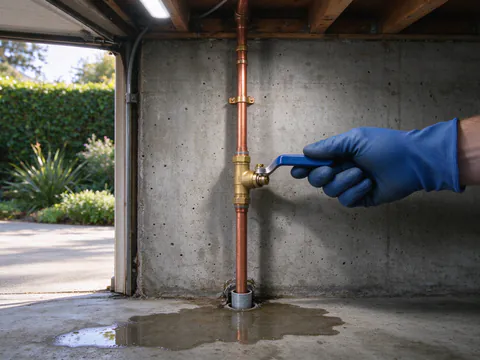
The main shutoff. SFPUC says most main shutoffs are on the outside of the home or just inside the property, in line with the water meter at the sidewalk. Where the supply enters through a ground-floor garage, look on the wall where the line comes in. It is usually one of two types:
- A gate valve with a round handle. Turn it clockwise until it stops. Old gate valves can be stiff; firm, steady pressure works better than force, and a valve that won’t move should be left for the plumber rather than broken.
- A ball valve with a lever handle, often blue. Turn it a quarter turn so the handle sits at 90 degrees across the pipe.
SFPUC also notes that in some homes the supply enters through a cylindrical tank in the garage, basement or a closet, with a valve sometimes painted red.
Unit and fixture valves. San Francisco’s code requires a valve at each fixture, and, in buildings with more than one dwelling unit, shutoffs that isolate each unit. If the break is at a toilet, sink or appliance connection, its own stop valve may be enough. If it is inside one unit of a flat and the unit has its own shutoffs, closing those keeps water on for the neighbors. Older buildings don’t always have them.
The water heater. If the break is on the hot side, closing the cold supply valve at the water heater stops water from the heater; San Francisco requires one on every heater’s cold supply. Closing the main does the same.
If you cannot find the valve, it won’t close, or the break is between the meter and the valve, call for help rather than open the meter box.
Don’t touch the meter
In San Francisco the meter belongs to SFPUC, and SFPUC asks customers not to access it; only its field staff should. For water emergencies SFPUC runs a 24-hour hotline through 311 in the city. SFPUC also offers a courtesy visit to help an owner locate their shutoff valve, which is worth doing before anything breaks.
In Daly City, the city’s Department of Water and Wastewater Resources will turn the water off on request at any hour (650-991-8200) and warns owners not to turn off the meter themselves, since they may cause a leak or break the service and be liable for the repair. In South San Francisco, Cal Water’s Bayshore District handles the utility side, with an after-hours line at (650) 558-7800.
Keep people safe
Water and electricity together are the immediate danger. If water is reaching outlets, light fixtures, appliances or the electrical panel, keep everyone out of the wet area and don’t wade through standing water to reach a switch. Ceilings that are bulging with water can come down; keep people out from under them. If a gas line was damaged, or you smell gas, leave the building and call 911, then PG&E at 1-800-743-5000.
Freezing is rarely the cause here. NOAA’s normals for downtown San Francisco record no nights at or below freezing in an average year, so the cold-climate advice about thawing pipes doesn’t apply.
Pipe burst right now?
Emergency pipe repair is available 24/7. Close the main valve first, then call.
Why pipes burst in San Francisco buildings
A sudden failure usually has a slow cause behind it.
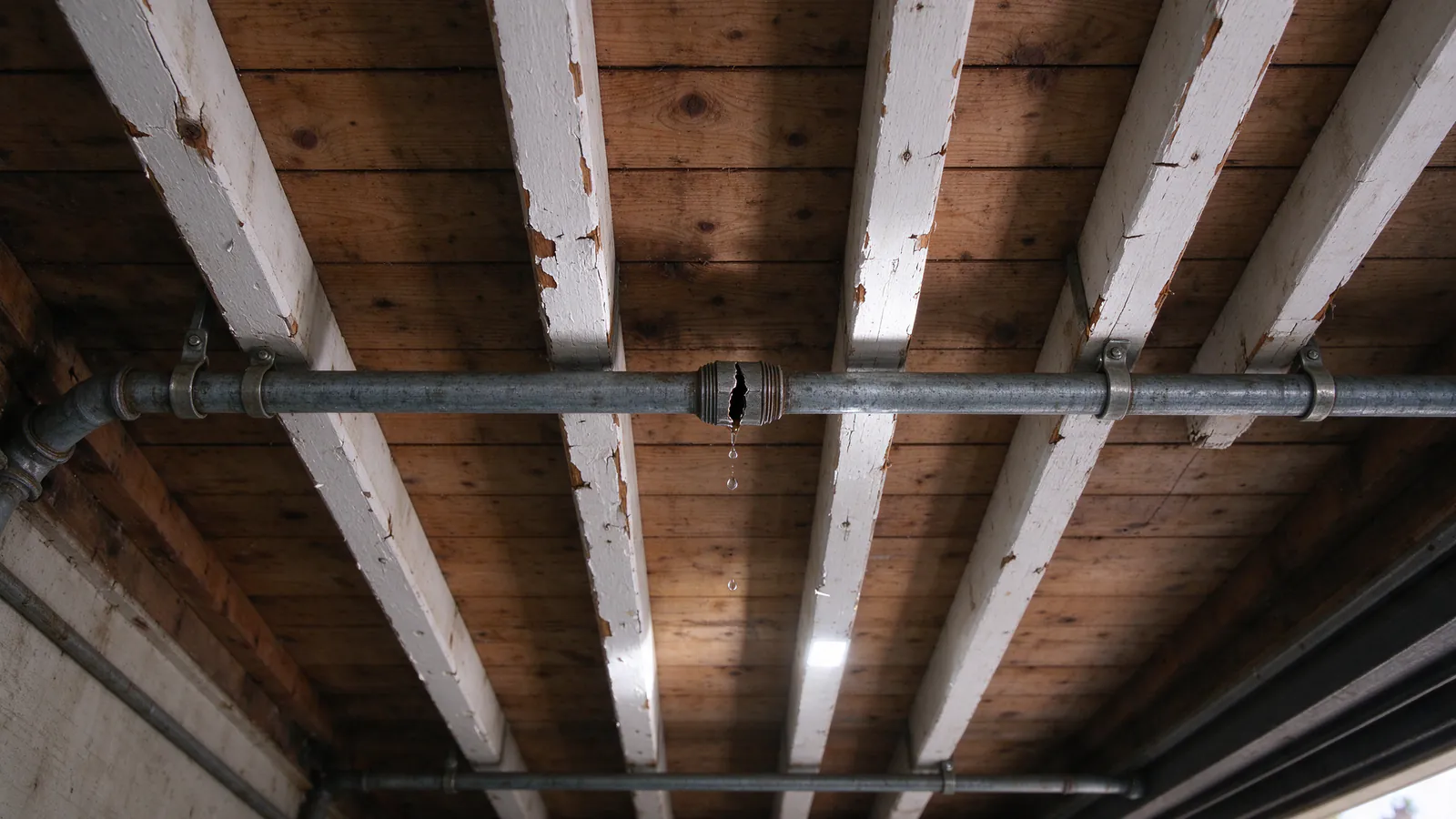
- Corroded galvanized joints. Galvanized steel corrodes from the inside, and the thinnest wall is at threaded joints. A joint can let go all at once after decades of thinning.
- Copper pinholes and joints. Copper usually leaks rather than bursts, but a pinhole can open up under pressure, and a failed solder joint can separate. There is no single cause; the copper pinhole leaks guide covers them.
- Supply connectors. Braided or plastic connectors to toilets, faucets, washers and refrigerators can fail at their crimps and nuts, and a failed one runs at full pressure.
- High pressure. Where static pressure exceeds 80 psi, California’s code requires a pressure regulator and an expansion tank. A failed regulator, or none at all on a high-pressure street, stresses every joint in the building.
- Water hammer. Quick-closing valves send a pressure spike through the pipe; San Francisco requires air chambers to absorb it.
Knowing the material helps both the repair and the next decision. The guide to identifying pipe material shows how to tell what failed.
Document it for insurance and the utility
Before anything is cut out:
- Photograph the break, the water damage and the rooms affected.
- Keep the failed section of pipe or the fitting.
- Call the insurer early, especially before walls are closed.
- Keep every invoice from the plumber and any drying work.
Homeowners insurance generally addresses sudden, accidental water damage under the policy’s terms, and a burst is the kind of event policies are written for; the pipe itself and any wider replacement usually are not. The homeowners insurance guide explains the line. In San Francisco, SFPUC’s leak allowance can also credit the water bill: 100% of the excess for a concealed leak, behind a wall or underground, and 50% for a visible one, for up to two billing periods, if the owner applies within 15 days of first noticing the high bill and proves the repair. The SFPUC leak alert guide covers the allowance.
The repair
An emergency repair makes the system safe and gets water back on: the damaged section is cut out and replaced, or the line is capped so the rest of the building has water while the permanent repair is planned. In San Francisco, repairing a leak without cutting into or removing piping is exempt from a permit; cutting out and replacing a section needs a DBI plumbing permit and an inspection before the pipe is covered. DBI charges $555 an hour for off-hours inspections, with two- or four-hour minimums, so once the emergency is contained it usually makes sense to book the inspection for regular hours. The pipe repair page covers the work.
After the water stops
Once the repair is in, the questions change from damage to the pipe itself. A burst at a threaded joint in galvanized pipe says the steel at that joint has thinned from inside, and the rest of the same pipe is the same age. A third pinhole on the same copper run says that run is wearing out. One failure does not prove the whole system is failing, but it is a good moment to look, because the walls may already be open. The repipe vs repair guide walks through the decision, and the partial repiping and whole-house repiping pages cover the larger options.
If water is running now, close the main valve and call. If it has stopped, call or send the form and the repair is scoped from the break outward.